


The 12 Olympians of Greek Mythology: Their Roman Names and Symbols


Classical Greek mythology tells stories about how the universe was created and about the lives of gods, goddesses and heroes. The gods were believed to live on Mount Olympus in the Thessaly region, Greece's highest peak at 2,919 meters.
Here are the 12 great gods and goddesses of Olympus, along with the names the Romans gave them and the symbols they are known by.


Zeus, Hera, Athena and Poseidon ruled the sky, family, wisdom and the seas.
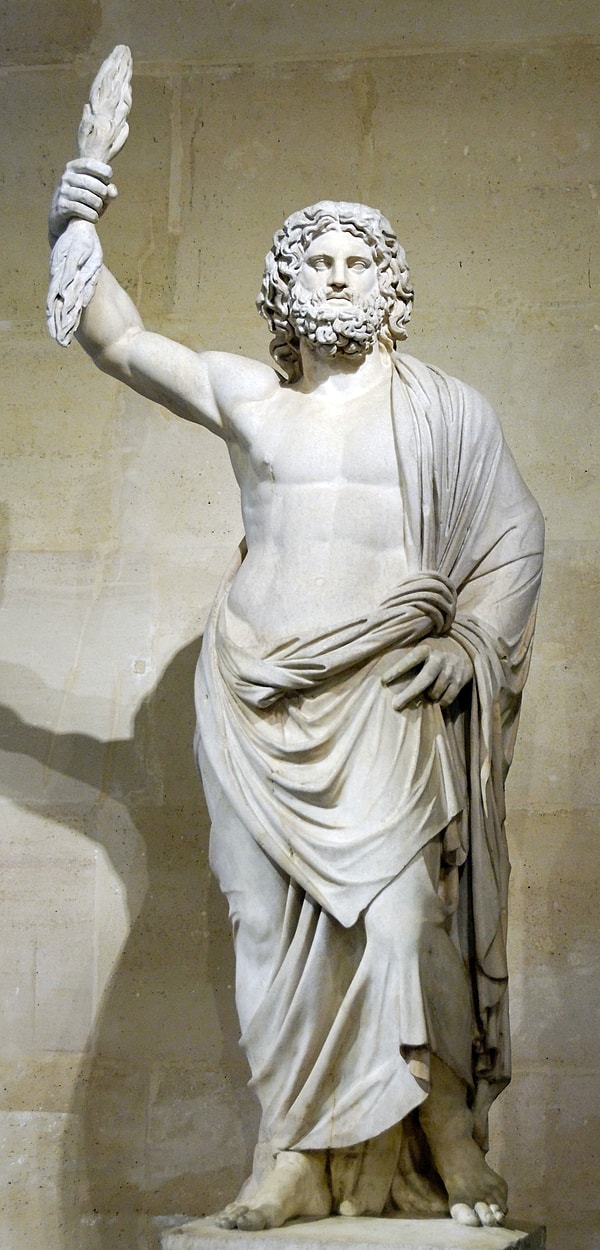
1. Zeus / Jupiter
Called the king of the gods, Zeus defeated his father Kronos, freed his siblings and began the reign of the Olympians. He was considered the most powerful of the gods and was also famous for his many love affairs. The eagle and the thunderbolt are among his symbols. In Roman mythology he is Jupiter.
2. Hera / Juno
Sister and wife of Zeus, Hera is the goddess of marriage and family. Myths often show her jealousy toward Zeus's children from other relationships, Herakles being one of the best known. Known as the queen of the gods, her symbols include the cow, the peacock, the pomegranate and the crown. The Romans called her Juno.
3. Athena / Minerva
Goddess of wisdom and war, Athena is the daughter of Zeus and Metis. Her birth was unusual: she is said to have sprung from Zeus's head fully armed, spear in hand. She created the olive tree in a contest with Poseidon. Her best-known symbols are the owl, the shield and the head of Medusa.
4. Poseidon / Neptune
After Zeus defeated Kronos, his brother Poseidon became the god of the seas. He was also known as the god of earthquakes. His symbols are the trident, the sea and the horse.
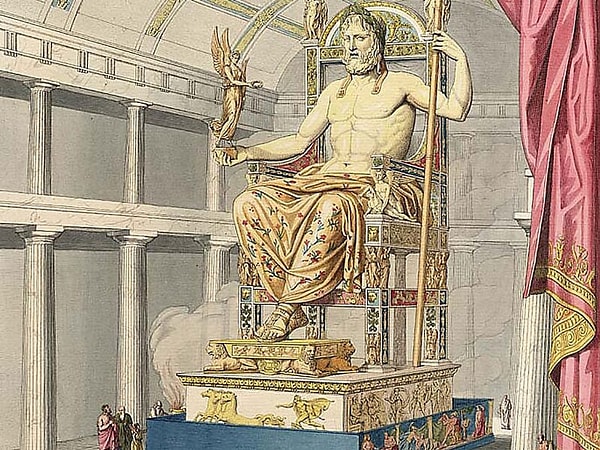
The Statue of Zeus at Olympia was one of the Seven Wonders of the Ancient World.
5. Apollo / Apollo
Son of Zeus and the Titaness Leto and twin brother of Artemis, Apollo is the god of the sun and light, as well as music and the arts. He appears wherever prophecy is mentioned in myth. One of the two most important oracle centers of antiquity was the Temple of Apollo at Didyma. His symbols are the bow and the lyre.
6. Artemis / Diana
Apollo's twin, Artemis is the goddess of the moon and the hunt. Together with her brother, she sided with the Trojans in the Trojan War. Her best-known symbols are the deer and the bow.
7. Hermes / Mercury
The messenger of Zeus and son of Zeus and Maia, Hermes is the fastest of the gods. His winged sandals and the tortoise are his main symbols, and he carries a staff called the caduceus. He also guides the souls of the dead to the underworld.
8. Aphrodite / Venus
The goddess of love and beauty was born from the sea foam off the coast of Cyprus. She is the wife of Hephaestus and the lover of Ares, and according to some sources the mother of Eros. Her symbols include the rose, the mirror and the dove.
Ares, Hephaestus, Demeter and Hestia complete the twelve.
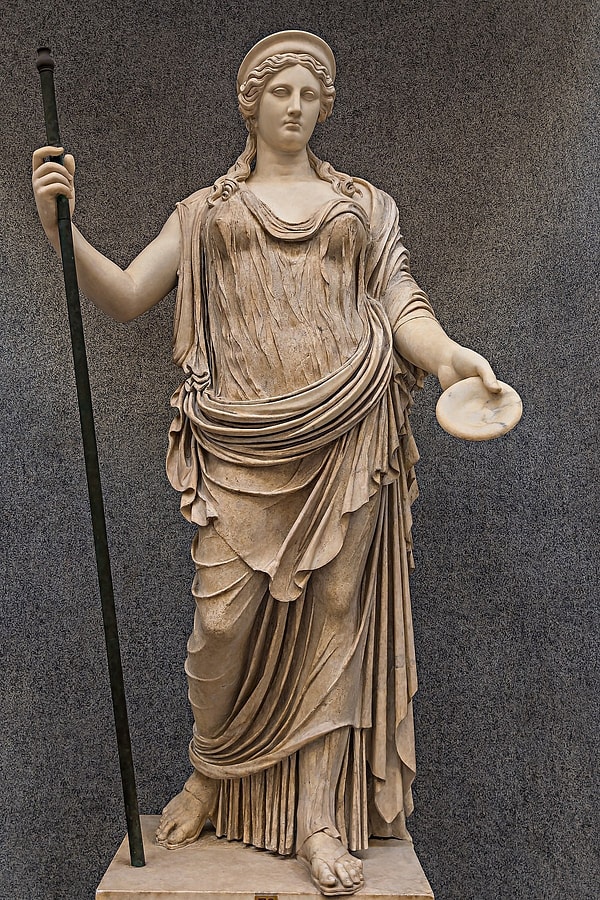
9. Ares / Mars
The son of Zeus and Hera, Ares is the god of war. He was not much loved in Greek myth but became a very important god in Rome. His affair with Aphrodite was exposed by Hephaestus. He is shown with a spear and a helmet.
10. Hephaestus / Vulcan
Another son of Hera, Hephaestus is the lame craftsman god of Olympus. Though looked down upon, he made weapons and armor of unmatched craftsmanship for gods and heroes. His marriage to Aphrodite is one of the most striking contrasts on Olympus. His symbols are the hammer and the volcano.
11. Demeter / Ceres
The sister of Zeus, Demeter is the goddess of harvest and fertility who taught people to sow and reap wheat. Her symbol is the ear of wheat. Her best-known myth is the abduction of her daughter Persephone by Hades.
12. Hestia / Vesta
The first daughter of Kronos and Rhea, Hestia is the goddess of the hearth and the home and is known as the gentlest and most generous of the gods. She never married. Her symbols are the hearth fire and the home. According to some accounts, she eventually left Olympus and Dionysus took her place.
Keşfet ile ziyaret ettiğin tüm kategorileri tek akışta gör!
 Test
 Gündem
 Magazin
 Video



Send Comment