


What Is a Martenitsa? The Red and White Balkan Bracelet That Welcomes Spring


Trees are budding, birds are singing and the sky is turning blue again: spring is on its way. In the Balkans, this change of season is marked by an old custom. When the calendar reaches March 1, the martenitsa bracelet comes out. With its red and white threads, it stands for the energy of life and new beginnings.
So what exactly is a martenitsa, when is it worn and when is it taken off? Here is the meaning and the story behind it.


A martenitsa is a red and white bracelet worn throughout March to welcome spring.
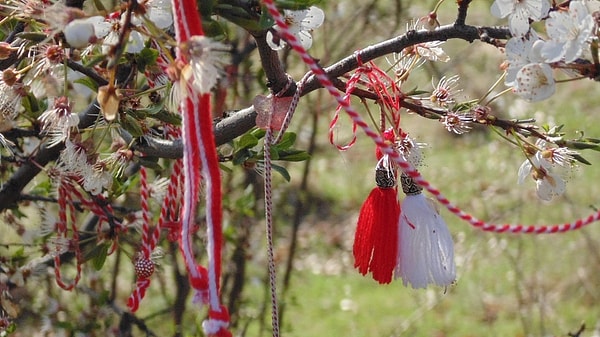
Also known as martenitsa or martipi, it comes from the Balkans and Thrace and is one of the region's loveliest traditions. Although it is best known as an old Bulgarian custom, it is celebrated every March across the Balkans, and in Turkey too, thanks in part to communities with Balkan roots.
People wear the bracelets to greet the coming of spring and the return of the sun, hoping for a good month ahead. The red stands for health and strength, while the white stands for purity, new beginnings and long life.
It is put on on March 1 and taken off when you see the first swallow or stork.
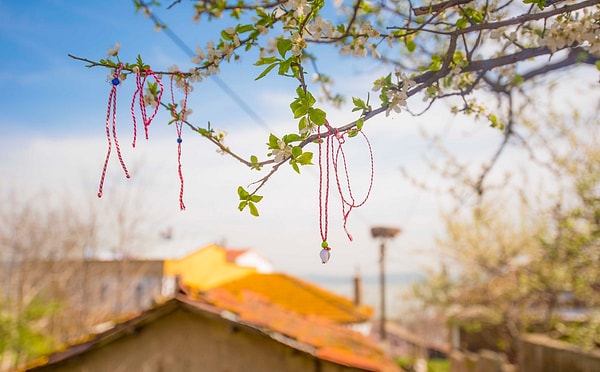
According to the custom, people give each other red and white bracelets as gifts and tie them on with the arrival of spring, on March 1. One important detail: you don't tie a martenitsa on yourself, someone close to you should do it.
When is it taken off?
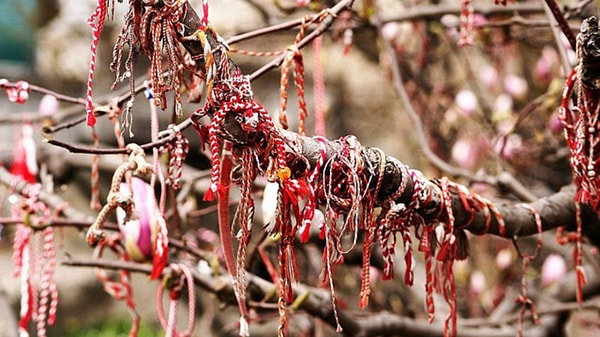
The martenitsa is removed when you see the first swallow or stork of the year. It is then tied to the nearest tree in bloom, and it is believed that your wishes will come true.
The Baba Marta story
Bulgarian culture has several legends about the martenitsa, and one of the most respected is Baba Marta (Grandma March). Bulgarians believe Baba Marta's days begin on March 1 and give their loved ones martenitsas as a wish for health and strength throughout the year. Martenitsas can also be tied to fruit trees, houses and farm animals as a wish for a fruitful farming year.
The first martenitsas were made only from red and white threads.
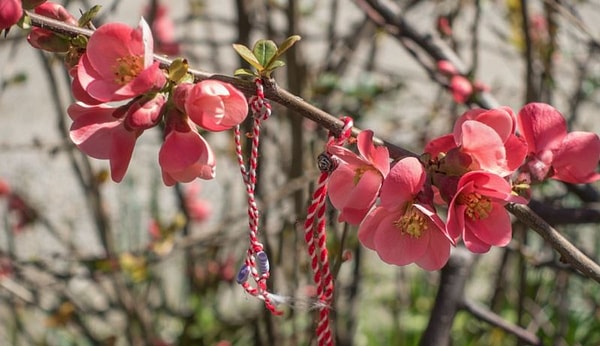
They were tied on people and animals for protection against the evil eye. In some regions, a gold or silver coin was attached to the twisted red and white string as a symbol of protection against illness.
Martenitsas, once made of red and white wool, can take many shapes: tassels, pom-poms or little figures. The most famous are Pizho and Penda, a pair of dolls made from red and white yarn.
Tradition says a martenitsa is not bought but only given as a gift, and it is completely handmade.
Making your own martenitsa takes just a few minutes.
How to make a martenitsa
Cut red and white threads a little longer than your wrist.
Tie the ends of the red and white threads together.
With the knot in the middle, hold the free end of the red thread in one hand and keep it taut.
With your other hand, hold the free end of the white thread and, keeping the tension, twist it clockwise.
When the thread becomes hard to twist, release the tension.
Once the red and white threads have wound around each other, tie a knot at the other end.
Your martenitsa is ready. You can add beads or decorations if you like, then tie it on your wrist or give it to someone you love as a wish for luck and happiness.
Keşfet ile ziyaret ettiğin tüm kategorileri tek akışta gör!
 Test
 Gündem
 Magazin
 Video



Send Comment