


What Is Geology? A Guide to the Science of Planet Earth


Geology, also known as earth science, is the science whose main subject is Earth itself. It mainly studies the content, structure and properties of the rocky outer shell of the planet. While Earth is its core subject, geology can also study other planets and natural satellites. A large part of the field looks at how Earth's materials, structures, processes and organisms have changed over time.
Here is what you need to know about geology.


Geology studies Earth, the materials it is made of and the processes that shape it.
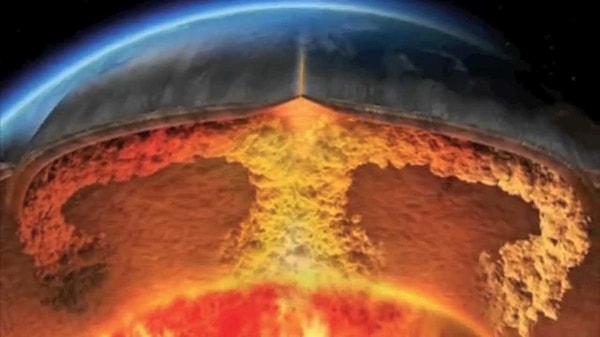
In its broadest sense, geology covers Earth's place in the solar system, its physical and chemical properties, the changes it has gone through since it formed and the evolution of the life on it.
Geologists helped establish that Earth is about 4.6 billion years old. They also showed that the lithosphere is broken into moving tectonic plates. Beyond theory, the field has a wide range of practical uses: geologists help locate and manage natural resources and metals, and they work closely with gemstones and minerals.
Where does the word come from?
The word 'geology' in its modern sense was first used in 1778 by Jean-André Deluc.
The roots of geology go back a very long way.
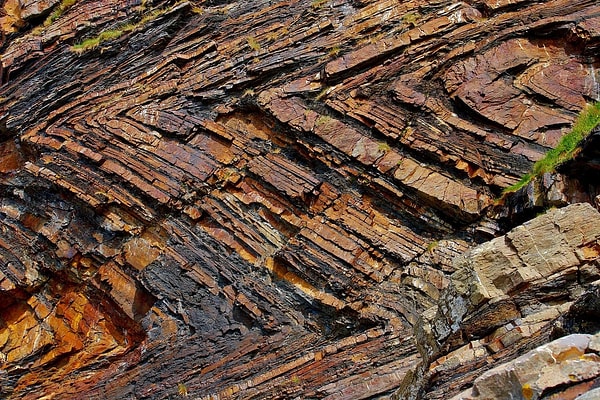
The Chinese scholar Shen Kuo observed animal shells on a mountain hundreds of kilometers from the ocean and used this to form hypotheses about how land is formed.
Another early landmark is On Stones by Theophrastus, a student of Aristotle, which remained an authority in its field for a very long time. In the centuries that followed, scholars in many countries studied geology, including the volcanic origins of their lands.
Geologists work to understand the planet's past so they can anticipate its future.
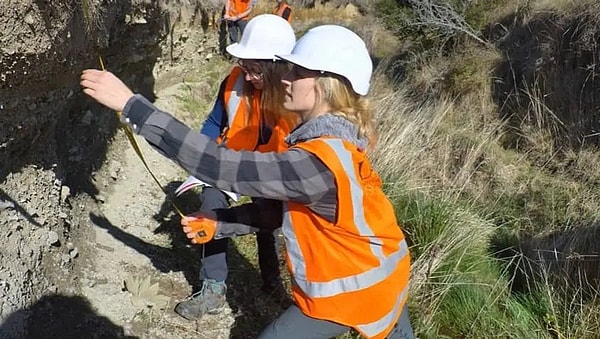
The better geologists understand Earth's history, the better they can predict how past events and processes might affect the future.
Natural hazards
Landslides, earthquakes, floods and volcanic eruptions can be dangerous for people. Geologists study these processes so that important structures are not built where they could be damaged. If they can map areas that flooded in the past, they can also map areas that may flood in the future. Such maps help guide how communities grow and show where flood protection or flood insurance is needed.
Earth's materials
People use Earth materials every day: oil from wells, metals from mines and water from rivers or underground. Geologists locate rocks that contain important metals, plan the mines that produce them and the methods used to extract the metals. They do similar work to find and produce oil, natural gas and groundwater.
Past climates
Many geologists study Earth's past climates and how they changed over time. This knowledge helps us understand how today's climate is changing and what the consequences might be.
Becoming a geologist
The minimum education is a four-year university degree in geology. Many geologists go on to earn master's or doctoral degrees in specialties such as paleontology, mineralogy, hydrology or volcanology. They work for natural resource companies, environmental consultancies, government agencies, nonprofits and universities, and many spend at least part of their time doing fieldwork.
Keşfet ile ziyaret ettiğin tüm kategorileri tek akışta gör!
 Test
 Gündem
 Magazin
 Video



Send Comment