


Fired Clay Fragments Found In Mardin Show People Tried Making Vessels About 11,000 Years Ago


Fired clay fragments about 11,000 years old, uncovered at Çemka Höyük in Mardin, south-eastern Turkey, show that people were trying to make vessels out of clay thousands of years before pottery became widespread. According to a study published in the journal Antiquity, the pieces were fired deliberately.


Researchers found 46 fired clay fragments in a layer dated to around 9350 BC.
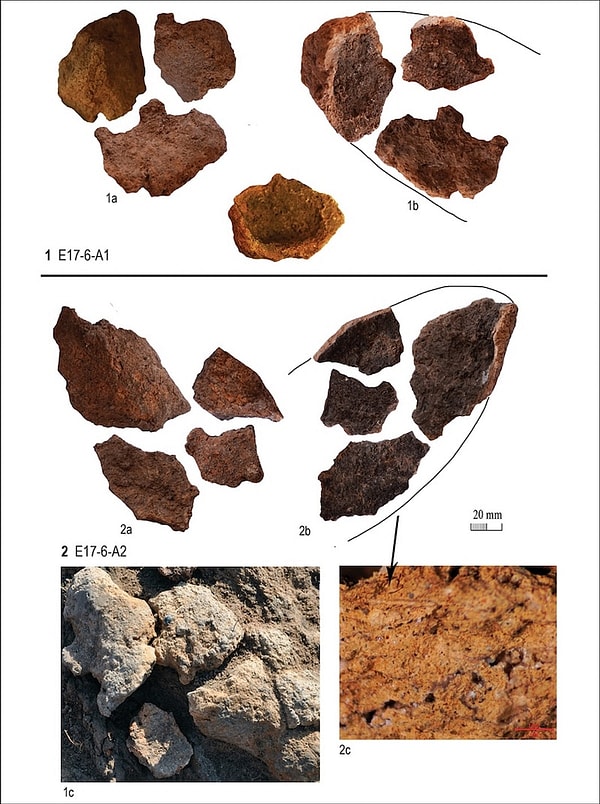
Çemka Höyük, in Mardin, was inhabited between roughly 10,800 and 8700 BC. Part of the mound was damaged by construction machinery during road building for the Ilısu Dam project, and rescue excavations were carried out at the site. The excavations identified eight separate building layers, running from round huts to pit houses and then to structures at ground level.
In the second building layer, dated to around 9350 BC, the researchers found a total of 46 fired clay fragments. The pieces are thought to belong to nine separate vessels, which places them among the earliest known fired clay vessels in Southwest Asia.
Image: Kodaş, E., Petrova, N., Daghmehchi, M., & Özbal, R. (2026)
Mineral analysis indicates the pieces were fired in a controlled fire at about 600 to 700 degrees, not by accident.
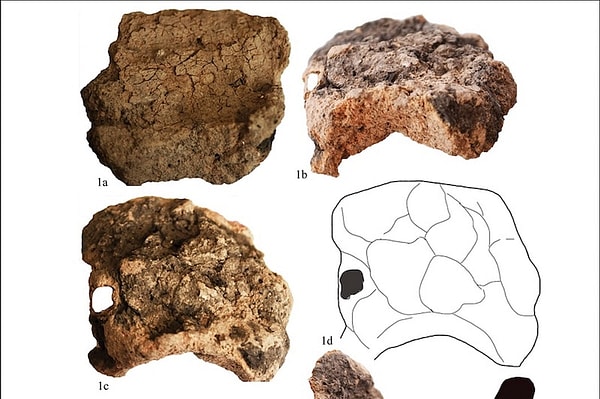
The team, made up of Rana Özbal of Koç University, Ergül Kodaş of Mardin Artuklu University, Maria Daghmehchi and Natalia Petrova, examined the fragments under the microscope and with X-ray diffraction analysis. Mineral changes in the clay show that the material went through an irreversible thermal transformation, which sets it apart from clay that was only dried.
The fragments reflect different approaches. Some were applied as a clay coating around oval objects made of organic material, and one may have been added to a stone vessel to increase its volume. The holes in that piece were probably made for a cord that tied down a lid. The remaining fragments belong to vessels built by joining clay slabs on top of one another. The paste of these vessels contains up to 30 percent crushed plant material, and animal dung was identified in two samples.
Image: Kodaş, E., Petrova, N., Daghmehchi, M., & Özbal, R. (2026)
A community that already plastered its walls with clay may have carried that knowledge over to vessels.
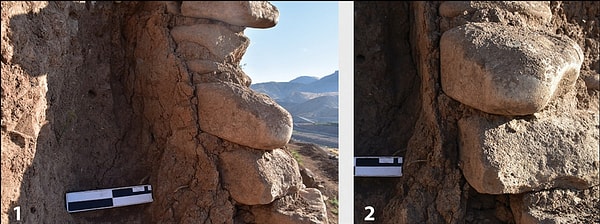
The inhabitants of Çemka Höyük coated stone walls with clay plaster and also used mudbrick. According to the researchers, this familiarity prepared the ground for discovering that clay could be used for other purposes.
Pottery became widespread in Southwest Asia only around 7000 BC. The findings suggest that pottery developed not in a single moment of invention but through a regional and gradual process. The finds from Çemka reflect an experimental phase rather than an established pottery tradition. Being able to produce a new material did not make it spread at once: the vessels also had to fit daily life and the preferences of the community.
Keşfet ile ziyaret ettiğin tüm kategorileri tek akışta gör!
 Test
 Gündem
 Magazin
 Video



Send Comment