


The Scientist Who Created an Artificial Living Cell from Scratch: Craig Venter


For the first time in human history, scientists managed to create an entirely synthetic genome and successfully inserted it into a living cell in 2010. This groundbreaking discovery signifies the birth of the field of synthetic biology, demonstrating our ability to rewrite the fundamental codes of life.
Source

Craig Venter's Historic Achievement: The First Synthetic Genome

In 2010, under the leadership of the J. Craig Venter Institute (JCVI) team, a groundbreaking study was carried out where the genome of the Mycoplasma mycoides bacterium was entirely synthesized in a laboratory setting and transferred into a living cell. This project signified the chemical production and transformation of a DNA sequence, consisting of 1.08 million base pairs, into a functional organism.
Following this achievement, Venter and his team set their sights on an even more ambitious goal: determining the minimum set of genes necessary for life. This research was of critical importance in terms of understanding the fundamental requirements of life.
JCVI-syn3.0: The World's Simplest Artificial Life Form
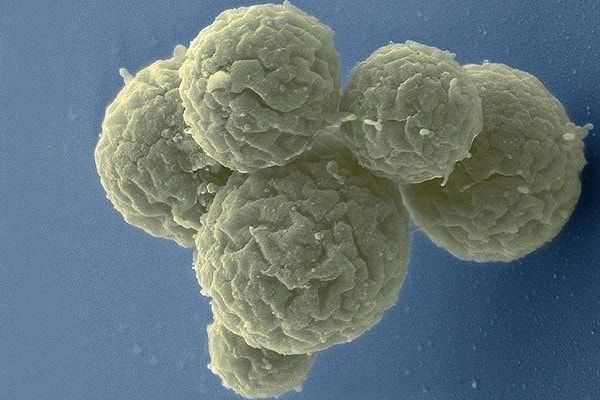
In 2016, the same team once again astounded the scientific community by creating a minimal cell called JCVIsyn3.0. This organism, able to exist with merely 473 genes, was the simplest known form of life on Earth. To put things into perspective, the E. coli bacteria possesses around 4,300 genes, while the human genome comprises between 20,000 and 25,000 genes.
During the construction of this minimal cell, the researchers made a startling discovery: the function of 149 out of the 473 genes remained unknown. This underscored the fact that the complexity of life is yet to be fully unraveled, and it highlighted the need for further research in the field of synthetic biology.
Practical Applications of Synthetic Biology
Revolutionizing Biofuel Production
Synthetic biology holds the potential to provide solutions to the energy crisis. Genetically modified microorganisms are capable of producing clean fuels such as bioethanol, biodiesel, and even hydrogen. Significant advancements in this field are being made by ExxonMobil's algae biofuels project and the efforts of Synthetic Genomics.
A New Era in Drug Production
The production of Artemisinin is one of the most notable examples of synthetic biology's success in medicine. Sanofi, a pharmaceutical company, managed to produce this malaria drug, derived from the Artemisia annua plant, using genetically modified yeast cells. This method not only reduced costs but also increased production capacity.
Biological Solutions for Environmental Cleanliness
Synthetic organisms are also utilized in cleaning up environmental pollution. Bacteria that break down oil spills, microorganisms that absorb heavy metals, and enzymes capable of processing plastic waste are among the significant applications in this area.
The BioBricks Standard and Drew Endy's Vision
Drew Endy from Stanford University has developed the BioBricks standard to democratize synthetic biology. This system standardizes genetic parts, enabling biological components produced by different laboratories to work compatibly with each other. According to Endy, 'Biology should evolve into engineering, and standardization is the key to this transformation.'
The BioBricks system, by creating genetic modules that interlock like LEGO blocks, has made it easier for researchers to design complex biological systems.
IGEM Competition: The Scientists of the Future
The annual competition organized by the International Genetically Engineered Machine (iGEM) Foundation pits university students from around the world against each other in synthetic biology projects. The competition, which started with just five teams in 2004, has now transformed into a global platform with over 300 participating teams.
Some of the most notable projects in the competition include bacteria that detect cancer cells, biosensors that measure environmental pollution, and microorganisms that enhance food safety.
Bioethical Concerns and Future Questions
The rapid development of synthetic biology brings with it serious ethical questions. The greatest concern is the potential for unforeseen consequences if artificial organisms are released into natural ecosystems.
Furthermore, there's concern among experts about the risk of this technology being misused for the development of biological weapons. The National Academy of Sciences emphasizes that synthetic biology research should be conducted under safety protocols.
Other significant ethical questions include whether artificial life can be patented, the inequity of access to this technology, and the philosophical dimensions of the concept of 'creating life'.
Keşfet ile ziyaret ettiğin tüm kategorileri tek akışta gör!
 Test
Test
 Gündem
 Magazin
 Video
Video



Send Comment