


Mold Isn’t Always the Enemy: Which Moldy Foods Are Healing, and Which Are Toxic?


Certain foods are intentionally produced through a process of molding, and under the right conditions, these foods can be quite beneficial for health. However, this does not mean that every moldy food is edible.
So, which moldy foods are safe to eat, and which are not?
Source: BBC

Mold is a microscopic fungus that develops on plant-based or animal-derived foods.
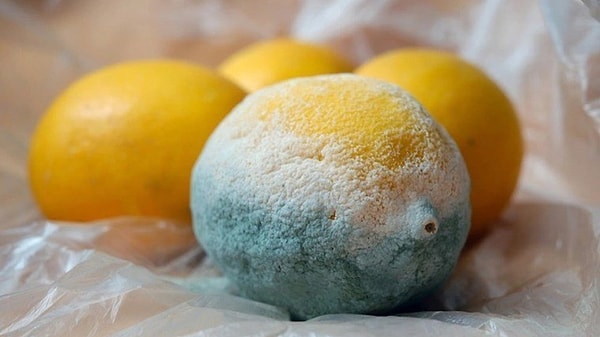
According to a report by the BBC, certain molds can cause allergic reactions and respiratory problems. Mycotoxin, on the other hand, is a naturally occurring toxin in food, produced by specific molds. It can lead to various issues, ranging from acute poisoning to immune deficiency. It is even known to have long-term effects, such as cancer.
Mold can be safely consumed in some foods. For instance, moldy cheese has been consumed in Anatolia for many years, and its benefits are widely discussed by experts. However, this doesn't imply that all moldy food can be eaten. The British Food Standards Agency (FSA) advises the following groups to refrain from consuming any food with mold:
Children
Elderly people
Pregnant women
Those with weakened immune systems
Is it safe to eat moldy bread?
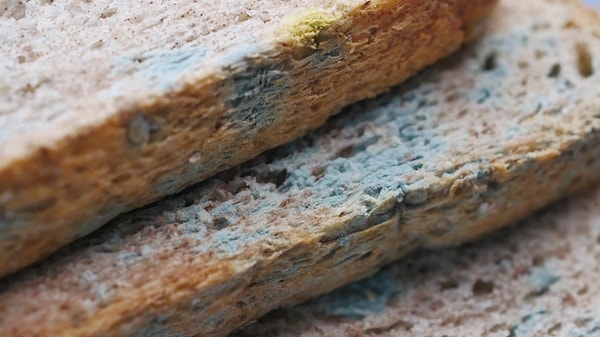
Bread might be one of the most commonly moldy foods in our homes. But can you eat moldy bread? Can you eat it after cutting off the moldy part? The answer to all these questions is a resounding no.
The FSA emphasizes that you shouldn't eat moldy bread. According to mold expert Dr. Patrick Hickey, 'As a general rule, if there is mold with a diameter of 1 cm, this mold has penetrated 1 cm deep into the food.'
Molds, with their thread-like branches and roots, can spread deep into your food, even if you can't see them. Furthermore, there may be invisible bacteria that multiply along with the mold in moldy foods. Therefore, cutting off the visible mold doesn't mean you've completely saved the food.
What about moldy cheeses, fruits, and vegetables?
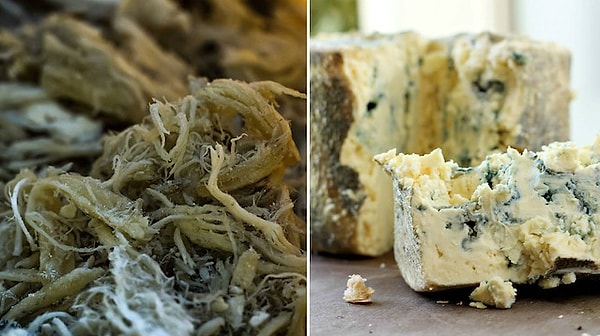
Cheddar and parmesan cheeses are notably resilient, as they do not provide the moist environment necessary for the emergence of mold.
Hickey advises, 'If you see molds smaller than 5 millimeters on hard cheeses, cut off at least 10 millimeters before eating.' However, there's a crucial point you need to be mindful of; never let your knife touch the moldy part. Otherwise, the mold will spread to the other parts of the cheese.
Now, let's talk about mold on fruits and vegetables.
Generally, hard fruits and vegetables with small spots of mold can be salvaged. However, if a slimy texture has formed on the fruit or vegetable, it should not be consumed. For hard vegetables (like cabbage), cut off at least 1 centimeter around the moldy area before eating. Moreover, fruits and vegetables like cucumbers, tomatoes, and peaches should be discarded as soon as mold is spotted.
Keşfet ile ziyaret ettiğin tüm kategorileri tek akışta gör!
 Test
Test
 Gündem
 Magazin
 Video
Video



Send Comment