


The 68-Million-Year-Old Giant Egg Found in Antarctica Remains a Mystery


This colossal fossil found in Antarctica has been intriguing the scientific community for years. With a history dating back 68 million years, this structure bears no resemblance to conventional dinosaur eggs. Its thin shell, gigantic size, and its connection to marine reptiles have sparked heated debates. The most astonishing aspect, however, is the acceptance that the group of creatures thought to have laid it were previously believed to reproduce by giving birth.

What they thought was a 68-million-year-old rock turned out to be the egg of a giant reptile.
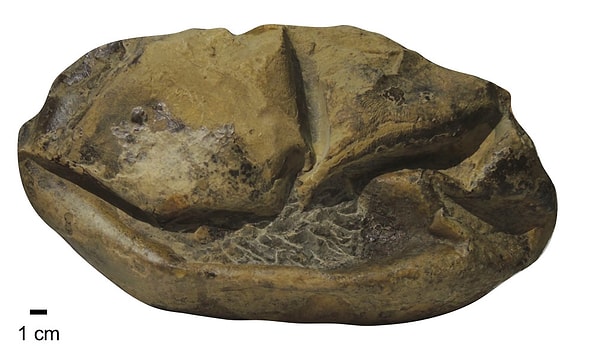
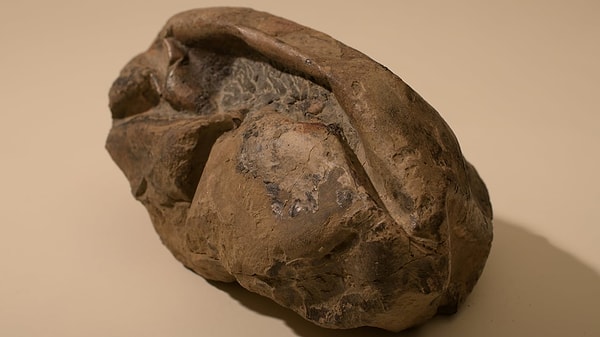
In 2011, a stone measuring 28 by 18 centimeters, discovered on Seymour Island, waited in a museum for a long time without its true nature being understood. It was presumed to be just another ordinary piece of the collection at the Chilean National Museum of Natural History. That was until 2018 when Professor Julia Clarke from the University of Texas suggested that the specimen could actually be an egg.
A scientific study published in 2020 formalized this discovery and the species was named Antarcticoolithus bradyi. Although slightly smaller in size than an ostrich egg, it is about one third larger in volume than any known egg from non-avian dinosaurs. In other words, we are dealing with one of the largest reptile eggs ever recorded in history.
Belonging to a creature not a dinosaur, but as large as one.
The initial guess was naturally directed towards dinosaurs. However, the shell structure does not match that of traditional dinosaur eggs. Instead of a thick layer of calcium, we're dealing with a thin and flexible structure. In fact, the fossil's tendency to fold inward rather than break suggests it possesses characteristics of a soft shell. Moreover, there are no noticeable pores on the shell.
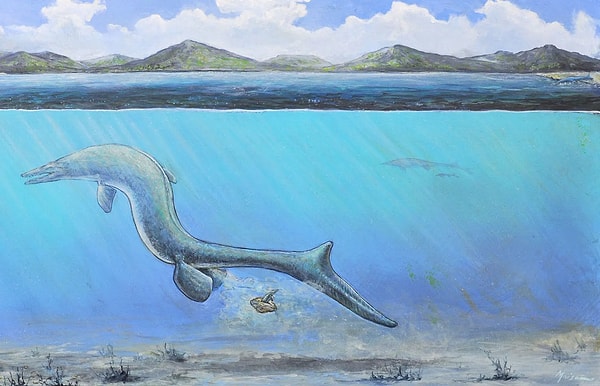
Researchers are leaning towards the idea that the most likely candidates are giant marine reptiles that could exceed 7 meters in length, particularly mosasaurs. What's intriguing is that mosasaurs were previously believed to give live birth. If this conjecture holds true, the reproductive strategies of marine reptiles will need to be rewritten.
Searching for fossils in Antarctica is a challenging process in and of itself.
The vast majority of the continent is buried beneath a thick layer of ice. Consequently, data pertaining to prehistoric life primarily originates from land masses like South Australia, which were once connected to Antarctica. Seymour Island, however, serves as one of the rare windows into the past.
Since the publication of the study on Antarcticoolithus bradyi, no robust alternative hypotheses have been put forward. Nevertheless, the discovery is frequently cited in debates over whether early dinosaur eggs had hard or soft shells. In other words, it's not just a single fossil, but it could potentially serve as a pivotal turning point in our understanding of prehistoric reproductive evolution.
Keşfet ile ziyaret ettiğin tüm kategorileri tek akışta gör!
 Test
Test
 Gündem
 Magazin
 Video
Video



Send Comment