


How the $200M Biosphere 2 Artificial World Turned into a Nightmare


Initiated in the heart of the Arizona desert in 1991, the 'Biosphere 2' project, resembling a futuristic space colony, has gone down in history as one of the most expensive and dramatic failures of humanity's attempt to mimic nature. In this glass sphere, where eight people lived completely isolated from the outside world for two years, the mysterious disappearance of breathable oxygen brought the experiment to an abrupt end.

On September 26, 1991, a crew of eight, comprising four men and four women, voluntarily confined themselves inside a colossal glass and steel structure spanning three acres, located near the town of Oracle, Arizona.
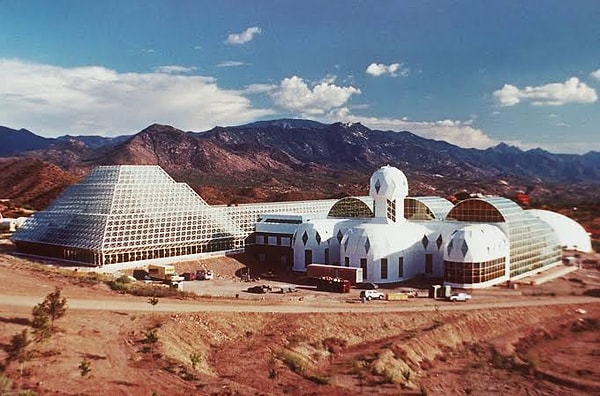
This project, dubbed Biosphere 2, was designed to be a flawless miniature of our planet Earth, which they referred to as 'Biosphere 1', complete with a rainforest, ocean, coral reef, savannah, desert, and farmland.
Funded by billionaire finances and costing a whopping 200 million dollars, the project had two primary objectives: to experimentally study the behaviors of closed ecosystems and to develop a life-support system for future space colonies. However, the best-laid plans often go awry, and this was no exception with the glass house in the middle of the desert.
Shortly after the commencement of the experiment, the level of oxygen, which was at 21% within the atmosphere, began to plummet rapidly and persistently.
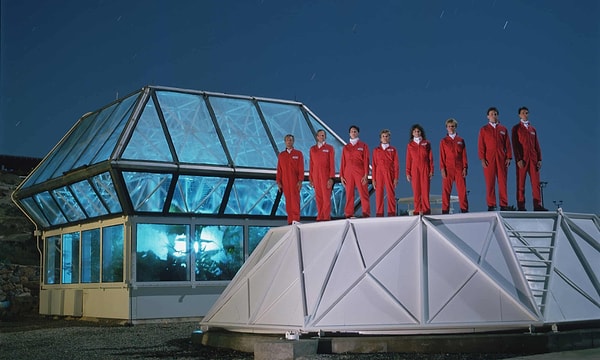
The oxygen level had dwindled down to 14%. This was equivalent to living atop a mountain approximately 4000 meters high. The crew began to experience severe fatigue and shortness of breath.
However, the most intriguing and mysterious aspect was this: The diminishing oxygen should have normally converted into carbon dioxide (CO2) under standard conditions, yet the anticipated rise in the level of carbon dioxide inside was not observed. The oxygen hadn't leaked or escaped into space; it had seemingly 'evaporated' and disappeared within the glass structure.
Crew Member Mark Nelson Recalls Those Days as Follows:
'The oxygen slowly disappeared over a span of 16 months, and we just couldn't figure out where it had gone. Physically, it was a complete nightmare.'
Investigations conducted by scientists have revealed a crucial detail that has been overlooked in the process of emulating nature.
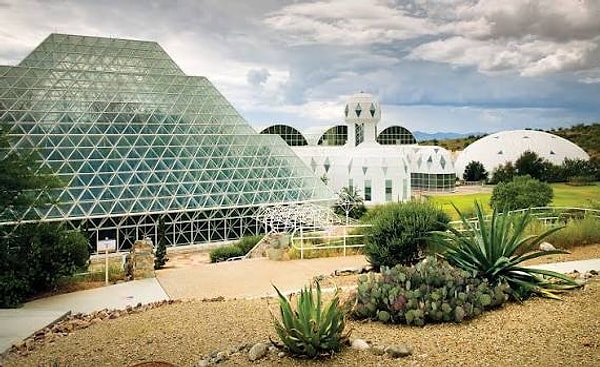
The eradication of oxygen was the result of two interrelated covert influences:
Overly Rich Soil: The soil in agricultural areas had been excessively enriched with organic matter to boost productivity. This situation led to the proliferation of billions of microbes. These microbes consumed oxygen and produced carbon dioxide at a rate far exceeding the oxygen that plants could generate through photosynthesis.
Concrete Walls: The massive amount of carbon dioxide produced didn't diffuse into the air. Tons of concrete used in the construction of the structure, which hadn't fully cured (dried), silently absorbed the carbon dioxide, trapping it within as calcium carbonate.
So, oxygen didn't disappear; it was converted into carbon dioxide by microbes and then swallowed up by concrete walls.
When the oxygen level perilously approached the life-threatening threshold, it became imperative to pump oxygen in from the outside.
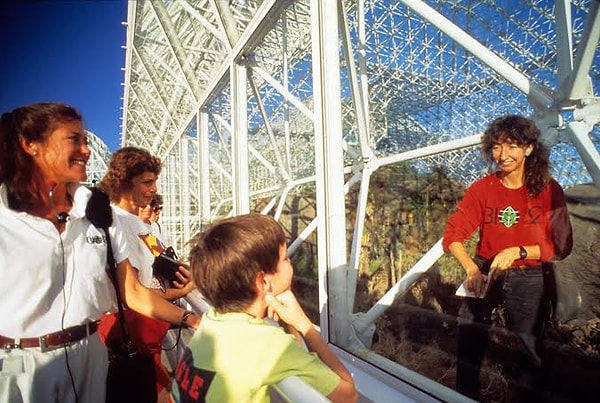
This intervention completely shattered the project's claim to be a 'self-sufficient closed system.'
During that period, the project was harshly criticized by traditional scientific communities. The work conducted by the team led by John Allen was accused of resembling a 'media show' rather than a controlled scientific experiment. Indeed, as the process dragged on, personal disputes and psychological warfare among the crew overshadowed the science being conducted.
The initial team completed their two-year mission and left the structure on September 26, 1993. The second mission, which began in 1994, lasted only six months due to administrative crises.
Today, Biosphere 2 is no longer a space colony simulation. The facility is operated by the University of Arizona and serves as a global research center for controlled environmental and earth science experiments, without enclosing humans within.
Keşfet ile ziyaret ettiğin tüm kategorileri tek akışta gör!
 Test
Test
 Gündem
 Magazin
 Video
Video



Send Comment