


Harbor Pilots Boarding Giant Moving Ships via Rope Ladders Leave Viewers Breathless


Most of the world’s trade travels by sea. As enormous cargo ships approach port, local pilots who know those waters better than anyone take the helm. Making the transfer while a ship is still underway is one of the most dangerous moments in maritime work. What’s more, these transfers take place every day of the year, whatever the weather or sea conditions.
Footage has been brought together showing pilots climbing from their pilot boats onto towering ships via rope ladders slung down their hulls. With one slip capable of having irreversible consequences, these tense transfers left viewers holding their breath.


You can watch it here;
So why do marine pilots board ships using a pilot ladder? Why aren’t they on board from the very start of the voyage?
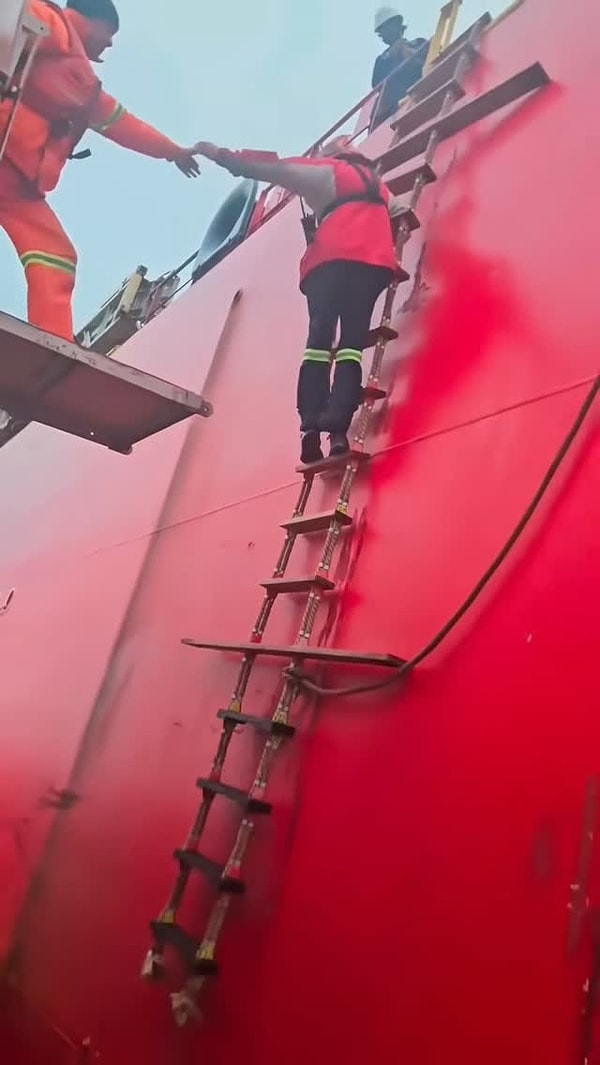
A marine pilot is on board for only a short part of the voyage. In open waters, the ship’s master is in command. The pilot steps in only when the vessel enters a port or navigates narrow waters such as straits and canals, where their knowledge of local currents and depths is second to none. When a ship leaves port, the pilot boards at the quay, guides it out to open water, then climbs down the same ladder into the pilot boat.
A huge cargo ship approaching a port or narrow channel can’t simply stop and wait. Instead, the pilot boat pulls alongside, and the pilot climbs aboard while the ship is still moving. The rope ladders used for this transfer must meet specific requirements under the International Convention for the Safety of Life at Sea. Each step must be at least 40 centimeters long, 11.5 centimeters wide, and 2.5 centimeters thick. The steps must be evenly spaced between 31 and 35 centimeters apart, and the ladder must be supported on both sides by ropes at least 18 millimeters thick.
A rope ladder can be used to climb a maximum of 9 meters. If the ship’s deck is higher above the water than that, an accommodation ladder is used alongside the rope ladder, as shown in the footage. Ships generally slow down during the transfer and use their hulls to break the waves, creating a sheltered side. Even when everything is set up according to the rules, waves, wind, and cold water make the climb challenging, so pilots tackle it with great care every time.
Keşfet ile ziyaret ettiğin tüm kategorileri tek akışta gör!
 Test
Test
 Gündem
 Magazin
 Video
Video



Send Comment