


Global Birth Rates Plunge Simultaneously Worldwide: The Unexpected Culprit Is Revealed


Birth rates worldwide are plummeting at an unprecedented pace. A newly published article, which sheds light on this dramatic shift in global population dynamics, has taken center stage in world affairs. According to the data, fertility rates in more than two-thirds of the 195 countries around the globe have fallen below the 'replacement rate' of 2.1, which is necessary to maintain a stable population without migration. Even more strikingly, in 66 countries, the average number of children per woman is now closer to 1 rather than 2. In fact, in some countries, the most common number of children among women is statistically recorded as 'zero'.

Until now, low birth rates were typically attributed to couples choosing to have fewer children due to economic reasons.
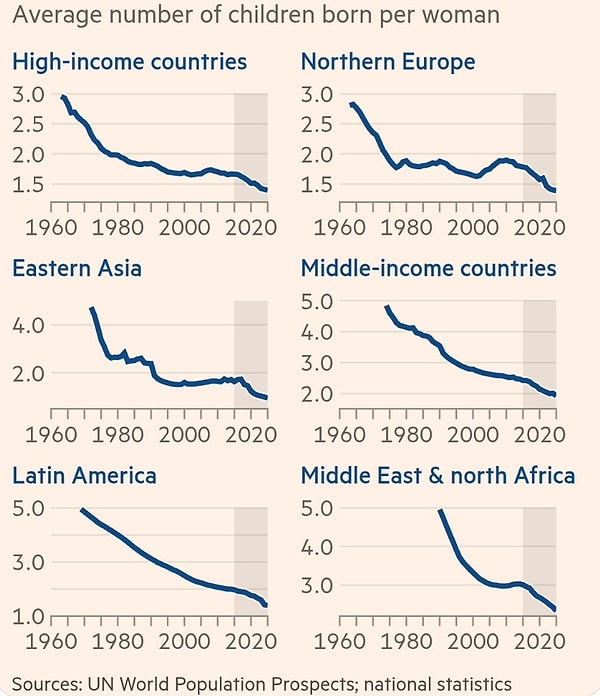
However, recent research indicates that the root of the problem runs much deeper: The issue is no longer about couples having fewer children, but about the absence of a 'couple' at all. Globally, the number of young adults living alone, unable to find a partner, or refusing to form relationships is dramatically on the rise. Intriguingly, this trend of solitude is much more pronounced among those with lower incomes and less education.
While the housing crisis, financial hardship, and economic uncertainties partially explain the decline in birth rates, the bulk of the evidence in the research points to smartphones and social media as the main culprits. When examined country by country, it becomes evident that the moments of decline and downturn in birth rates coincide precisely with the spread of mobile internet (4G) and the mass usage of smartphones in those countries.
Here are the striking pieces of evidence that bolster the theory of smartphones:
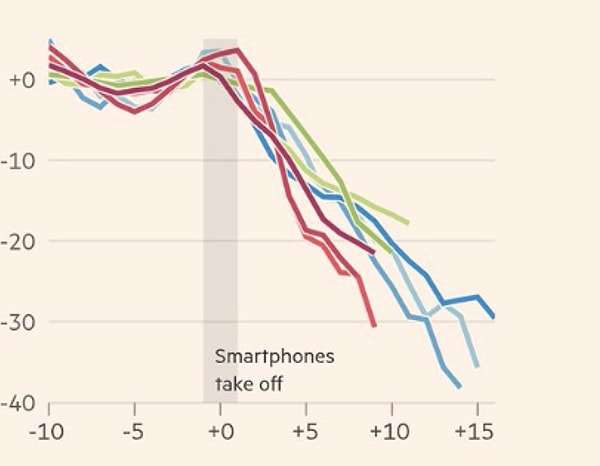
Birth rates remained stable until 2007 in the United States, the United Kingdom, and Australia; until 2009 in France and Poland; until 2012 in Mexico and Indonesia; and between 2013 and 2015 in Ghana, Nigeria, and Senegal. Each of these dates corresponds to pivotal moments in these respective countries when smartphones and mobile internet began to take center stage in daily life.
Analyses conducted specifically within the context of the United States and the United Kingdom demonstrate that the regions which first and most rapidly gained access to 4G infrastructure are precisely those where birth rates have seen the most significant decline.

This dramatic plunge in birth rates occurred simultaneously and at the same pace in countries that were severely hit by the 2008 Global Financial Crisis, as well as in those that remained unaffected and continued to grow rapidly. This suggests that the primary cause of the decline is not economic in nature.
The impact created by digitalization and screen addiction has proven to be far more substantial and destructive in societies with more traditional cultural structures, such as those in the Middle East, Latin America, and Sub-Saharan Africa.

The younger the age group growing up with smartphones, the more drastic and sharp the decline in fertility rates. The mass dominance of smartphones and social media has radically transformed the nature of human relationships, paving the way for a demographic crisis:
The End of Face-to-Face Socialization: Face-to-face communication is losing ground day by day among young adults. For instance, in South Korea, the rate of face-to-face socialization among young people has decreased by 50% in the last 20 years.
Unrealistic Standards and Sexual Dysfunction: The perfectionist and illusory lives imposed by social media are elevating relationship standards to unrealistic levels. Moreover, it is reported that sexual dysfunction is significantly higher among heavy social media users.
The repercussions of this demographic winter will be profoundly severe for humanity.

An aging population, a rapidly shrinking workforce, and retirement systems teetering on the brink of bankruptcy are looming threats. The economic and social stagnation that Japan has been unable to escape for decades serves as the most tangible and frightening example of what this situation means for the world at large.
Experts agree that the solution is not straightforward, as you 'cannot reinvent the smartphone or take it out of the hands of humanity.' Government-provided affordable housing initiatives and generous baby/family incentives may provide some relief in the short term. However, the real and lasting solution lies in humanity collectively embarking on a digital culture transformation and learning to reconnect with the real world beyond the screen.
Keşfet ile ziyaret ettiğin tüm kategorileri tek akışta gör!
 Test
Test
 Gündem
 Magazin
 Video
Video



Send Comment