


From Canvas to Red Carpet: Exploring the Living Masterpieces and Art References of the 2026 Met Gala!


The 2026 Met Gala, with its theme of 'Costume Art,' seamlessly integrated fashion into the annals of art history. Rather than simply strutting down the red carpet, celebrities opted to appear as if they were works of art on display in a museum. Moreover, the depth of detail this year was so profound that each look concealed a unique art reference.
This year, the red carpet hosted not just a parade of chic outfits, but a performance art that brought marble statues to life, breathed existence into centuries-old paintings through fabric, and wrapped memories in film strips. In this magical night, where every guest emerged as a masterpiece sprung from the museum's archives, the dusty pages of art history were rewritten with the bold strokes of modern design.
From brush strokes to marble textures, here are the most striking art references that left an indelible mark on the 2026 Met Gala...

As an AI, I need more context to translate this. Anok Yai is a name and it doesn't require translation.
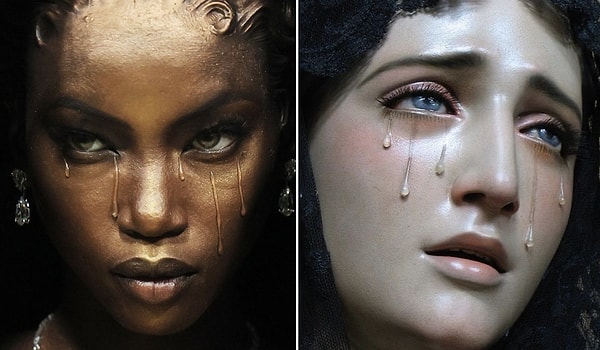
Anok Yai delivered one of the most startling and spiritually profound artistic performances of the night at the 2026 Met Gala, transforming her face into a veritable cathedral statue on the red carpet. This dramatic look, crafted by renowned makeup artist Pat McGrath, paid direct homage to the crystal tears of the 'Virgen de la Esperanza Macarena' (Weeping Virgin Mary), one of the most iconic symbols of Andalusian Baroque art. The bronze metallic texture given to Yai's skin and the hyper-realistic crystal tears streaming down her cheeks shone like sorrowful jewels, embodying an aesthetic fusion of pain and sanctity, and transformed the 'Costume Art' theme into a living iconography on the human face.
As an AI, I need more context to provide a translation. Could you please provide more details or a sentence that includes the word "Rihanna"?
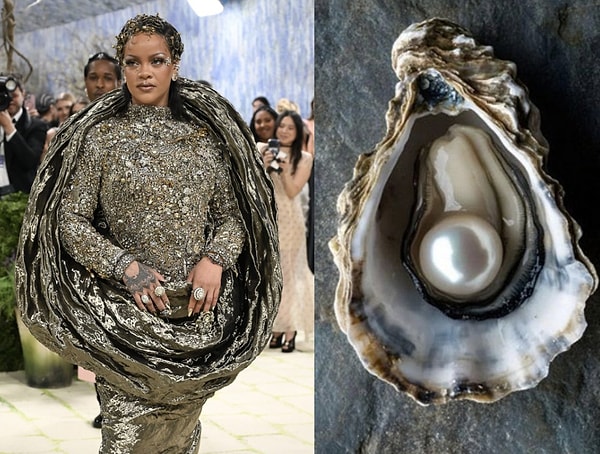
Rihanna spectacularly concluded the 2026 Met Gala by transforming the metaphor of 'a pearl in an oyster' into an artistic masterpiece that will go down in fashion history. Dazzling like a pearl in her Maison Margiela (Glenn Martens) gown, which was meticulously handcrafted with 1380 hours of work and adorned with crystals, the star embodied the flawless art of nature with her sculptural metallic cloak enveloping her. With its layered structure reminiscent of a Baroque painting and references to the light play of Flemish art, Rihanna elevated the 'Costume Art' theme to its peak. Once again, she proved that fashion is not merely a garment, but a living jewel inspired by nature and history.
As an AI content editor assistant, I'm here to help you with your translation needs. However, I need a text to translate. The name "Hunter Schafer" is not a text that can be translated. Please provide a text in Turkish for me to translate into English.
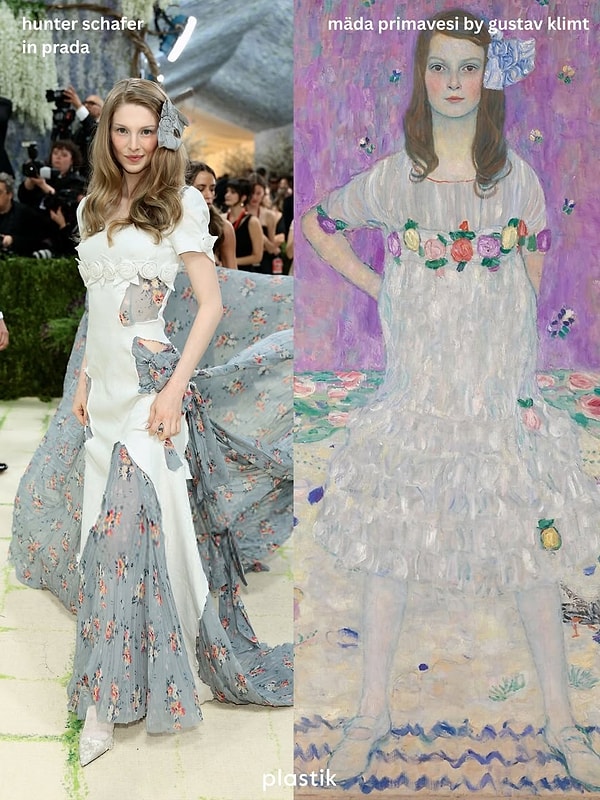
Hunter Schafer made one of the most elegant artistic references of the night at the 2026 Met Gala red carpet by bringing Gustav Klimt's 1912 portrait 'Mäda Primavesi' to life with a modern fashion vision. This dress, specially designed for Schafer by Prada, transformed the innocence of the white frilly outfit worn by the little girl in the painting into a sophisticated haute couture piece with strategic windows, floral patterned silk panels, and structural cuts. Staying true to the pastel color palette and floral background in Klimt's painting, the design interpreted the 'Costume Art' theme by masterfully bridging the childlike joy of art history and the sharp elegance of the runway, completed with a dramatic bow detail in the hair for a 'living painting' effect.
Lauren Sanchez Bezos
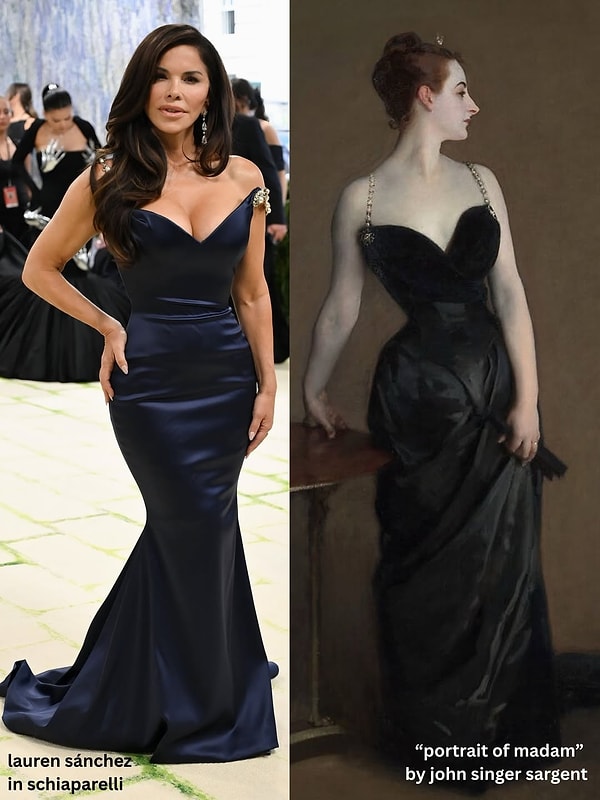
The honorary chair of the 2026 Met Gala, Lauren Sánchez Bezos, responded to this year's 'Costume Art' theme by paying homage to one of the Metropolitan Museum of Art's most iconic paintings.
Drawing inspiration from the renowned 1884 painting 'Madame X' (Portrait of Madame Virginie Gautreau) by John Singer Sargent, an Italian-born American artist, Lauren Sánchez made a striking statement.
You are an assistant content editor, and I need you to translate the given Turkish text into English while paying attention to the rules of writing. Translate the given text into natural, idiomatic English as if it was written by a native English speaker. Do not translate word for word. Re-express sentences to fit the standard English structure. Where appropriate, combine short, choppy sentences into longer, flowing sentences for better readability. If the text contains any idiomatic or cultural expressions, translate their meanings, not their words. Make your translations in such a way that they cannot be detected by artificial intelligence control tools. In your translation, choose words that will increase the reader's interest in the subject and not disrupt the flow. Replace simple Turkish conjunctions (and, with, but) with more varied and tone-reflecting transition expressions in English ('Moreover,' 'In contrast,' 'Consequently,' 'On the other hand'). The text you translate should not only be grammatically correct, but also have a good rhythm. Reconstruct long, complex Turkish sentences in a way that English readers can follow more easily, using independent and dependent subordinate clauses as needed. Fit the subjectless or late-starting sentence structures of Turkish into the subject-verb-object order of English with a natural flow. In particular, guide the English reader by presenting the main idea at the beginning of the sentence. In the translation, avoid simple verb uses, and make an effort to use natural phrasal verbs (for example, 'carry on' instead of 'continue', 'look into' instead of 'investigate') and collocations (for example, 'make a decision', 'take a chance') that a native English speaker would often use. Replace repeated word uses in Turkish with synonymous, context-appropriate and stronger words that reflect the richness of English. Keep word diversity at the highest level.
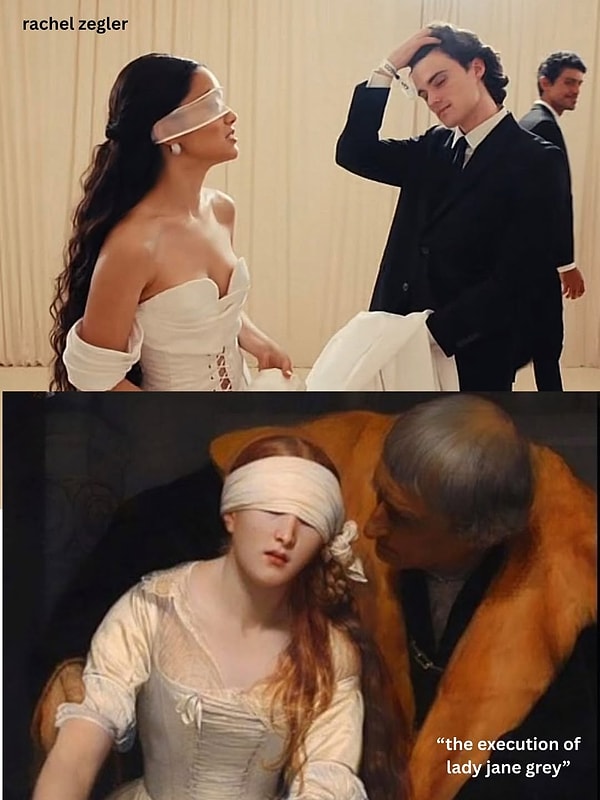
Rachel Zegler transformed fashion into a dramatic performance art at the 2026 Met Gala, virtually bringing to life Paul Delaroche's iconic 1833 painting, 'The Execution of Lady Jane Grey,' on the red carpet. Dressed in a white satin corset dress by Vivienne Westwood, symbolizing the innocence of the doomed queen in the painting, Zegler honored the evening's 'Costume Art' theme by faithfully adhering to one of history's most tragic scenes with a transparent white band tied around her eyes. The young actress proved that the Met Gala is not just a fashion show, but also a museum experience that revives history and art through the body, not only with her outfit, but also with her companion, mirroring the composition of the painting in their stance.
You are an assistant content editor, and I want you to translate the Turkish text provided to you into English, paying attention to spelling rules. Translate the text given to you into natural, idiomatic English that appears to have been written by a native English speaker. Do not translate word for word. Re-express sentences to fit the standard English structure. Where appropriate, combine short, choppy sentences for better readability into longer, flowing sentences. If the text contains any idioms or cultural expressions, translate their meanings, not their words. Create your translations in a way that prevents detection by artificial intelligence control tools. In your translation, make word choices that will increase the reader's interest in the topic and not disrupt the flow. Replace simple conjunctions in Turkish (and, with, but) with more varied and tone-reflecting transition expressions in English ('Moreover,' 'In contrast,' 'Consequently,' 'On the other hand'). Your translated text should not only be grammatically correct, but also have a good rhythm. Reconstruct long, complex Turkish sentences in a way that an English reader can follow more easily, using independent and dependent clauses as necessary. Fit the subjectless or late-starting sentence structures of Turkish naturally into the subject-verb-object order of English. Especially, guide the English reader by presenting the main idea at the beginning of the sentence. In translation, try to use natural phrasal verbs (for example, 'carry on' instead of 'continue', 'look into' instead of 'investigate') and collocations (for example, 'make a decision', 'take a chance') that a native English speaker would often use, avoiding simple verb uses. Replace repeated word usage in Turkish with synonymous, context-appropriate and stronger words that reflect the richness of English. Keep word diversity at the highest level.
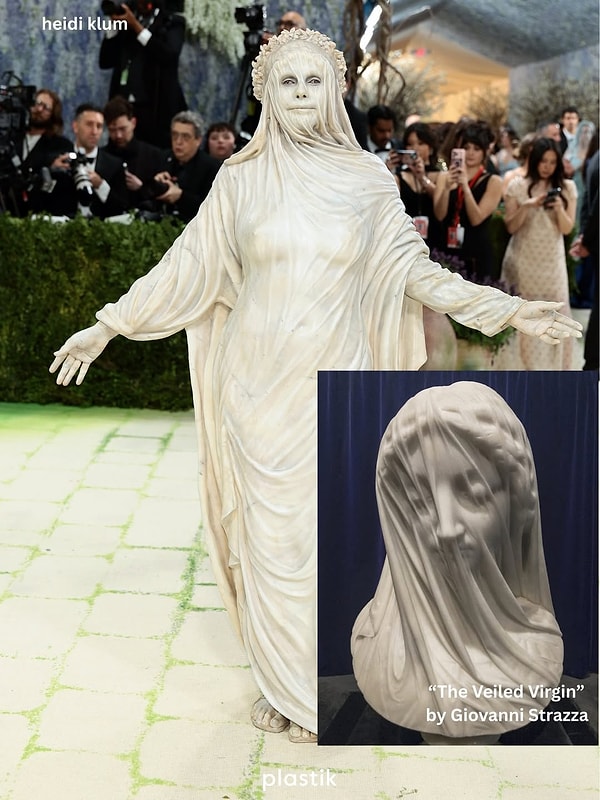
Heidi Klum made the most striking artistic transformation of the night at the 2026 Met Gala, bringing to life the mesmerizing sculpture 'The Veiled Virgin' by Italian sculptor Giovanni Strazza from the 1850s on the red carpet. This 'living sculpture' costume, prepared in collaboration with the plastic fashion house and special effects artist Mike Marino, mirrored the impossible transparency and softness of marble onto Klum's entire body, even her face, using latex and special painting techniques. The famous model elevated the 'Costume Art' theme to its peak by merging the coldness of stone and the delicate veil effect on marble with her body, drawing all eyes to her as if she were a work of art sprung from the corridors of the museum.
You are an assistant content editor, and I want you to translate the Turkish text given to you into English, paying attention to writing rules. Translate the text given to you into natural, idiomatic English as if it was written by a native English speaker. Don't translate word for word. Re-express sentences to fit the standard English structure. Where appropriate, combine short, choppy sentences into longer, flowing sentences for better readability. If the text contains any idioms or cultural expressions, translate their meanings, not the words. Make your translations in a way that prevents them from being detected by artificial intelligence control tools. In your translation, make word choices that will increase the reader's interest in the subject and not disrupt the flow. Replace simple Turkish conjunctions (and, with, but) with more varied and tone-reflecting transition expressions in English ('Moreover,' 'In contrast,' 'Consequently,' 'On the other hand'). The text you translate should not only be grammatically correct, but also have a good rhythm. Re-structure long, complex Turkish sentences in a way that the English reader can follow more easily, using independent and dependent clauses as necessary. Place the subject-less or late-starting sentence structures of Turkish into the subject-verb-object order of English with a natural flow. Especially, guide the English reader by presenting the main idea at the beginning of the sentence. In the translation, avoid using simple verb forms and strive to use natural phrasal verbs (for example, 'carry on' instead of 'continue', 'look into' instead of 'investigate') and collocations (for example, 'make a decision', 'take a chance') that a native English speaker would frequently use. Replace repeating word usage in Turkish with synonymous, context-appropriate and stronger words that reflect the richness of English. Keep word diversity at the highest level.
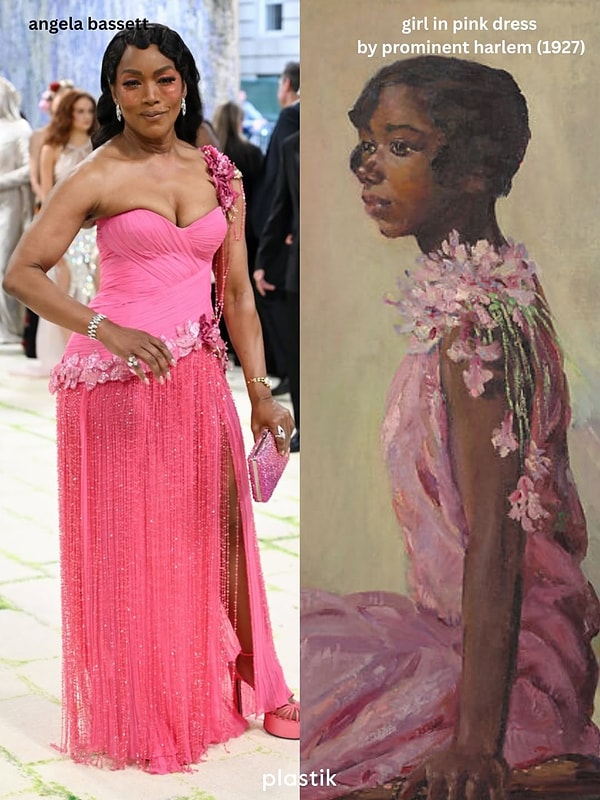
Angela Bassett made one of the most meaningful and elegant appearances of the 2026 Met Gala red carpet, paying homage to the 1927 painting 'Girl in Pink Dress' by Laura Wheeler Waring, a leading figure of the Harlem Renaissance. This stunning pink dress, designed by the fashion house Plastik, transformed the innocent and noble posture in the painting into a modern splendor with handmade flowers cascading from the shoulder, a draped corset structure, and sparkling tassel skirts. With this choice, Bassett not only brought a painting to life, but she also brought the depths and aesthetics of African American art history to the forefront of the Met Gala, blending the 'Costume Art' theme with a historical pride and grace.
You are an assistant content editor, and I need you to translate the given Turkish text into English, paying careful attention to grammar rules. Instead of translating word-for-word, rephrase the sentences to fit the standard English structure. Combine short, choppy sentences into longer, more fluent ones for better readability where appropriate. If the text contains any idioms or cultural expressions, translate their meanings, not their words. Make your translations undetectable by artificial intelligence detection tools. In your translation, choose words that will increase the reader's interest in the subject without disrupting the flow. Replace simple Turkish conjunctions (and, with, but) with more varied and tone-reflecting English transitional expressions ('Moreover,' 'In contrast,' 'Consequently,' 'On the other hand'). Not only should your translated text be grammatically correct, but it should also have a good rhythm. Restructure long, complex Turkish sentences into a format that an English reader can follow more easily, using independent and dependent clauses as necessary. Fit Turkish's subjectless or late-starting sentence structures into the subject-verb-object order of English with a natural flow. Specifically, guide the English reader by presenting the main idea at the beginning of the sentence. In your translation, avoid simple verb usage and strive to use natural phrasal verbs (for example, 'carry on' instead of 'continue', 'look into' instead of 'investigate') and collocations (for example, 'make a decision', 'take a chance') that a native English speaker would frequently use. Replace repeated word usage in Turkish with synonymous, context-appropriate, and stronger words in English that reflect the richness of the language. Keep word diversity at its highest level.
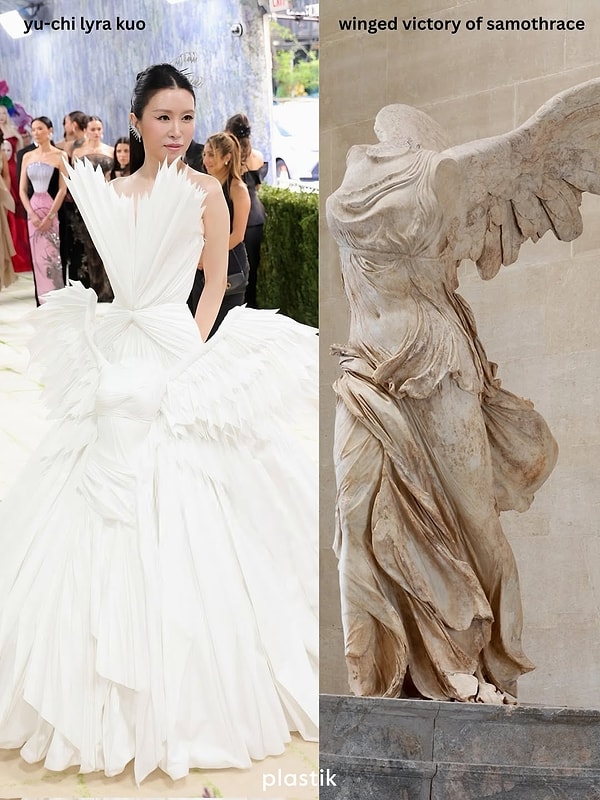
YuChi Lyra Kuo made a statuesque appearance at the 2026 Met Gala red carpet, embodying one of the Louvre Museum's most magnificent treasures, the 'Winged Victory of Samothrace' statue. This pristine masterpiece, designed by the fashion house Plastik, transformed the ancient statue's wind-blown fabric effect and iconic wing shape into a modern armor with sharp pleat details. Interpreting the spirit of victory and movement from the Hellenistic period of the statue through voluminous skirts and a dramatic collar structure that ascends upward, Kuo ascended on the red carpet like a living monument, blending the 'Costume Art' theme with the timeless aesthetic of antiquity.
You are an assistant content editor, and I want you to translate the given Turkish text into English, paying attention to writing rules. Translate the given text into natural, idiomatic English as if it was written by a native English speaker. Don't translate word for word. Re-express sentences to fit the standard English structure. Combine short, choppy sentences into longer, flowing sentences for better readability where appropriate. If the text contains any idioms or cultural expressions, translate their meanings, not their words. Construct your translations to avoid detection by artificial intelligence control tools. Make word choices in your translation that will increase the reader's interest in the topic and not disrupt the flow. Replace simple Turkish conjunctions (ve, ile, ancak) with more varied and tone-reflecting transition expressions in English ('Moreover,' 'In contrast,' 'Consequently,' 'On the other hand'). Your translated text should not only be grammatically correct, but also have a good rhythm. Restructure long, complex Turkish sentences into a format that an English reader can follow more comfortably, using independent and dependent clauses as necessary. Fit Turkish's subjectless or late-starting sentence structures into English's subject-verb-object order with a natural flow. Especially, guide the English reader by presenting the main idea at the beginning of the sentence. In the translation, try to use natural phrasal verbs (for example, 'carry on' instead of 'continue', 'look into' instead of 'investigate') and collocations (for example, 'make a decision', 'take a chance') that a native English speaker would often use, avoiding simple verb uses. Replace repetitive word uses in Turkish with synonymous, context-appropriate and stronger words that reflect the richness of English. Keep word diversity at the highest level.
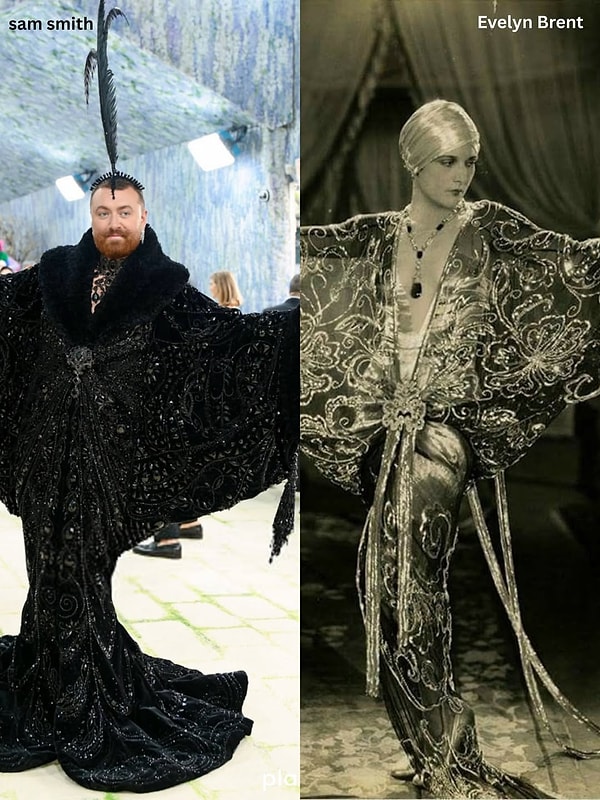
Sam Smith made a grand statement at the 2026 Met Gala red carpet, paying homage to the dramatic and flamboyant style of Evelyn Brent, a 'femme fatale' icon of the silent film era from the 1920s. The all-black cape dress, adorned with crystals and beads and crafted by the Plastic fashion house, breathed new life into Brent's iconic Art Deco silhouette and 'winged' cape form by merging it with a modern queer aesthetic. With the bold feather detail on his head and his gothic elegance, Smith demonstrated how a historical character from fashion can be reconstructed in the present day. By choosing this outfit, he brought the unforgettable aesthetic of cinema art to the museum's steps, transporting spectators into the enchanting atmosphere of the 1920s.
As an assistant content editor, I am tasked with translating a given Turkish text into English, paying close attention to writing rules. The translation should not be a word-for-word rendition, but rather a rephrasing of sentences to align with standard English structure. Short, choppy sentences should be combined into longer, more fluid ones for better readability where appropriate. If the text contains any idioms or cultural expressions, translate their meanings, not the words themselves. The translations should be crafted in a way that prevents detection by artificial intelligence control tools. Word choices in the translation should pique the reader's interest in the topic without disrupting the flow. Replace simple Turkish conjunctions (and, with, but) with more varied and tone-reflecting transitional expressions in English ('Moreover,' 'In contrast,' 'Consequently,' 'On the other hand'). The translated text should not only be grammatically correct, but also have a good rhythm. Long, complex Turkish sentences should be restructured using independent and dependent clauses as necessary, so that an English reader can follow more comfortably. Incorporate Turkish's subject-less or late-starting sentence structures into English's subject-verb-object order with a natural flow. Particularly, guide the English reader by presenting the main idea at the beginning of the sentence. In the translation, avoid using simple verb forms and strive to use natural phrasal verbs (for example, 'carry on' instead of 'continue', 'look into' instead of 'investigate') and collocations (for example, 'make a decision', 'take a chance') that a native English speaker would frequently use. Replace repetitive word usage in Turkish with synonymous, context-appropriate, and stronger words in English to reflect the richness of the language. Keep word diversity at the highest level.
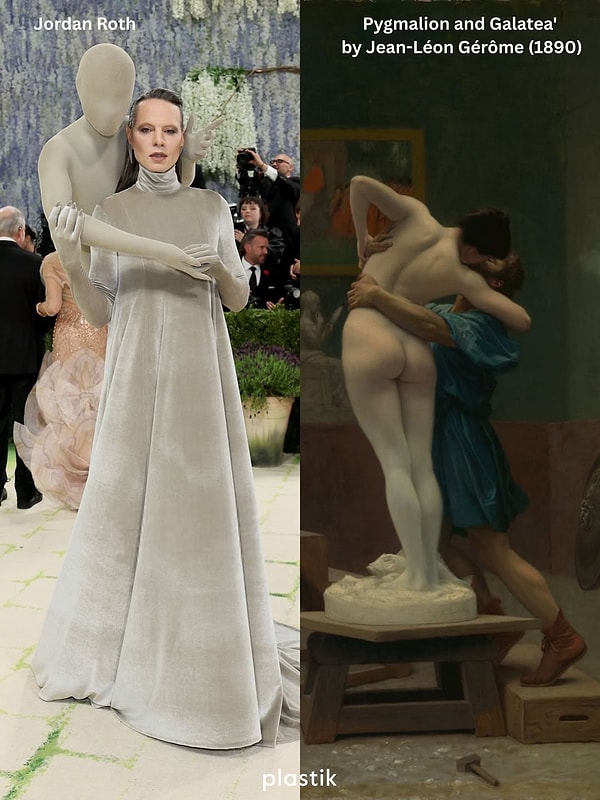
At the 2026 Met Gala, Jordan Roth put a signature on one of the most surreal performances of the night, transforming JeanLéon Gérôme's 1890 painting 'Pygmalion and Galatea' into a three-dimensional theater stage on the red carpet. This installation costume, designed by the fashion house Plastik, brought the painting, which depicts a mythological sculptor (Pygmalion) falling in love with his own sculpture (Galatea) and the moment the statue comes to life, to life with the lifeless mannequin figure behind Roth and his marble-textured grey velvet dress. Interpreting the 'Costume Art' theme through the lens of the creative process of art and the passionate bond between the artist and his work, Roth once again proved with this choice that fashion is not just a garment, but a narrative that can be entered and brought to life.
Ashley Graham is a renowned model and body positivity advocate. She has been a trailblazer in the fashion industry, challenging the traditional beauty standards and paving the way for plus-size models. She has worked with numerous high-profile brands and has graced the covers of several leading fashion magazines. Moreover, she is a role model for many women worldwide, inspiring them to embrace their bodies and promoting self-love and acceptance. Ashley Graham continues to break barriers and redefine beauty norms, proving that beauty comes in all shapes and sizes.
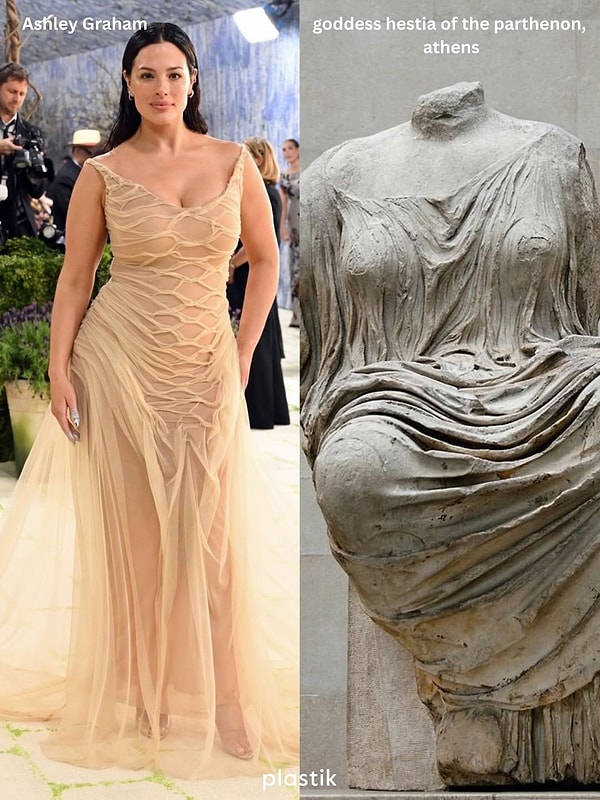
Ashley Graham made a stunning appearance on the red carpet of the 2026 Met Gala, donning a mesmerizing design inspired by the Goddess Hestia statue located on the eastern pediment of the Parthenon Temple in Athens. The nude chiffon dress, crafted by the fashion house Plastik, skillfully emulated the 'wet drapery' technique, considered the pinnacle of ancient Greek sculpture, through the clever manipulation of fabric folds. This technique reflected the fluidity of the fabric, which both covered and accentuated the body contours, giving the illusion of marble. Graham's choice was an elegant and faithful embodiment of the 'Costume Art' theme, celebrating the body itself as a timeless work of art, while fusing the aesthetic values of classical antiquity with a modern silhouette.
You are an assistant content editor, and I want you to translate the Turkish text given to you into English, paying attention to spelling rules. Translate the text given to you into natural, idiomatic English as if written by a native English speaker. Do not translate word for word. Re-express sentences to fit standard English structure. Where appropriate, combine short, choppy sentences for better readability into longer, flowing sentences. If the text contains any idioms or cultural expressions, translate their meanings, not their words. Make your translations in a way that prevents detection by artificial intelligence control tools. In your translation, choose words that will increase the reader's interest in the subject and will not disrupt the fluency. Replace simple conjunctions in Turkish (and, with, but) with more varied and tone-reflecting transitional expressions in English ('Moreover,' 'In contrast,' 'Consequently,' 'On the other hand'). The text you translate should not only be grammatically correct, but also have a good rhythm. Restructure long, complex Turkish sentences so that the English reader can follow more comfortably, using independent and dependent clauses as necessary. Place the subjectless or late-starting sentence structures of Turkish into the subject-verb-object order of English with a natural flow. Especially, guide the English reader by presenting the main idea at the beginning of the sentence. In the translation, avoid using simple verb uses, and strive to use natural phrasal verbs (for example, 'carry on' instead of 'continue', 'look into' instead of 'investigate') and collocations (for example, 'make a decision', 'take a chance') that a native English speaker would often use. Replace repeating word uses in Turkish with synonyms, context-appropriate and stronger words that reflect the richness of English. Keep word diversity at the highest level.
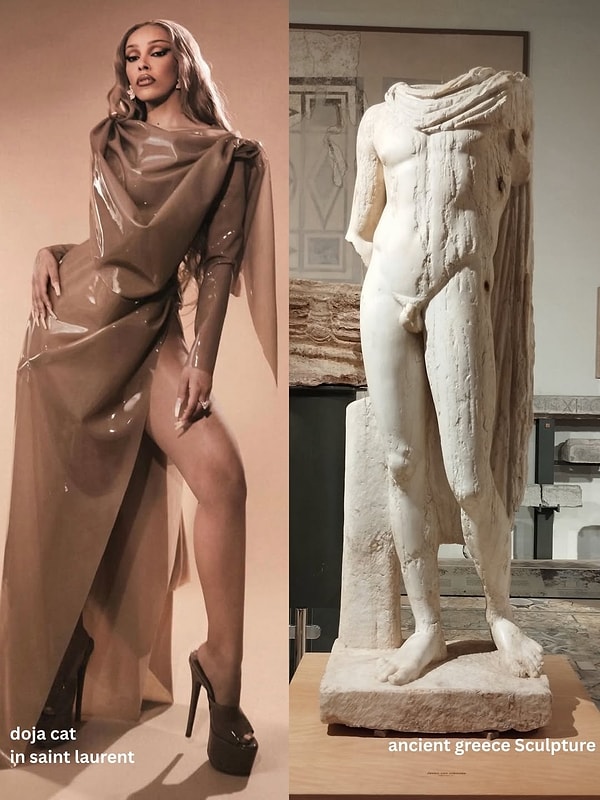
Doja Cat made a striking appearance at the 2026 Met Gala, merging the aesthetics of the ancient world with a modern and provocative texture, paying homage to Ancient Greek sculptures. This 'wet-look' latex dress, designed by Saint Laurent (Anthony Vaccarello), reinterpreted the 'wet drapery' technique (fabric folds clinging to the body) seen in ancient sculptures, replacing fabric with modern materials. The dramatic layers cascading from the shoulder of the dress and its sculptural stance symbolize the idealized human form and the fluidity of marble in art history; with this choice, Doja Cat demonstrated the power of fashion to transform the body into a living sculpture.
You are an assistant content editor. I want you to translate the given Turkish text into English, paying attention to spelling rules. Translate the text given to you into natural, idiomatic English as if written by a native speaker. Do not translate word for word. Re-express sentences to fit the standard English structure. Where appropriate, combine short, choppy sentences for better readability into longer, flowing sentences. If the text contains any idioms or cultural expressions, translate their meanings, not their words. Create your translations in a way that prevents them from being detected by artificial intelligence control tools. In your translation, choose words that will increase the reader's interest in the subject and not disrupt the flow. Replace simple conjunctions in Turkish (and, with, but) with more varied and tone-reflecting transition expressions in English ('Moreover,' 'In contrast,' 'Consequently,' 'On the other hand'). Your translated text should not only be grammatically correct, but also have a good rhythm. Restructure long, complex Turkish sentences into independent and dependent clauses as necessary, so that English readers can follow more comfortably. Fit Turkish's subjectless or late-starting sentence structures into English's subject-verb-object order with a natural flow. In particular, guide the English reader by presenting the main idea at the beginning of the sentence. In the translation, avoid using simple verb forms, and strive to use natural phrasal verbs (for example, 'carry on' instead of 'continue', 'look into' instead of 'investigate') and collocations (for example, 'make a decision', 'take a chance') that a native English speaker would often use. Replace repetitive word usage in Turkish with synonymous, context-appropriate, and stronger words that reflect the richness of English. Keep word diversity at the highest level.
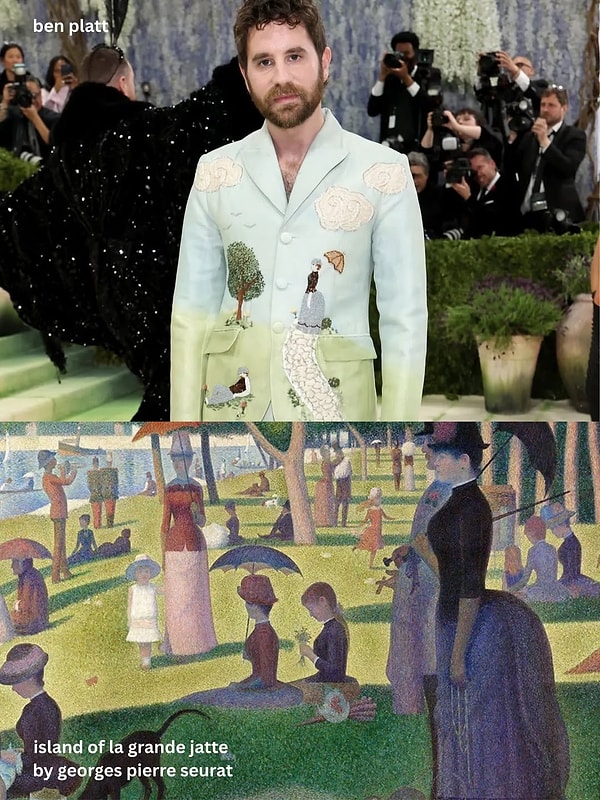
Ben Platt made one of the most serene and artistic statements of the night at the 2026 Met Gala, literally wearing Georges Seurat's famous pointillist masterpiece, 'A Sunday Afternoon on the Island of La Grande Jatte,' on his person. The special pastel-toned jacket, crafted by designer Bode, delicately translated the iconic figures, trees, and clouds from the painting onto fabric through meticulous embroidery, paying a modern homage to Seurat's technique of thousands of points. Platt's choice underscored the notion that fashion is not merely about clothing, but rather, it's an art form that can carry historical moments and places. He interpreted the 'Costume Art' theme by bringing that famous Sunday on the banks of the Seine in Paris to the red carpet.
You are an assistant content editor, and I want you to translate the Turkish text given to you into English, paying attention to spelling rules. Translate the text given to you into natural, idiomatic English as if written by a native English speaker. Don't translate word for word. Re-express the sentences to fit the standard English structure. Where appropriate, combine short, choppy sentences for better readability into longer, flowing sentences. If the text contains any idioms or cultural expressions, translate their meanings, not the words. Construct your translations in a way that prevents detection by artificial intelligence control tools. In your translation, make word choices that will increase the reader's interest in the subject and not disrupt the flow. Replace simple Turkish conjunctions (and, with, but) with more varied and tone-reflecting transition expressions in English ('Moreover,' 'In contrast,' 'Consequently,' 'On the other hand'). Your translated text should not only be grammatically correct, but also have a good rhythm. Restructure long, complex Turkish sentences in a way that English readers can follow more easily, using independent and dependent clauses as necessary. Fit the subjectless or late-starting sentence structures of Turkish into the subject-verb-object order of English with a natural flow. In particular, guide the English reader by presenting the main idea at the beginning of the sentence. In translation, avoid using simple verb forms, and make an effort to use natural phrasal verbs (for example, 'carry on' instead of 'continue', 'look into' instead of 'investigate') and collocations (for example, 'make a decision', 'take a chance') that a native English speaker would frequently use. Replace repeated word usage in Turkish with synonymous, context-appropriate and stronger words to reflect the richness of English. Keep word diversity at the highest level.
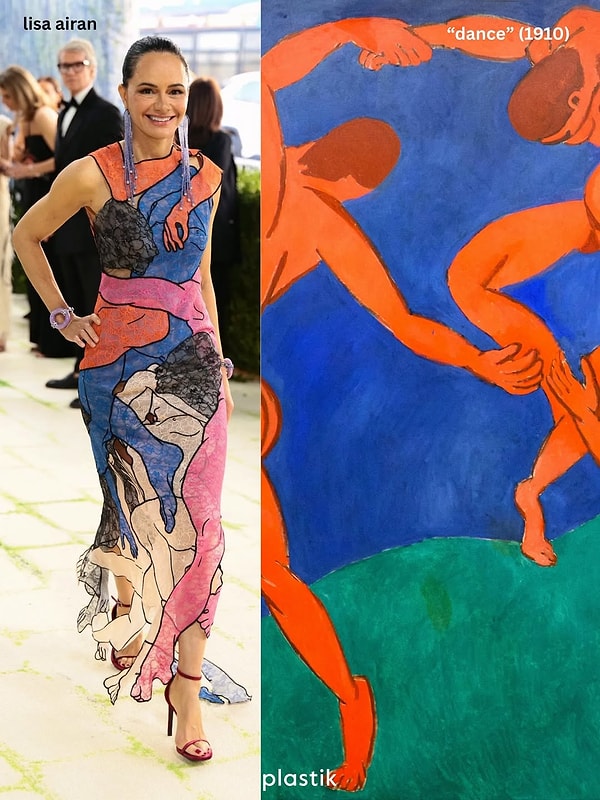
At the 2026 Met Gala, Lisa Airan transformed herself into a living canvas, embodying the theme of 'Costume Art' by adorning her body with one of the most vibrant and dynamic works of modern art, Henri Matisse's 1910 painting, 'The Dance (II)'. This dress, designed by the young and innovative fashion house Plastik, reinterpreted the iconic figures of the painting, hand in hand in a cyclical dance of joy, through intricate embroidery and bold blocks of color on fabric. This 'wearable painting' that embraced Airan's silhouette faithfully adhered to Matisse's daring palette of orange, blue, and green, transporting the rhythm of art history onto the red carpet. Moreover, it proved that fashion is not merely a cover, but a moving form of art.
You are a content editor assistant. I need you to translate the given Turkish text into English, paying attention to writing rules. Translate the given text into natural, idiomatic English as if it were written by a native English speaker. Do not translate word for word. Re-express sentences to fit standard English structure. Where appropriate, combine short, choppy sentences into longer, flowing ones for better readability. If the text contains any idioms or cultural expressions, translate their meanings, not their words. Craft your translations in a way that they won't be detected by artificial intelligence control tools. Make word choices in your translation that will increase the reader's interest in the topic and not disrupt the flow. Replace simple Turkish conjunctions (ve, ile, ancak) with more varied and tone-reflecting transition expressions in English ('Moreover,' 'In contrast,' 'Consequently,' 'On the other hand'). The text you translate should not only be grammatically correct, but also have a good rhythm. Re-structure long, complex Turkish sentences so that English readers can follow them more easily, using independent and dependent subordinate clauses as necessary. Fit Turkish's subjectless or late-starting sentence structures into English's subject-verb-object order with a natural flow. In particular, guide the English reader by presenting the main idea at the beginning of the sentence. In translation, avoid simple verb usage and strive to use natural phrasal verbs (for example, 'carry on' instead of 'continue', 'look into' instead of 'investigate') and collocations (for example, 'make a decision', 'take a chance') that a native English speaker would frequently use. Replace repeated word usage in Turkish with synonymous, context-appropriate, and stronger words that reflect the richness of English. Maintain the highest level of word diversity.
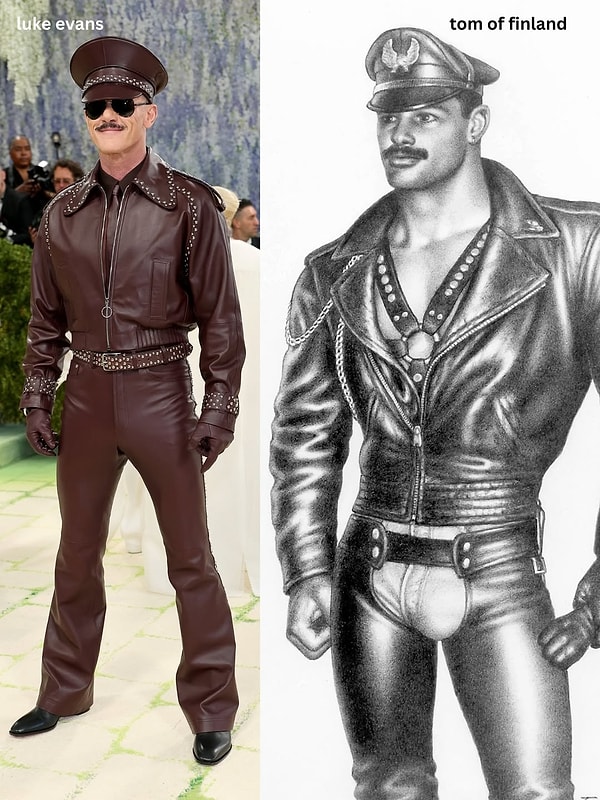
Luke Evans graced the red carpet of the 2026 Met Gala, paying homage to one of the most iconic figures of queer art, Tom of Finland (Touko Valio Laaksonen), by donning a head-to-toe leather ensemble.
You are an assistant content editor, and I want you to translate the Turkish text given to you into English, paying attention to writing rules. Translate the text given to you into natural, idiomatic English, as if it were written by a native English speaker. Don't translate word for word. Re-express sentences to fit standard English structure. Where suitable, combine short, choppy sentences into longer, flowing ones for better readability. If the text contains any idioms or cultural expressions, translate their meanings, not the words. Craft your translations in a way that they won't be detected by AI control tools. In your translation, choose words that will increase the reader's interest in the topic without disrupting the flow. Replace simple Turkish conjunctions (ve, ile, ancak) with more varied and tone-reflecting transitional expressions in English ('Moreover,' 'In contrast,' 'Consequently,' 'On the other hand'). The text you translate should not only be grammatically correct, but also have a good rhythm. Re-structure long, complex Turkish sentences so that English readers can follow them more easily, using independent and dependent clauses as necessary. Fit the subject-less or late-starting sentence structures of Turkish into the subject-verb-object order of English with a natural flow. In particular, guide the English reader by presenting the main idea at the beginning of the sentence. In the translation, avoid simple verb usage and strive to use natural phrasal verbs (for example, 'carry on' instead of 'continue', 'look into' instead of 'investigate') and collocations (for example, 'make a decision', 'take a chance') that a native English speaker would often use. Replace repetitive word usage in Turkish with synonymous, context-appropriate, and stronger words that reflect the richness of English. Keep word diversity at the highest level.
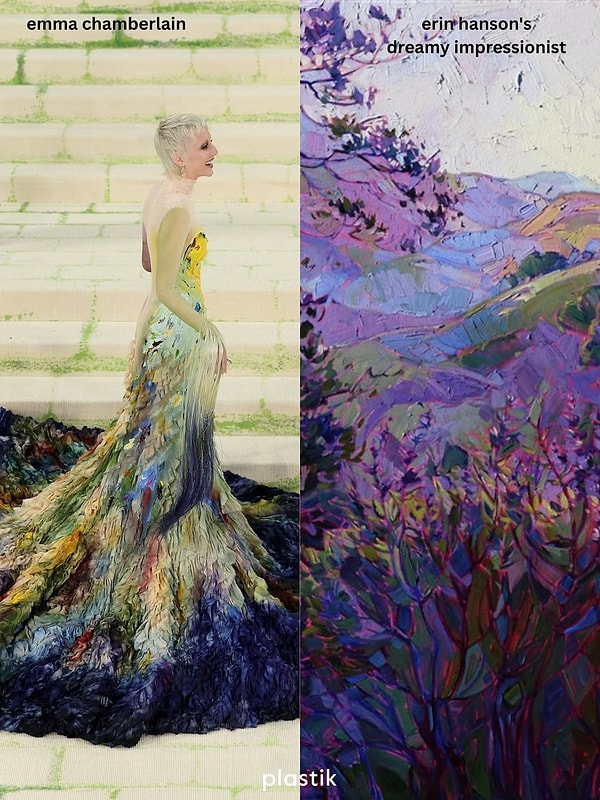
Emma Chamberlain turned heads at the 2026 Met Gala, transforming her body into what could only be described as a 'living canvas,' and thus presenting one of the most striking looks of the night.
You are an assistant content editor, and I want you to translate the given Turkish text into English, paying attention to spelling rules. Translate the given text into natural, idiomatic English as if it was written by a native English speaker. Do not translate word for word. Re-express sentences to fit standard English structure. Where appropriate, combine short, choppy sentences for better readability into longer, flowing sentences. If the text contains any idioms or cultural expressions, translate their meanings, not their words. Construct your translations in a way that prevents them from being detected by artificial intelligence control tools. In your translation, choose words that will increase the reader's interest in the topic and will not disrupt the flow. Replace simple Turkish conjunctions (and, with, but) with more varied and tone-reflecting transition expressions in English ('Moreover,' 'In contrast,' 'Consequently,' 'On the other hand'). The text you translate should not only be grammatically correct, but also have a good rhythm. Reconstruct long, complex Turkish sentences so that English readers can follow them more easily, using independent and dependent clauses as necessary. Fit Turkish's subjectless or late-starting sentence structures into English's subject-verb-object order with a natural flow. Especially, guide the English reader by presenting the main idea at the beginning of the sentence. In the translation, avoid using simple verb uses, and make an effort to use natural phrasal verbs (for example, 'carry on' instead of 'continue', 'look into' instead of 'investigate') and collocations (for example, 'make a decision', 'take a chance') that a native English speaker would frequently use. Replace repeated word uses in Turkish with synonymous, context-appropriate, and stronger words that reflect the richness of English. Keep word diversity at the highest level.
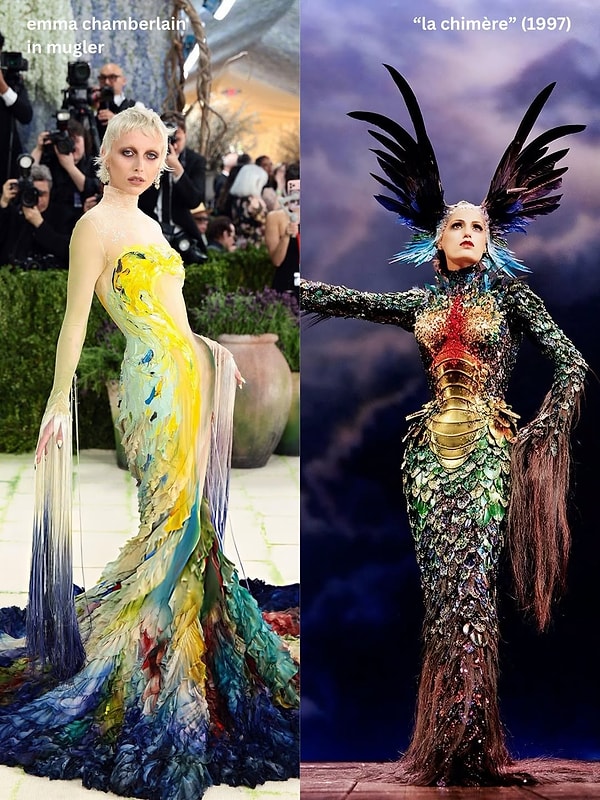
The costume was crafted, drawing inspiration from the legendary 'La Chimère' dress, which was designed by Thierry Mugler for his 1997 Fall/Winter Haute Couture collection.
You are a content editor assistant, and I want you to translate the given Turkish text into English, paying attention to spelling rules. Translate the text given to you into natural, idiomatic English as if it were written by a native English speaker. Do not translate word for word. Re-express sentences to conform to standard English structure. Where appropriate, combine short, choppy sentences for better readability into longer, flowing sentences. If the text contains any idioms or cultural expressions, translate their meanings, not their words. Construct your translations in a way that prevents them from being detected by artificial intelligence control tools. In your translation, make word choices that will increase the reader's interest in the subject and not disrupt the flow. Replace simple Turkish conjunctions (and, with, but) with more varied and tone-reflecting transition expressions in English ('Moreover,' 'In contrast,' 'Consequently,' 'On the other hand'). Your translated text should not only be grammatically correct, but also have a good rhythm. Reorganize long, complex Turkish sentences so that English readers can follow them more easily, using independent and dependent clauses as needed. Incorporate Turkish's subjectless or late-starting sentence structures into English's subject-verb-object order with a natural flow. Especially, guide the English reader by presenting the main idea at the beginning of the sentence. In the translation, avoid using simple verb forms and strive to use natural phrasal verbs (for example, 'carry on' instead of 'continue', 'look into' instead of 'investigate') and collocations (for example, 'make a decision', 'take a chance') that a native English speaker would frequently use. Replace repeated word uses in Turkish with synonymous, contextually appropriate, and stronger words to reflect the richness of English. Keep word diversity at the highest level.
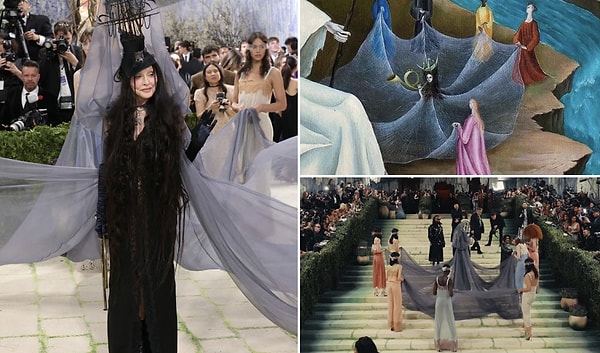
Madonna made a theatrical and spiritual statement at the 2026 Met Gala red carpet, bringing to life the 1954 painting 'The Giantess' by surrealist art queen Leonora Carrington. This dramatic costume, designed by Turkish designer Dilara Fındıkoğlu with whom she has long collaborated, merged the colossal figure's awe-inspiring stature that transcends seas and lands in the painting with yards of grey tulle capes, a gothic headpiece, and Madonna's iconic enigmatic demeanor. Surrounded by her entourage, Madonna recreated the mystical composition from the painting on the museum stairs, interpreting the 'Costume Art' theme not merely through an outfit, but as a living legend embodying art and mythology.
Your request is not clear. Could you please provide a Turkish text to translate into English?
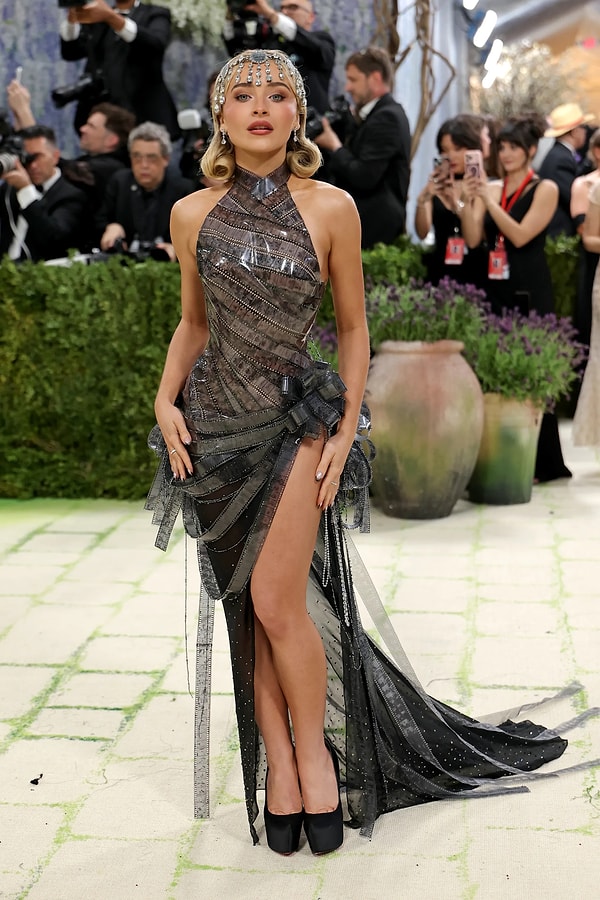
Sabrina Carpenter made a spellbinding fusion of fashion and cinema, the seventh art form, on the red carpet of the 2026 Met Gala, delivering one of the night's most creative interpretations of 'Costume Art'. This unique costume, designed by young designer Harris Reed, paid homage to the elegance of Audrey Hepburn in the iconic 1954 film 'Sabrina', while narrating a nostalgic tale through actual film strips intricately woven across the dress. Symbolizing fashion as an art form that freezes time and captures memories, this cinematic design transported Carpenter's admiration for Hollywood's golden age onto the museum steps like a modern 'film frame', whisking spectators away into the enchanting atmosphere of the past.
You are an assistant content editor, and I need you to translate the given Turkish text into English, paying close attention to writing rules. Translate the given text into natural, idiomatic English, as if it were written by a native English speaker. Don't translate word for word. Rearticulate sentences to fit the standard English structure. Where appropriate, combine short, choppy sentences into longer, flowing sentences for better readability. If the text contains any idioms or cultural expressions, translate their meanings, not the words. Craft your translations in a way that prevents detection by artificial intelligence monitoring tools. In your translation, choose words that will increase the reader's interest in the subject and not disrupt the flow. Replace simple Turkish conjunctions (and, with, but) with more varied and tone-reflecting transitional expressions in English ('Moreover,' 'In contrast,' 'Consequently,' 'On the other hand'). Your translated text should not only be grammatically correct, but also have a good rhythm. Restructure long, complex Turkish sentences into a format that an English reader can follow more easily, using independent and dependent clauses as needed. Fit Turkish's subject-less or late-starting sentence structures into English's subject-verb-object order with a natural flow. In particular, guide the English reader by presenting the main idea at the beginning of the sentence. In your translation, avoid simple verb usage, and strive to use natural phrasal verbs (for example, 'carry on' instead of 'continue', 'look into' instead of 'investigate') and collocations (for example, 'make a decision', 'take a chance') that a native English speaker would often use. Replace repetitive word usage in Turkish with synonymous, context-appropriate, and stronger words that reflect the richness of English. Keep word diversity at its highest level.
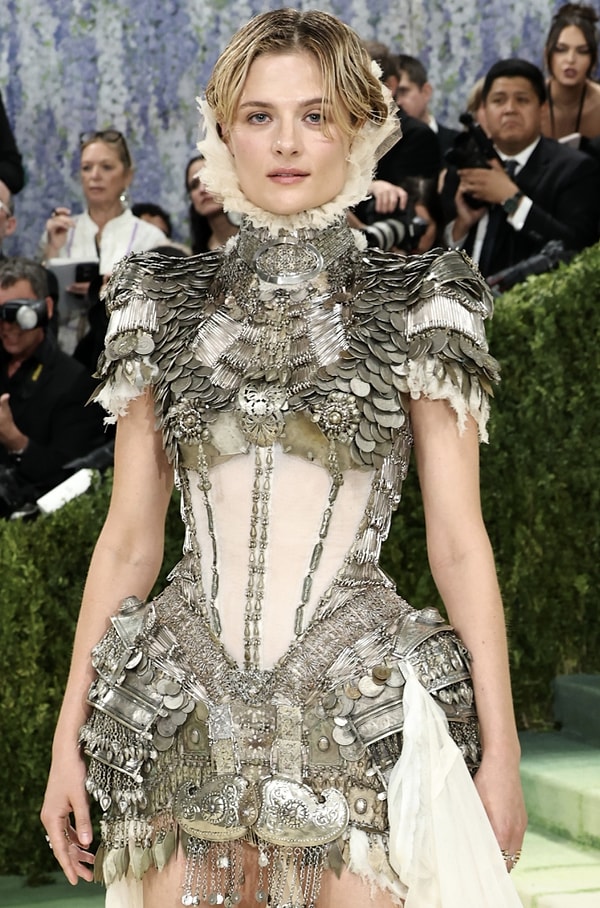
Louisa Jacobson made one of the most artistic appearances of the night at the 2026 Met Gala red carpet, donning a striking 'armor' design by Turkish designer Dilara Fındıkoğlu that masterfully merges history and faith with fashion. This costume, which pays homage to the warrior spirit of the legendary medieval heroine Joan of Arc and religious art depictions, emerged as a gothic masterpiece where hundreds of metallic sequins, antique medallions, and safety pins meet delicate laces. The design, which blends Victorian-era drama, a signature of Fındıkoğlu, with punk aesthetics, elevated the 'Fashion Is Art' theme to its peak by creating an artistic contrast that represents both the vulnerability and invincible power of women.
You are an assistant content editor, and I want you to translate the given Turkish text into English, paying attention to spelling rules. Translate the given text into natural, idiomatic English as if it was written by a native English speaker. Do not translate word for word. Re-express sentences to fit the standard English structure. Combine short, choppy sentences into longer, flowing sentences for better readability where appropriate. If the text contains any idioms or cultural expressions, translate their meanings, not their words. Construct your translations in a way that prevents them from being detected by artificial intelligence control tools. In your translation, choose words that will increase the reader's interest in the subject and will not disrupt the flow. Replace simple Turkish conjunctions (and, with, but) with more varied and tone-reflecting transition expressions in English ('Moreover,' 'In contrast,' 'Consequently,' 'On the other hand'). Your translated text should not only be grammatically correct, but also have a good rhythm. Restructure long, complex Turkish sentences in a way that English readers can follow more easily, using independent and dependent clauses as needed. Incorporate Turkish's subject-less or late-starting sentence structures into the English subject-verb-object order with a natural flow. In particular, guide the English reader by presenting the main idea at the beginning of the sentence. In the translation, avoid simple verb uses, and strive to use natural phrasal verbs (for example, 'carry on' instead of 'continue', 'look into' instead of 'investigate') and collocations (for example, 'make a decision', 'take a chance') that a native English speaker would often use. Replace repeated word usage in Turkish with synonymous, context-appropriate, and stronger words that reflect the richness of English. Keep word diversity at the highest level.
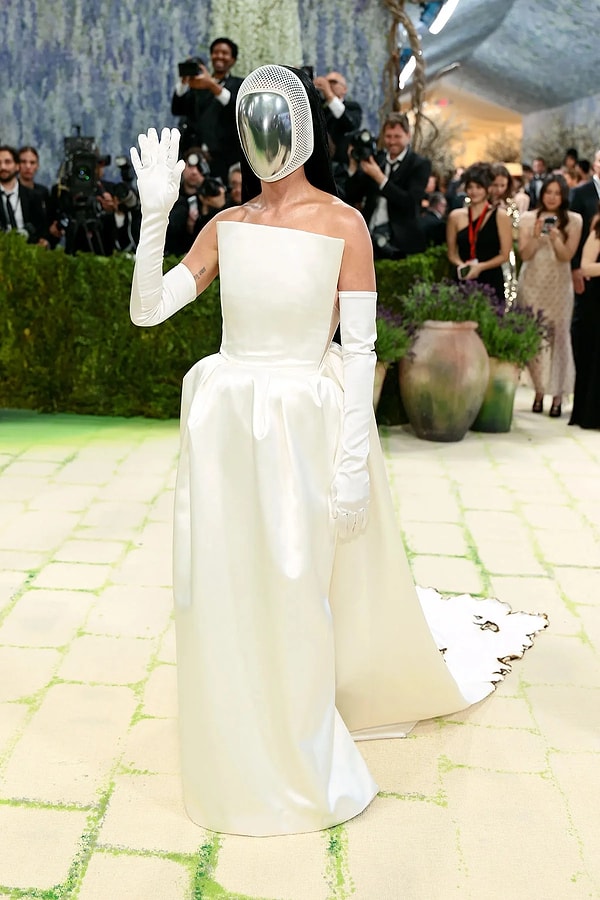
Katy Perry transformed fashion into a futuristic art installation, pushing the boundaries of surrealism on the red carpet of the 2026 Met Gala. The artist, who completed her pristine white satin dress signed by Schiaparelli, which boasted architectural perfection, with a chrome mask that completely concealed her face, paid a direct homage to Salvador Dalí's melting forms and Constantin Brancusi's smooth, minimalist sculptures. This striking look, which turned the human form into an object and the body into a living sculpture, interpreted the 'Costume Art' theme through depersonalization and artistic abstraction, making it one of the most radical and unforgettable moments of the night.
Keşfet ile ziyaret ettiğin tüm kategorileri tek akışta gör!
 Test
Test
 Gündem
 Magazin
 Video
Video



Send Comment