


Engineering Marvel: Massive Bridge That Transforms Into an Underwater Tunnel Built With 80K-Ton Blocks


The colossal 55-kilometer transportation line that connects Hong Kong, Zhuhai, and Macao was completed with a 6.7-kilometer undersea tunnel, discreetly tucked 45 meters beneath the sea surface to avoid disrupting marine traffic and flight routes.


Constructed in the Pearl River Delta and connecting three major cities, the Hong Kong-Zhuhai-Macau Bridge garners global attention not only with its overwater viaducts, but also with its underwater tunnel that pushes the boundaries of engineering.
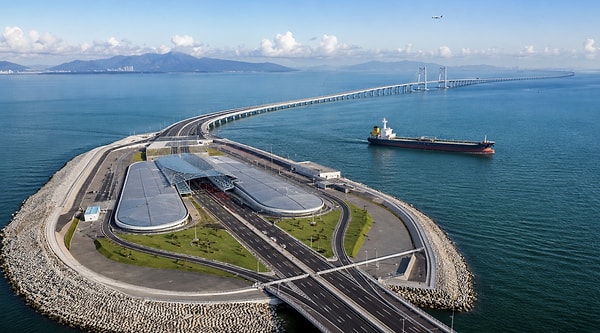
Due to the intense maritime trade and the height restrictions imposed by the local airports, a portion of the colossal project was submerged into the depths of the sea. From a distance, the bridge, which appears to vanish into the sea, actually continues as a seamless route beneath the water.
The construction of a very high bridge, which would not obstruct the heavy ship traffic in the region, posed a risk of interfering with the flight paths of airplanes due to nearby airports. Engineers solved these two critical problems by submerging the route under the water.
Thanks to this tunnel, located approximately 45 meters below sea level, giant oil tankers can comfortably use the surface channel, while vehicular traffic flows safely from the lower level. As a result, maritime and road traffic no longer have to compete for the same space.
According to the technical data published by the International Tunnelling and Underground Space Association (ITA), the immersed tunnel, which is 6.7 kilometers long, is composed of a whopping 33 giant blocks.
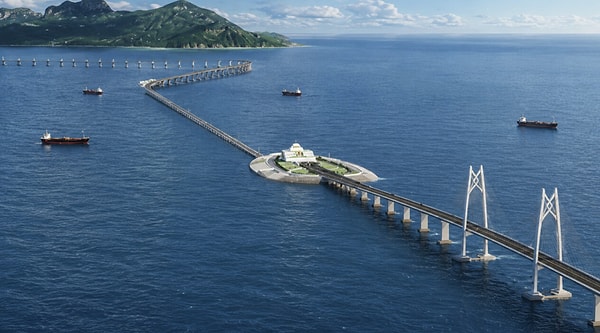
Each module has been designed to be approximately 180 meters in length.
The weight of some blocks can reach up to 80,000 tons.
These colossal pieces, which are transported to the sea and positioned correctly, are aligned with the previous one with millimetric precision. Following assembly, the points of connection formed a continuous path, protected from water, for vehicle circulation.
The fact that the sea floor does not offer the same resistance at every point, and the presence of hard and soft grounds, required special solutions during the construction process. In order to distribute the weight of the tunnel evenly and prevent the structure from moving, a robust foundation that balances the load was built under the modules.
In order to ensure a seamless transition between the viaducts over the water and the tunnel under the sea, two large artificial islands were constructed in the ocean.
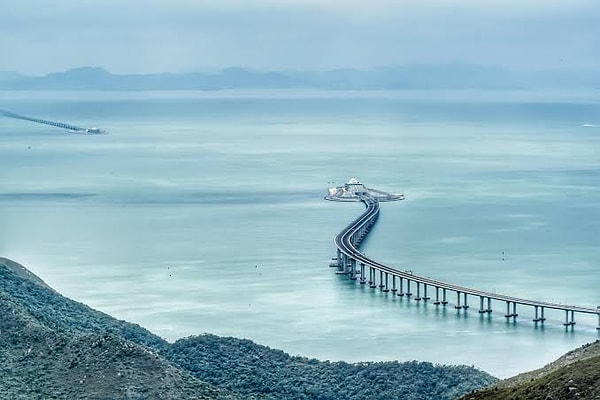
Serving as virtual gateways, these islands facilitate the vehicles' departure from the bridge, their entry into the tunnel, and their crossing of the sea channel. After this, the vehicles resurface from the other island and return to the elevated section.
This colossal project proves that a highway line doesn't always have to be fully visible; with 33 cleverly designed blocks, artificial islands, and the right engineering, uninterrupted transportation can be achieved even under the sea.
Keşfet ile ziyaret ettiğin tüm kategorileri tek akışta gör!
 Test
Test
 Gündem
 Magazin
 Video
Video



Send Comment