


Beavers Reclaim America's Driest Desert and Turn Dried Creek into a Green Oasis


Located in Nevada, the driest state of the United States receiving less than 25 centimeters of rainfall annually, Susie Creek was nothing more than a narrow stream of dry pebbles in official records taken in 1989. There was no trace of willow trees, green vegetation, or wildlife. For decades, its banks had collapsed due to overgrazing, and the groundwater level had hit rock bottom.

Yet today, the same location evokes a slice of paradise in the middle of the desert, with its deep water pools, lush green pastures, and dense willow trees.
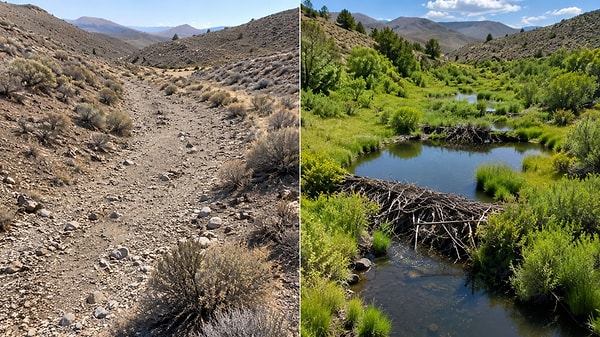
This revolutionary transformation isn't backed by million-dollar budgets, but rather by the most skilled engineers of nature: beavers.
Biologist Carol Evans and ranch manager Jon Griggs, who were keen on rescuing the local ecosystem, took a radical decision to keep cattle away from the riverbanks during the hottest months of the year. The goal was to allow nature to heal itself. In no time, native grasses and willows began to sprout anew along the shores.
However, in 2003, something unexpected happened: Drawn by the allure of young willow trees, beavers naturally returned to the area.
The beavers that settled in the area instinctively began constructing dams and barriers from mud and branches, designed to slow down the flow of water.
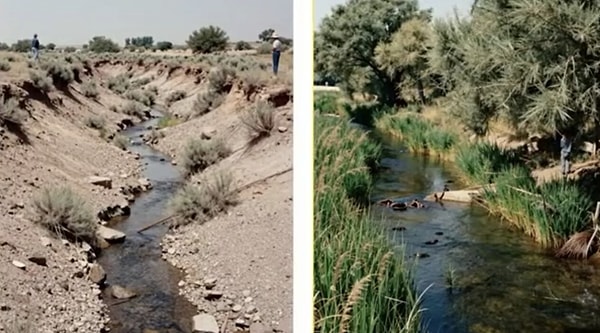
When the flow of the water slowed down, it spread into floodplains and seeped into the depths of the soil. The water accumulated beneath the surface, forming a colossal 'underground sponge'.
The beavers' industrious work was reflected in satellite images: the number of natural dams in the region quickly rose from 107 to 271. As the groundwater level rose, plant roots gripped the soil and the ecosystem entered into a self-healing, tremendous cycle.
The miracle of the beavers was proven during the most ruthless drought period in history that hit the area after 2012. While neighboring farmers had to transport water by trucks to prevent their cattle from dying, the deep pools and green vegetation in Susie Creek, where the beavers had settled, defied the heat.
Moreover, scientific studies have confirmed that beaver dams cool the water, creating vital thermal refuges for native trout and salmon species in the rivers.
Inspired by the remarkable achievements of beavers, engineers have begun to construct artificial dams, referred to as Beaver Dam Analogues (BDAs).
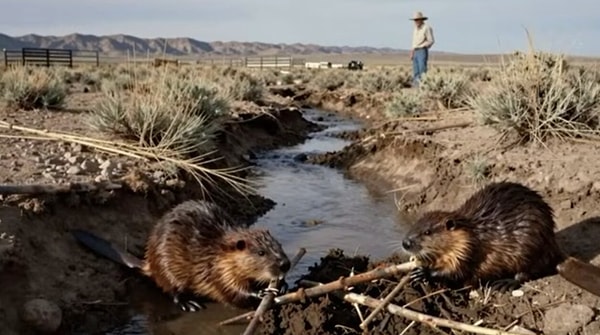
These artificial dams, established in just a few hours and at a cost of less than a thousand dollars, have made the tens of thousands of dollars spent on traditional river rehabilitation projects seem like money down the drain. Moreover, in the areas where these artificial structures were installed, real beavers eventually showed up and took over the maintenance for free.
Once seen as a nuisance for clogging up channels and blown up with dynamites, beavers are now being recognized as humanity's greatest ally against the water crisis.
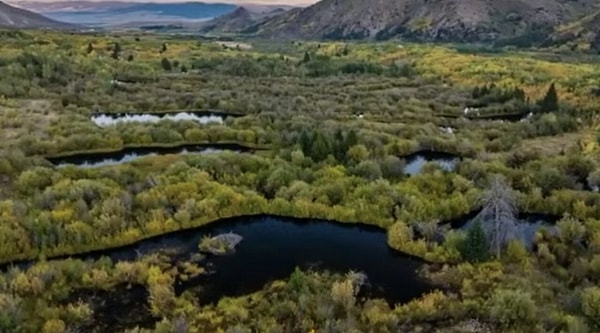
The story of Susie Creek demonstrated to the world that the most effective and economical solution to the global water crisis is sometimes not hidden in artificial intelligence, but rather nestled right in the heart of nature.
Keşfet ile ziyaret ettiğin tüm kategorileri tek akışta gör!
 Test
Test
 Gündem
 Magazin
 Video
Video



Send Comment