


You’ll Be Surprised to Learn Why Time Seems to “Slow Down” When You Don’t Look at the Clock!


When you focus on the ticking of a clock, minutes seem to stretch into infinity, yet while engrossed in a beloved film, hours can fly by in what feels like mere seconds. Research conducted by Stanford University neuroscientist David Eagleman reveals that this 'a watched pot never boils' phenomenon is intrinsically linked to the fundamental mechanisms of how our brain perceives time. Our attention and emotional state directly influence how we perceive the 'flow' of time.

What is the Difference Between Prospective and Retrospective Time Perception?

Eagleman's research reveals that the brain processes time in two distinct ways: prospective (in the moment) and retrospective (looking back) time perception. In prospective perception, our prefrontal cortex strives to estimate the duration of events currently unfolding. The more intensely we focus during this process, the slower time seems to pass.
On the other hand, in retrospective perception, our hippocampus answers the question of 'how much time has passed' by looking back at the past. Here, the number of events recorded in our memory plays a pivotal role. When reflecting on a day filled with new experiences, it seems long, whereas a monotonous day feels short.
Why Does Anxiety and Stress Seem to Slow Down Time?
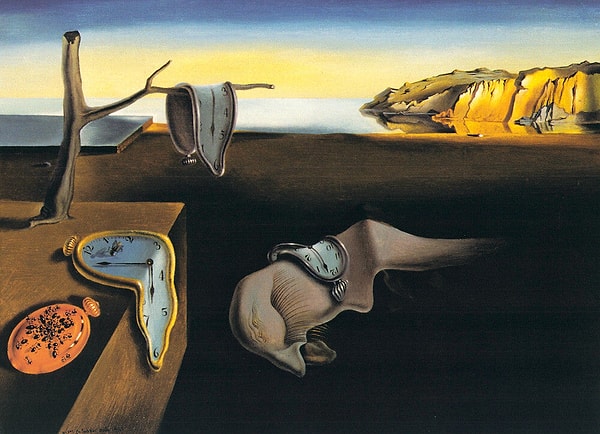
Researchers from the University of Montreal have discovered that the dorsolateral prefrontal cortex becomes hyperactive in states of anxiety. This condition puts the brain's time-tracking system into an 'overly cautious' mode. Consequently, individuals suffering from anxiety perceive minutes as longer due to their heightened attention to time.
On the other hand, an alternative theory suggests that there is no central timekeeper in our brain; instead, different brain regions run their own 'clocks'. The stress hormone cortisol slows down these clocks, disrupting our perception of time.
Does Boredom Stretch Time?

A study conducted by Timothy Wilson from the University of Virginia in 2014 proved that boredom also extends the perception of time. Participants waiting in a monotonous environment were making estimates that were 30-40% longer than the actual duration. During moments of boredom, the anterior cingulate cortex kicks in, tracking time more intensely in anticipation of something stimulating.
Eagleman's suggestion is straightforward: if you want time to fly, distract your attention; if you wish for it to slow down, focus on something. This knowledge has practical applications in terms of productivity and mental health.
Keşfet ile ziyaret ettiğin tüm kategorileri tek akışta gör!
 Test
Test
 Gündem
 Magazin
 Video
Video



Send Comment