


Why Does Laundry Smell Bad? 10 Simple Fixes For Fresh-Smelling Clothes


You open the washing machine door, and instead of fresh detergent you get that all-too-familiar damp-cloth smell. 😅 And this is from clothes you have just washed. There are clear reasons behind the smell, and most of the fixes are simpler than you think. Let's take a look! 👇


The real culprit is bacteria that thrive in damp, and the door seal is their favorite spot.

1. Know the culprit: bacteria that love moisture
That sour, damp-cloth smell is usually caused by bacteria. A study published by Japanese researchers in 2012 found that the smell comes from a compound produced by a bacterium called Moraxella osloensis. The bacterium multiplies easily in damp fabric and in the corners of the machine that always stay wet. The way to beat the smell is to cut down on moisture and residue.
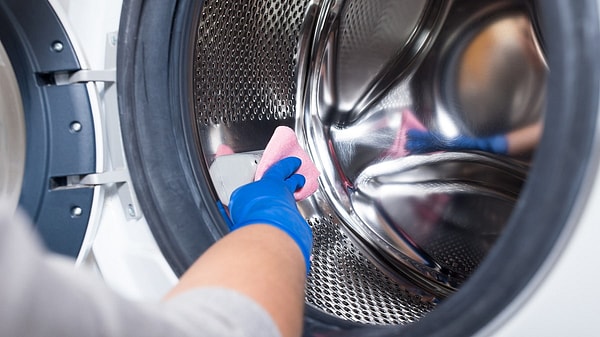
2. Wipe the door seal after every wash
In a study published in 2020 by Germany's Furtwangen University, this bacterium was found in the rubber door seals of 9 out of the 13 household machines examined. Water, lint and detergent residue collecting in the folds of the seal make a ready-made home for bacteria. When the wash is done, wipe the inside of the seal with a dry cloth; if you notice dark spots, clean it with warm water, dish soap and a soft brush. If mold has worked its way into the rubber, the seal may need replacing.
Leave the door and drawer ajar, and run a maintenance wash once a month.
3. Leave the door and detergent drawer ajar
If you shut the door tight as soon as the wash ends, the moisture inside has nowhere to go and the drum and seal stay wet for hours. Leaving the door and the detergent drawer open for a while lets the inside dry out. Every now and then, take the drawer out and scrub it with warm water too; the sticky layer of detergent that builds up there can also cause odors. If you have small children or pets at home, leave the door slightly ajar rather than wide open.
4. Run an empty maintenance wash once a month
If you always wash at 30–40°C, residue and bacteria build up more easily inside the machine. Manufacturers recommend a maintenance wash at a high temperature once a month with the machine empty: Siemens recommends 90–95°C, while AEG suggests a cotton program between 60 and 90°C. If your machine has a drum-cleaning program, use it. Also open the pump filter in the bottom corner at the intervals given in the manual and clear out lint and debris. Unplug the machine first and put a wide container underneath; more water may come out than you expect.
Get the detergent dose right, don't overload the drum, and go easy on fabric softener.
5. Don't use too much or too little detergent
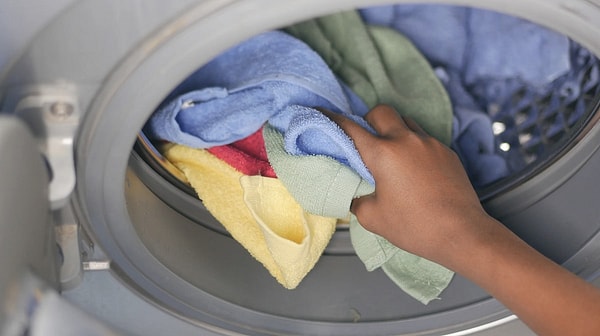
The idea that more detergent means cleaner clothes doesn't really hold up. Too much detergent doesn't rinse out properly and leaves residue on fabric and in the machine, and that residue feeds bacteria. Too little detergent, on the other hand, can't fully dissolve the dirt. Siemens also lists insufficient detergent among the reasons clothes smell bad. The best approach is to adjust the dose on the package to the size and dirtiness of the load.
6. Don't cram the machine full
When the drum is packed to the brim, water and detergent can't move between the clothes. The result: laundry that isn't fully clean, still has detergent on it and soon starts to smell. Leave enough space at the top of the drum to fit your hand comfortably.
7. Go easy on fabric softener, especially with towels
Fabric softener leaves a thin, waxy layer on fibers. As it builds up, fabric absorbs water and detergent less easily and traps odors inside. Towels are hit hardest: they become less absorbent and start to smell quickly. Using less softener on towels, or skipping it every few washes, makes a difference.
Don't leave wet laundry in the machine, dry it quickly, and give gym clothes extra care.
8. Don't forget wet laundry in the machine
You didn't hear the program end, or you started it in the morning and forgot about it until evening. 🙈 Wet laundry sitting in the drum is an open buffet for bacteria. Experts recommend taking laundry out within a few hours at most. If you forgot it and that sour smell has set in, hanging it up won't save it; the load needs to be washed again.
9. Dry laundry quickly and never fold it damp
The slower laundry dries, the higher the risk of odor. Hang it outdoors when the weather allows. If you dry it indoors in winter, ventilate the room, don't crowd the drying rack and give each piece a good shake before hanging it. Folding laundry that isn't fully dry and putting it in the closet means trapping the moisture inside.
10. Give gym clothes special attention
Synthetic fabrics like polyester hold on to sweat odor more than cotton. In a 2014 study at Belgium's Ghent University, polyester T-shirts worn during exercise smelled worse than cotton ones, and more odor-causing Micrococcus bacteria grew on them. Don't stuff sweaty clothes into the hamper; air them out and turn them inside out first, and wash them without waiting too long.
Keşfet ile ziyaret ettiğin tüm kategorileri tek akışta gör!
 Test
 Gündem
 Magazin
 Video



Send Comment