


Life At Minus 40: The 8 Coldest Places On Earth Where People Still Live


In some corners of the world, winter is not just a season on the calendar. It shapes most of the year. In places where the thermometer drops to minus 40, people still go to work, children still walk to school, and life simply carries on.
From the far reaches of Russia to the Mongolian steppe, from the shores of Canada's Hudson Bay to northern China, here are eight of the coldest places on Earth where people live.

Vladivostok, Russia: A Pacific port city where the wind cuts to the bone
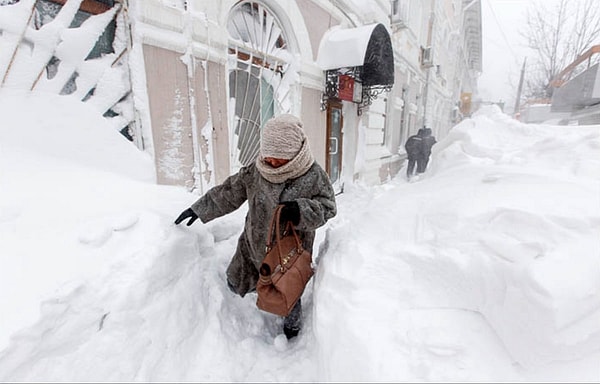
Russia's largest port on the Pacific coast and the final stop of the Trans-Siberian Railway, Vladivostok sits about 9,300 kilometers from Moscow. Home to around 600,000 people, it is the “mildest” name on this list: the average annual temperature is around 5°C, and summers are cool but humid.
The real challenge starts in winter. The average January temperature is around -12°C. More than the number itself, it is the harsh wind, created when dry cold air from Siberia meets moisture from the sea, that really hurts; the temperature it feels like is often far below what the thermometer shows. The city's bays partly freeze over in winter, and on days of heavy snowfall the streets fill up with snow in no time.
Ürümqi, China: One of the big cities farthest from any sea
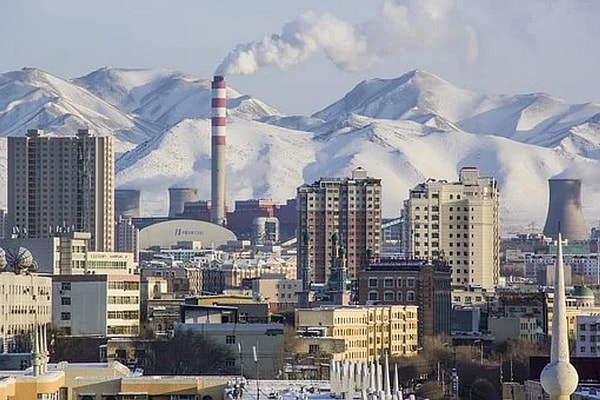
Ürümqi, the capital of the Xinjiang Uyghur Autonomous Region in northwest China, had around 4 million residents according to the 2020 census. Built at the foot of the Tian Shan mountains, the city lies about 2,500 kilometers from the nearest sea, which is why it is often described as one of the large cities farthest from an ocean.
Without the softening effect of the sea, its continental climate brings hot, dry summers and harsh winters. The average January temperature is around -13°C, and snow stays on the ground throughout the winter. Snow-covered mountains in the background and chimneys puffing smoke from coal burned for heating: that is Ürümqi's winter picture.
Harbin, China: A metropolis of 10 million that turns the cold into a festival
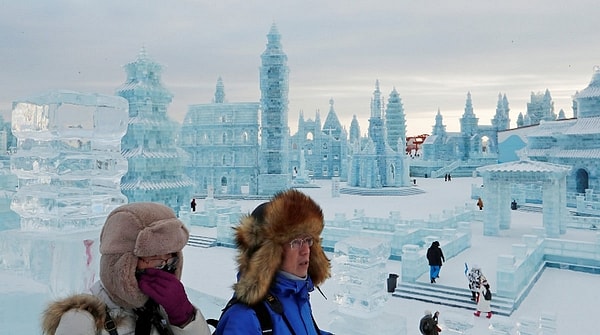
Harbin, the capital of Heilongjiang, China's northeasternmost province, is by far the most populous city on this list, with around 10 million people. Lying right in the path of cold air waves from Siberia, it sees average January temperatures between -17°C and -18°C, and at night the thermometer can drop to between -25°C and -30°C.
Harbin treats the cold as an opportunity rather than a problem. The Harbin International Ice and Snow Festival, built every winter from huge blocks of ice cut from the Songhua River, is considered one of the world's largest ice sculpture events. Every year, many tourists come to see its ice palaces, towers and bridges lit up at night. For the people of Harbin, winter is also the busiest season.
Astana, Kazakhstan: A capital that lives through both scorching summers and freezing winters
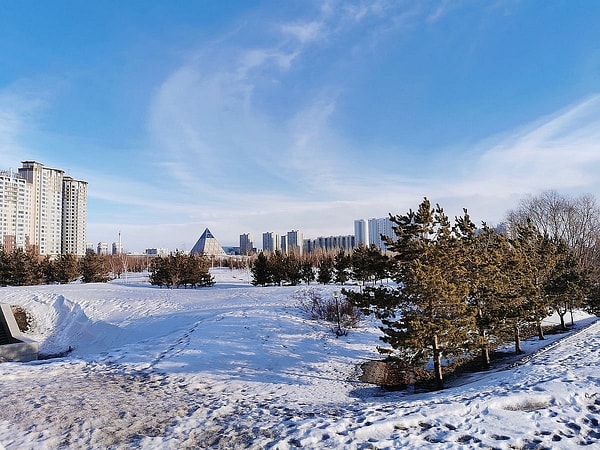
Kazakhstan's capital Astana was renamed Nur-Sultan in 2019 and went back to its old name in 2022. Home to around 1.4 million people, it is known as the world's second-coldest capital after Ulaanbaatar. With no mountains or sea around it, the endless steppe leaves nothing to stop cold air coming in from the north.
The average January temperature is around -14°C to -15°C, and during cold snaps the thermometer can hit -40°C. Since summer temperatures can exceed 30°C, the swing over the year approaches 90 degrees. In winter, life in Astana moves indoors; the giant tent-shaped Khan Shatyr shopping center, which even has an artificial beach inside, is the best-known example.
Churchill, Canada: The small town next door to polar bears
Churchill, on the shore of Hudson Bay in Manitoba, had 870 residents according to the 2021 census. There is no road to the town; you can only get there by train or plane. Because of the northern winds sweeping across the bay, the average January temperature is around -26°C. Every autumn, polar bears waiting for the bay to freeze walk toward the shore, and the town truly earns its title of “polar bear capital of the world.” In October and November, special teams keep watch so the bears don't wander into the streets, while tourists watch them safely from giant-wheeled “tundra vehicles.” In summer, beluga whales swim in the same waters.
Ulaanbaatar, Mongolia: The world's coldest capital
Mongolia's capital Ulaanbaatar sits at an altitude of 1,350 meters and has an average annual temperature below zero, which is why it is considered the coldest national capital in the world. Around 1.7 million people, close to half the country's population, live here. Average January temperatures range from -20°C to -28°C. Tens of thousands of families in the “ger” districts around the city heat their traditional felt tents and small houses with coal, which makes Ulaanbaatar one of the most air-polluted cities in the world in winter. Thick fog is as much a part of daily life as the cold.
Yakutsk, Russia: A city built on frozen ground
Yakutsk, the capital of Russia's Sakha Republic (Yakutia), has around 355,000 residents and is considered the coldest major city in the world. Located on the Lena River, it is built on permafrost, a layer of permanently frozen ground. To keep buildings from collapsing if the ground thaws, most of them stand on concrete piles. The average January temperature is around -39°C, the lowest recorded value is -64.4°C, and the annual average is around -9°C. On cold days, breath instantly turns into ice crystals, and thick ice fog can make it impossible to see more than a few meters ahead. Since summer temperatures can exceed 30°C, Yakutsk is one of the places with the most extreme climate.
Oymyakon, Russia: The village where school stays open down to minus 52
Oymyakon, a village of about 500 people in the Sakha Republic, is known as the place with the lowest temperature ever measured among permanently inhabited places. The official record is -67.7°C, recorded in 1933, and the January average is around -45°C.
Here, life is built around the cold. The village school does not close unless the temperature hits -52°C. Because permafrost makes it impossible to lay water and sewage pipes, toilets are in wooden huts outside. Car engines are either left running or kept in heated garages so they don't freeze and never start again. Since vegetables don't grow, meals are built around meat, dairy and the region's famous frozen raw fish, stroganina.
In summer, the picture flips: in July, temperatures can exceed 30°C and daylight barely fades. In December, the sun shows up for only a few hours a day.
Keşfet ile ziyaret ettiğin tüm kategorileri tek akışta gör!
 Test
 Gündem
 Magazin
 Video



Send Comment