


The Real History Behind Vampire Legends: 17 Facts From Opened Graves To Vlad The Impaler


Say the word vampire and most people picture a caped count on a cinema screen. The legend is older and stranger than that. Its roots run through European villages where graves were opened, through plague outbreaks and through illnesses nobody understood at the time. Here are 17 facts about the 'vampire graves' archaeologists have found, the official reports of the 18th century and the way literature and film shaped the figure.

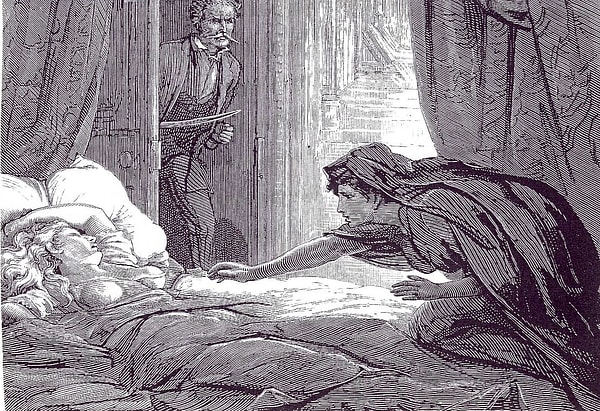
The vampire scare began with real graves being opened in European villages.
1. The Word Comes From Slavic Languages
The exact origin of the word is still debated, but the general view is that it is Slavic. It was barely known outside Eastern Europe until the early 1700s, when reports from the Balkans carried it into German, French and English. Vampires were in the news long before the novel Dracula.
2. In Kisiljevo, A Dead Man Was Blamed For Nine Deaths
In 1725 Petar Blagojević, also recorded as Peter Plogojowitz, died in the Serbian village of Kisiljevo. When nine more people died within a short time, the villagers blamed him and persuaded an Austrian official to let them open the grave. According to the accounts, fresh blood was seen in the corpse's mouth and a stake was then driven into the body.
3. Arnold Paole's Story Spread The Fear Across Europe
Arnold Paole died in Serbia in the mid-1720s after falling from a hay wagon and breaking his neck. Four people in the village died after him, and his grave was opened. The official report written by Austrian doctors circulated quickly and set off the vampire panic of the 1730s. The word 'vampyre' also reached the English-language press through these reports.
4. A Woman Was Found In Venice With A Brick In Her Mouth
On the island of Lazzaretto Nuovo near Venice, a 16th-century plague grave held a female skeleton with a brick placed between the jaws. According to researcher Matteo Borrini, this came from fear of the 'Nachzehrer', a corpse believed to chew its shroud and spread disease. The brick was meant to stop the dead from feeding.
5. In Poland, Sickles Were Laid Across The Necks Of The Dead
In one of the 16th and 17th-century graves found in Poland, a sickle had been placed over a woman's throat and a padlock fixed to her big toe. The tools are thought to have been meant to keep the dead from rising. Some researchers say they may relate to social status instead, so there is no firm verdict on every 'vampire grave'.
6. Stakes, Burned Hearts And Face-Down Burials
Methods differed from village to village in Eastern Europe. In some places a stake was driven through the chest, in others the heart was removed and burned, and in some regions the body was buried face down. The aim was the same each time: to stop the dead from returning and harming relatives.
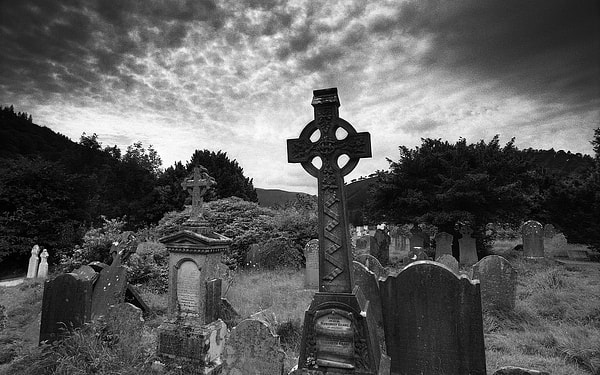
Disease, folk belief and two real historical figures all fed the legend.
7. In America's Last Vampire Case, Ashes Were Given As Medicine
In 1892 in Rhode Island, the body of Mercy Brown, who had died of tuberculosis, was exhumed along with other members of her family. Blood was found in her heart, and it was decided she was a vampire. The heart and liver were burned and the ashes mixed into a drink for her sick brother Edwin, who died about two months later.
8. Garlic Was A Protective Plant Before The Vampire Myth
In Balkan folk belief, garlic was a plant that kept evil spirits away. It was rubbed on doors and windows and sometimes placed beside the dead. Literature borrowed the belief, and the novel Dracula tied garlic to vampires.
9. The Porphyria Theory Is Disputed
Porphyria is a rare inherited condition that makes the skin extremely sensitive to light, which is why some people linked it to vampires. Drinking blood is known to do nothing for porphyria, and scientists later criticized the hypothesis.
10. Vlad The Impaler Got The Name Dracula From His Father
Vlad III, Prince of Wallachia (1431-1476), was called 'the Impaler' because he impaled his enemies. The name Dracula goes back to 'Dracul', the nickname his father took from membership of the Order of the Dragon. Stories that Vlad drank blood or was a vampire appeared later, and the location of his grave is still debated.
11. Elizabeth Bathory's Blood Baths Are A Later Story
Countess Bathory, born in Hungary in 1560, was tried on charges of torturing servant girls and confined in her castle until her death in 1614. The story that she bathed in blood was written down about a century after she died. Most historians are skeptical of it and of the victim count of more than 600.
12. Bram Stoker Wrote Dracula Without Ever Visiting Romania
The novel, published in 1897, rests on the author's library research in England. Before Bram Stoker, John Polidori's 1819 story 'The Vampyre' had brought the vampire into literature as an aristocratic and attractive figure. Bram Stoker combined that line with Eastern European legends and Vlad's name.
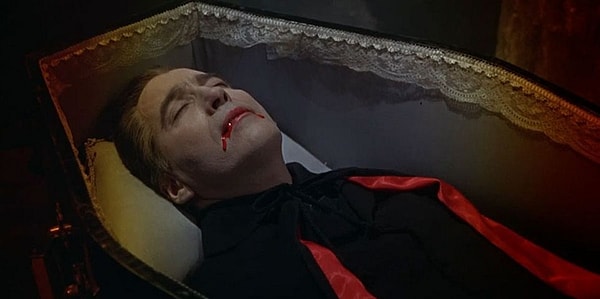
Literature and cinema gave the vampire the look we know today.
13. Bran Castle's Link To Vlad Is Weak
Bran Castle in Romania is promoted today as 'Dracula's Castle', but there is no solid evidence that Vlad lived there for any length of time. It earned the reputation mostly because it resembles the castle described in the novel, and tourism reinforced it.
14. Nosferatu Was An Unauthorized Dracula Adaptation
In 1922 German director F. W. Murnau filmed the novel without permission, renaming the character Count Orlok. Bram Stoker's widow sued and a court ordered the copies destroyed, though some survived. The idea that a vampire is destroyed by sunlight also spread through this film more than through folklore.
15. Bela Lugosi Made The Vampire A Screen Icon
Hungarian actor Bela Lugosi played the lead in Tod Browning's 1931 Dracula for Universal. His cape, his cold stare and his accent set the screen template, and dozens of later films copied the look.
16. Vampire Bats Are Named After The Legend, Not The Other Way Round
Europe learned about the blood-feeding bats of Central and South America only later, and the animals were named after the existing legend. The anticoagulant in their saliva is known as 'draculin'.
17. The Vampire Came Back Into Fashion In 1992
'Bram Stoker's Dracula', directed by Francis Ford Coppola and starring Gary Oldman, was released in 1992. It won Oscars for costume design, makeup and sound editing, and it brought the romantic side of vampire cinema back into popularity.
Sources: National Geographic, History.com, Smithsonian Magazine, Oxford University Press
Keşfet ile ziyaret ettiğin tüm kategorileri tek akışta gör!
 Test
 Gündem
 Magazin
 Video



Send Comment