


The Origins Of Wedding Traditions: What's Behind 8 Customs, From The Veil To The Bouquet Toss


In ancient Rome, some weddings ended with a cake made of grain being broken over the bride's head. Whether it is related to today's wedding cake is debated, but many of the customs we still keep at weddings go back at least that far. Some of them sit in documents. Others have simply been retold for centuries.

The ancestor of the bridal veil is the flame-colored cloth worn by Roman brides.
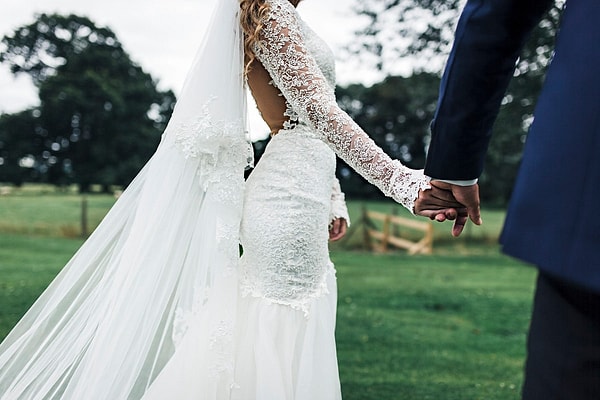
In ancient Rome the bride was wrapped in a large veil called the flammeum throughout the ceremony. Sources describe its color as somewhere between deep yellow and orange, and its name is related to flamma, the Latin word for flame. Even nubere, the Latin verb for a woman marrying, originally meant 'to veil oneself'.
The explanation that the veil protected the bride from the evil eye and kept evil spirits away became common later. We do not know for certain what reason the Romans themselves gave.
The Romans also wondered why the wedding ring goes on that particular finger.
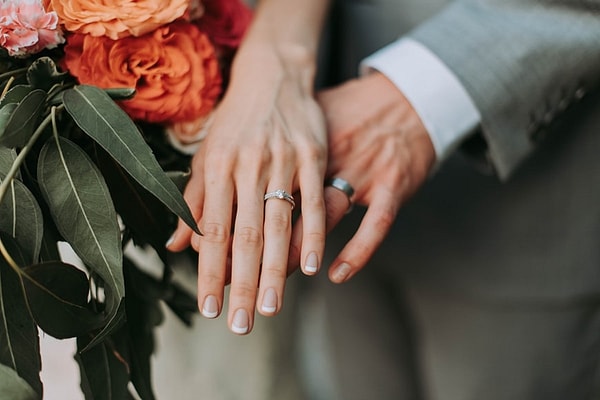
Aulus Gellius, a Roman author of the 2nd century, writes in his Attic Nights that Greeks and Romans wore the ring on the left hand, on the finger next to the little finger. His reason is a romantic one. Citing Apion, who wrote a history of Egypt, he reports that Egyptian examinations had found a fine nerve running from this finger to the heart.
There is no such nerve. Over the following centuries the nerve turned into a vein, and in the 17th century, through the writings of English lawyer Henry Swinburne, it came to be known as the vena amoris, the 'vein of love'.
The distant ancestor of the wedding cake may be a grain cake broken over the bride's head.
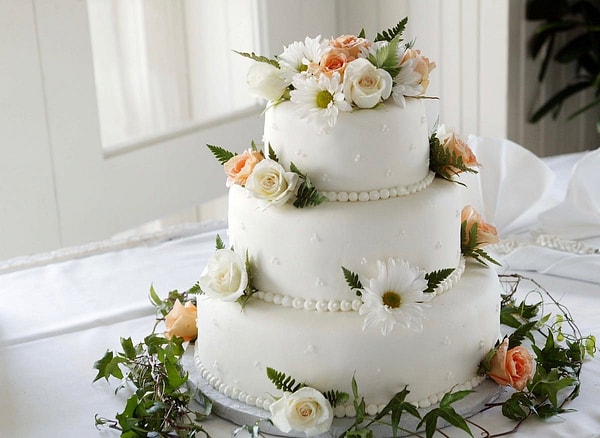
According to food historian Carol Wilson, at some Roman weddings a cake made of wheat or barley was broken over the bride's head in the belief that it would bring abundance. In the confarreatio ceremony, which was reserved for the nobility, the couple shared a cake made of far, a type of hulled wheat. The ceremony takes its name from it.
In medieval England, spiced buns were stacked as high as possible at weddings. Historians still disagree on whether these are the direct ancestor of today's tiered cake.
The person who made the white wedding dress fashionable was Queen Victoria.
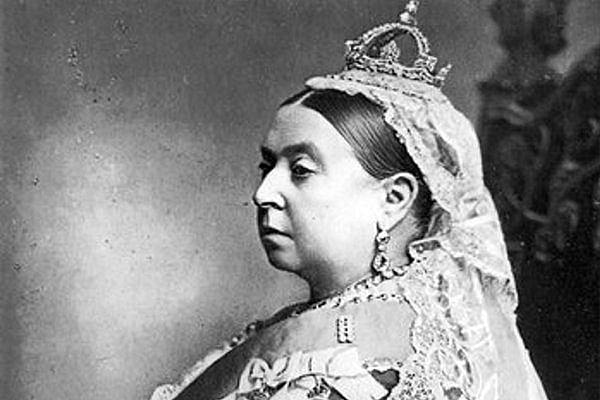
Queen Victoria married Prince Albert on February 10, 1840, at the age of 20, in the Chapel Royal of St James's Palace in London. Her dress was white silk satin woven in Spitalfields, and its handmade lace was worked in the village of Beer in Devon.
There were brides in white before her. The English princess Philippa, who married in 1406, was one of them. After Queen Victoria's wedding the white dress spread quickly. In cities full of soot, a color that needed constant cleaning was a sign of wealth at the time. The photograph here was taken many years after the wedding, in Queen Victoria's old age.
The Best Man As Swordsman: Often Told, Never Documented
The popular account says the groom's best swordsman once stood beside him to help against relatives who might come to take the bride back. No solid historical record supports this story. What is certain is that the earliest known written record of the phrase 'best man' dates from 1782. Sir John Sinclair noted that the Scottish expressions 'best man' and 'best maid' meant the same as 'bride-man' and 'bride-maid' in England.
Bridesmaids In Matching Colors As A Decoy
The common explanation is that bridesmaids once dressed like the bride so that evil spirits, or people wishing her harm, could not tell which one she was. Historian Hanne Blank reports the belief in the same way. The tradition is often said to go back to ancient Rome, but no reliable source shows this.
Something Old, Something New, Something Borrowed, Something Blue
This rhyme, which brides in English-speaking countries still follow, comes from 19th-century England. Its first two lines appear in a magazine story in 1871 and the full rhyme in a newspaper wedding report in 1876, where it is described as a Lancashire saying. According to a folklore collection from 1898, the old item protected against the evil eye and the blue item was usually a garter. The line 'a sixpence in her shoe', added later, was a wish for prosperity.
The Bouquet Toss And The Story Of Saving The Dress
As the story goes, in medieval Europe tearing off a piece of the bride's clothing was considered lucky, so guests crowded around her, and the bride started throwing what she was holding to distract them. This account circulates mostly in popular wedding writing and has not been confirmed by historical documents. What remains today is the belief that whoever catches the bouquet will be the next to marry.
Keşfet ile ziyaret ettiğin tüm kategorileri tek akışta gör!
 Test
 Gündem
 Magazin
 Video



Send Comment