


The Psychology Behind Why People Prefer Texting over Calling


In today's digital world, many of us share a common habit: that slight tension that suddenly arises when the phone starts to ring, followed by the thought, 'If only they had texted instead...' It's often assumed that people who dodge phone calls and prefer short messages (SMS, WhatsApp, etc.) are shy, socially inept, or 'antisocial'. Yet, the field of psychology tells a completely different story, contradicting this popular belief.

According to psychologists, individuals who opt for text-based communication are not, in fact, running away from people or interaction. Rather, they are simply choosing a method that safeguards the quality of their thought processes.

A phone call, in fact, constitutes an intensely 'real-time' and cognitively demanding multitasking arena for the human brain. While conversing on the phone, our brains are compelled to manage the following processes simultaneously:
Attentively listening to the other party and retaining what has been said.
Generating a logical response instantly and without hesitation.
Continually adjusting the tone, emphasis, and volume of the voice.
Deciding within split seconds when to pause the conversation or when to interject.
Particularly for introverted individuals who enjoy contemplation, this constant state of 'live performance' transforms from a social interaction into a mentally exhausting energy drain.
Text messaging completely eliminates the pressure of "instant response" created by the phone.

Communication allows for processing at the natural cognitive speed of the brain. Those who prefer written communication can thus:
Read the message whenever they feel mentally and emotionally ready.
Gain time to think deeply before responding.
Review and correct their words before sending them.
Express their ideas in a much clearer, precise, and accurate manner.
In conclusion, writing does not diminish communication; on the contrary, it makes it more tranquil, clear, and purposeful.
There's a prevalent belief in society that the nature of spoken communication inherently lends itself to greater sincerity and honesty.
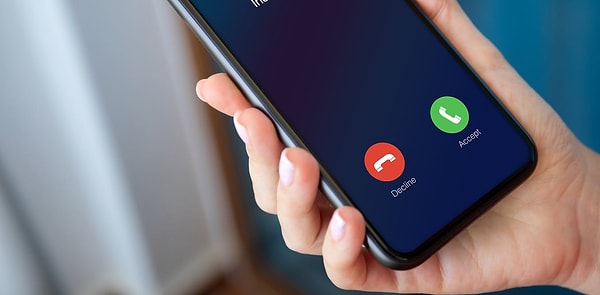
However, psychology suggests that sincerity cannot be measured by spontaneous and hastily given responses.
During phone conversations, people often provide unfiltered, rapid responses that first come to mind, just to avoid an awkward silence in the flow of the conversation. This doesn't always reflect a person's true or most accurate thoughts. In contrast, a carefully thought-out message, composed with chosen words, can carry much more meaning, depth, and emotional honesty than a long phone conversation made in haste.
In essence, opting to send a message rather than making a call does not necessarily indicate social isolation or fear.

This scenario represents a healthy communication preference, which aligns with the natural functioning of your mind, opting for 'depth and cognitive ease' over speed. Those who choose messaging are not shying away from relationships; rather, they are aiming for communication that is not just 'less,' but 'higher in quality.'
Keşfet ile ziyaret ettiğin tüm kategorileri tek akışta gör!
 Test
Test
 Gündem
 Magazin
 Video
Video



Send Comment