


They Planted 4 Million Trees in the Desert but Regretted It 60 Years Later


An ambitious afforestation project, initiated in the 1960s on the border of Israel's Negev Desert, has turned into a major regret after 60 years. The country's largest artificial forest, Yatir, created with 4 million Aleppo pines planted to prevent desertification, instead of slowing down the climate crisis, has further increased the temperature in the region.

Although tree planting is seen as a global strategy in the fight against climate change, the data obtained from Yatir Forest has shattered conventional wisdom.
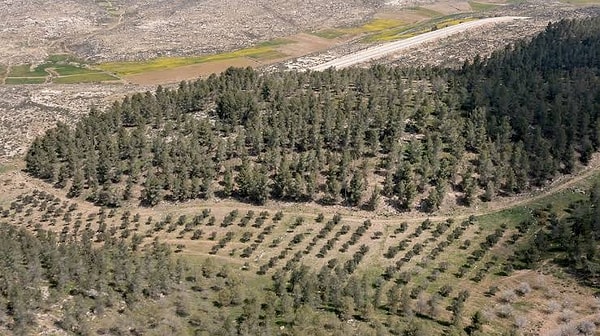
According to research conducted by scientists at the Weizmann Institute of Science for over two decades:
Forests absorb more sunlight and radiation due to their darker color compared to the bright desert floor.
The conversion of this absorbed energy into heat and its release into the atmosphere outweighs the cooling effect provided by trees through the absorption of carbon dioxide.
Researchers emphasize that it would take at least 200 years for forests to demonstrate a net cooling effect, but it remains uncertain whether trees can survive for such a long period.
In Yatir, where trees are neither watered nor fertilized, serious losses have been experienced in recent years due to escalating drought conditions.
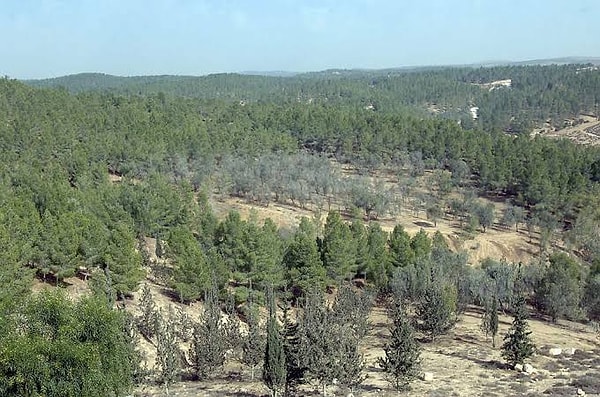
In certain regions, up to 80% of pine trees have dried up and died. Aleppo pines, which have an average lifespan of 80 years, are reportedly unable to naturally reproduce and replenish in the area due to drought and grazing destroying the newly grown pines.
Eyal Rotenberg from the Weizmann Institute states that the current species of pines are on the brink, indicating their lack of resilience against the climate crisis.
Environmentalists and experts argue that afforestation efforts, carried out under the guise of combating desertification, are causing harm to the region's unique ecosystem.
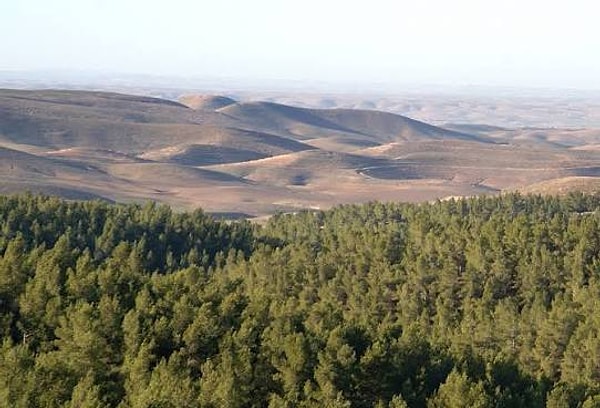
The Society for the Protection of Nature in Israel (SPNI) points out that planting trees in natural grasslands and shrublands displaces rare ground-nesting bird species, lizards, and small mammals from their habitats.
Meanwhile, the humanitarian and political aspects of afforestation projects are also under debate. Human rights advocates in the region argue that tree planting and new settlement projects are being utilized as a tool to seize the lands of local Bedouin communities who traditionally engage in livestock farming.
Experts advocating for a change in species rather than a complete halt to afforestation efforts, suggest planting trees that are more adaptable to desert conditions instead of the Aleppo pine.
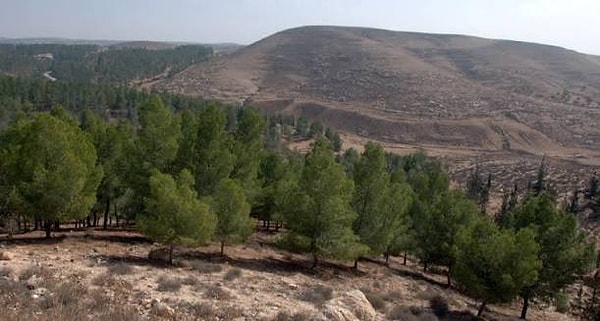
Experts suggest that if native species such as acacia, tamarisk, and Christ's Thorn Jujube, which can root up to 10 meters deep and withstand extreme temperatures, are chosen, it is possible to both preserve the ecosystem and achieve a structure that is more resistant to climate change.
Keşfet ile ziyaret ettiğin tüm kategorileri tek akışta gör!
 Test
Test
 Gündem
 Magazin
 Video
Video



Send Comment