


Massive 120-Kilometer Tunnel Carries Helsinki’s Water Deep Inside Mountains


Every time you turn on the tap in Helsinki, the capital of Finland, you're tapping into one of the unseen feats of engineering. The water consumed by over a million people in the city travels a full 120 kilometers through a massive rock tunnel, meters beneath the ground, before it's treated.

Finland, boasting some of the cleanest tap water in the world, owes this achievement to a hidden underground giant.
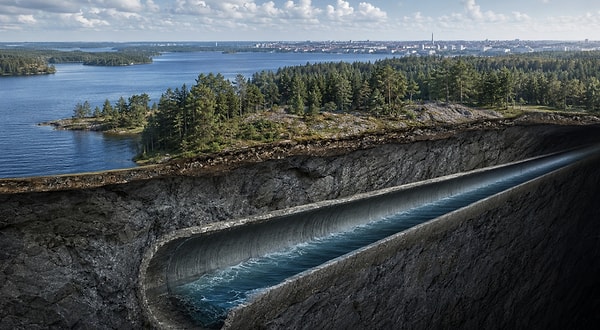
Details shared by the Helsinki Regional Environmental Services Authority (HSY) have shed light on the fascinating operation of the Päijänne Tunnel, which is right in the heart of city life yet remarkably isolated.
This colossal rock tunnel, stretching 30 to 100 meters below forests, streets, and skyscrapers, directly transports raw water from Lake Päijänne to the treatment plants in Helsinki.
The system is based on the principle of transporting "raw water", which is sourced directly from nature and is not yet processed to be drinkable.
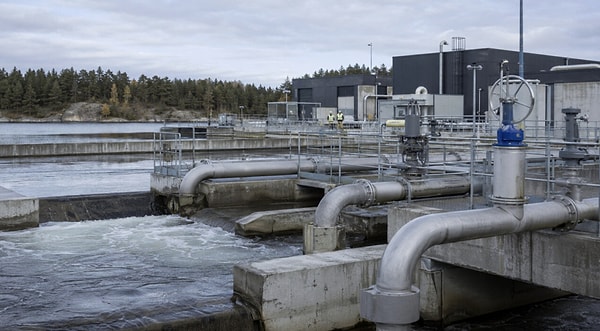
Starting Point: Lake Päijänne.
Hidden Route: A continuous rock mass stretching 120 kilometers underground.
Destination: A reservoir near the treatment plant in Helsinki.
The tunnel doesn't replace the pipes that directly distribute water to homes; rather, it forms the heart of the system. The raw water emerging from the tunnel is purified, filtered, and made potable at the plant before it is delivered to homes, workplaces, and faucets via the urban network and storage facilities.
The design of the system being entirely underground provides tremendous advantages in terms of water security:
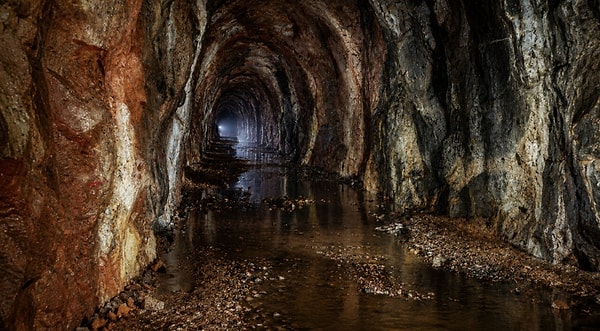
Protection from External Factors: Unlike structures built in the open air, the underground line remains completely isolated from surface constructions, heavy traffic, air pollution, and direct human interventions.
Harmony with the Environment: While urbanization continues seamlessly above the tunnel, water flows safely below.
Being underground doesn't mean the structure doesn't require maintenance. Experts from HSY underline the necessity of continuous inspection, regular maintenance, and constant preparedness for potential failure scenarios for a tunnel carrying such a large volume.
Large-scale water transportation is not exclusive to Finland.
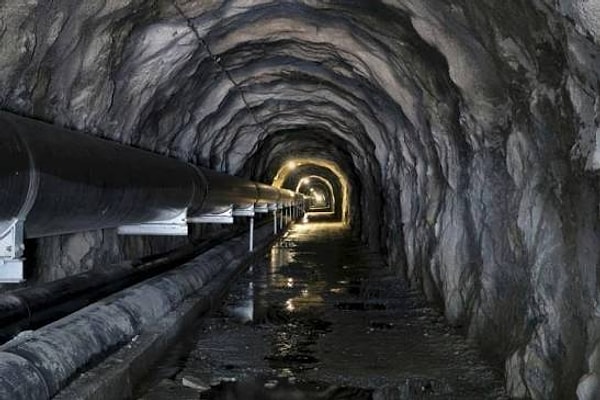
For instance, Brazil boasts colossal main pipelines that transport water over vast distances. However, the divergence between the two countries lies in their engineering approach and geography:
Finland (Helsinki) Approach: Massive underground tunnels carved into rock
Advantage: Maximum security and complete isolation from external factors
Brazil Model: Pipelines laid on the surface or along different routes
Advantage: Flexible terrain adaptation and various ground solutions
Experts point out that cities grappling with water issues cannot directly replicate the Finland model; local factors such as soil type, budget, distance, and water volume necessitate different solutions for each country.
Helsinki's water system proves that water security isn't just about finding a clean water source. The real triumph lies in constructing and sustaining pathways that can transport that water, without compromising its quality, to densely populated centers miles away.
Keşfet ile ziyaret ettiğin tüm kategorileri tek akışta gör!
 Test
Test
 Gündem
 Magazin
 Video
Video



Send Comment