


Have you ever wondered how microwaves can heat food so quickly?


The microwave oven in your kitchen is actually a sophisticated laboratory device that generates electromagnetic waves at a frequency of 2.45 gigahertz. This technology was serendipitously discovered in 1945 when Percy Spencer, an engineer at Raytheon, noticed his chocolate bar melting in his pocket while he was working on radar research.
So how exactly do microwave ovens manage to heat up food so rapidly?

How do microwaves operate?

The operating principle of a microwave oven is based on the dipole moment characteristic of water molecules. These molecules have an electrically asymmetric structure, with the oxygen atom carrying a negative charge and the hydrogen atoms a positive one. According to an explanation provided by Walter Lewin, a Physics Professor at MIT, electromagnetic waves at a frequency of 2.45 GHz change direction 2.45 billion times per second, causing the water molecules to rotate.
This constant rotation generates friction between the molecules, which in turn converts kinetic energy into heat energy. This process, known as dielectric heating, allows the food to heat from the inside out. Research conducted by the Engineering Faculty at Harvard University suggests that this method is 45% more efficient than traditional cooking methods.
So Why Can Metallic Containers Be Dangerous?
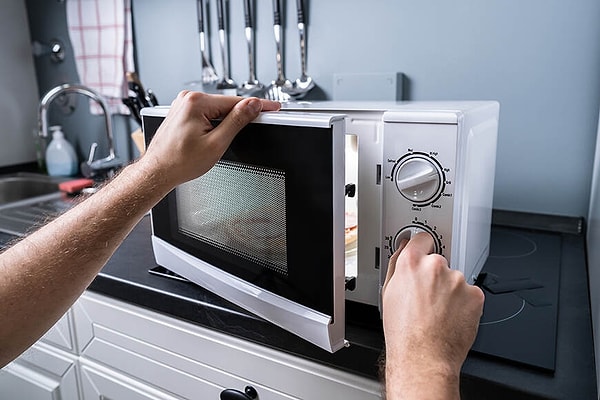
The prohibition of using metal in microwave ovens is explained by the Faraday cage effect. Metal surfaces reflect electromagnetic waves, sending them back to the magnetron tube, which can cause the device to overheat and become damaged. According to experts from the Electrical Engineering Department at Stanford University, metal containers also increase the risk of fire by generating electrical arcs.
Situated at the heart of the microwave oven is the magnetron tube. This vacuum tube generates high-frequency electromagnetic waves by spinning electrons within a magnetic field. Initially developed for radar technology in the 1940s, this system now forms the basis of the appliances we use daily in our homes.
Why Do Some Parts of Food Stay Hot While Others Remain Cold?
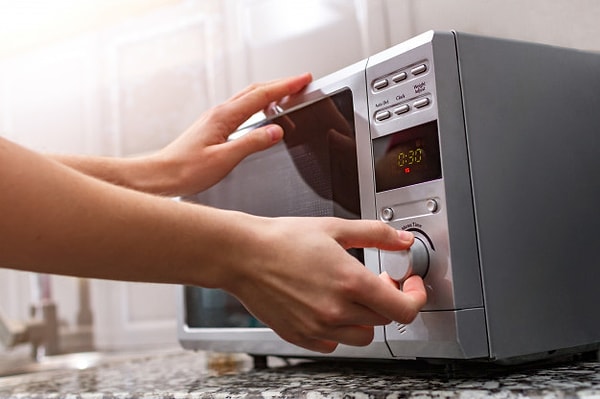
The phenomenon of 'hot and cold spots' occurring within a microwave oven can be explained by the concept of standing waves. Electromagnetic waves reflect off the oven walls and interact with the incoming waves. As a result of this interaction, the waves in some areas amplify each other, while in others, they weaken.
Modern microwave ovens attempt to tackle this issue with a rotating turntable. However, according to physicists at the California Institute of Technology, achieving perfectly uniform heating is still not feasible. Consequently, experts recommend stirring the food halfway through the cooking process.
Keşfet ile ziyaret ettiğin tüm kategorileri tek akışta gör!
 Test
Test
 Gündem
 Magazin
 Video
Video



Send Comment