


Gold Market Warning: Risk of Collapse Below Threshold


In global markets, gold per ounce is holding its breath at the threshold of $4,400, ahead of the August inflation data from the US. Saxo Bank Commodity Strategist Ole Hansen issued a critical threshold warning to investors: a movement dipping below $4,300 could potentially pull gold into a much steeper correction. Now, all eyes in the market are on the interest rate decision to be made by the FED next week.

What are the gold prices today?
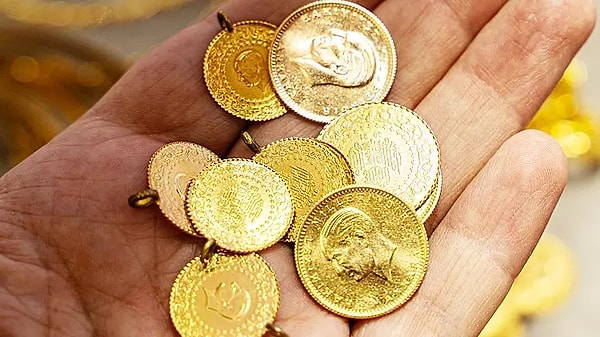
Citizens are curious about the current gold prices. Questions such as 'What's the price of gold now?' and 'How much is gold in Turkish Lira today?' are being asked. Here's the latest on gold prices as of September 10, 2026:
How much is a gram of gold?
The price of a gram of gold is 6,877 TL.
What's the price of a quarter gold coin?
A quarter gold coin is priced at 11,076 TL.
How much does a half gold coin cost?
A half gold coin is priced at 22,179 TL.
What's the price of a full gold coin?
A full gold coin costs 43,816 TL.
How much is a Republic gold coin?
The price of a Republic gold coin is 44,154 TL.
What's the price of an ounce of gold?
An ounce of gold is priced at 4,405 dollars.
Will gold prices go up?
In global markets, gold prices have turned their attention to the PPI and CPI data for August from the US in the last two trading days of the week. These two sets of data will reveal both the pressure on producer costs and the latest picture in consumer prices. If the figures exceed market predictions, it could strengthen the scenario of a 'more hawkish FED', which may put pressure on gold prices.
According to the CME FedWatch survey, a rate hike is priced in with a 60% probability for next week. Ole Hansen from Saxo Bank points out that gold investors and algorithmic programs, which constitute a large part of price movements, are currently having difficulty predicting which scenario will prevail. According to Hansen, this uncertainty is keeping the price of gold per ounce steady around $4,400 for now. The greatest pressure comes from rising bond yields in anticipation of an interest rate increase, which increases the opportunity cost of holding gold, a non-yielding asset.
Hansen reports that in the current picture, a weakening dollar is providing support for gold, while investment demand coming through ETFs and futures has remained resilient so far. Emphasizing that geopolitical uncertainty continues to run high, Hansen says the recent tension in the Middle East has strengthened gold's role as a portfolio diversifier and limited the downside risk against the new pressure from bond yields.
Hansen predicts that the main determinant ahead of the FED interest rate decision to be announced next week will be the August CPI and PPI data. According to him, an inflation figure above expectations could strengthen the possibility of a rate hike. If the data falls below expectations, some of the hawkish pricing in the market could be quickly withdrawn; in this scenario, Hansen believes the window for a rate hike could close until after the November midterm elections. He believes that in both scenarios, inflation data will be the main catalyst to break gold out of its current stagnation.
A warning for those planning to buy gold: Critical level in gold prices.
Taking into account the technical chart, Hansen points out that the 200-day moving average around $4,537 on gold serves as a significant resistance, while the $4,350 mark has repeatedly acted as support over the past month. Hansen's warning is clear: investors in a 'bearish' position in the market could focus on the emerging head and shoulders pattern, and a break below $4,300 could signal a much deeper correction towards the established support around $4,000.
On the flip side, a sustained break above the 200-day average could reverse the technical outlook. According to Hansen, the next target in this scenario could be the $4,770 level; this figure corresponds both to the local peak in May and to the 50% Fibonacci retracement point of the approximately $1,650 correction that occurred between January and June. Hansen also underlines that past price performance does not guarantee future returns.
(The statements in this content are not investment advice.)
Keşfet ile ziyaret ettiğin tüm kategorileri tek akışta gör!
 Test
Test
 Gündem
 Magazin
 Video
Video



Send Comment