


Giant Sand Tubes Deployed Underwater To Create an Invisible Barrier Against Erosion


The coasts of Mexico's Yucatan are fighting nature's power with nature's own materials. Giant, sand-filled fabric tubes (geotubes) placed under the sea to prevent coastal erosion and restore beaches have heralded a new era in coastal engineering. These 'invisible barriers' constructed in place of concrete walls are protecting the shores from hurricane destruction by breaking down wave energy.

The state of Yucatán in Mexico, a region of notable touristic and ecological significance, has pioneered an innovative approach to tackle the severe coastal erosion plaguing its northern shores. This issue, which has been ongoing for years, has led to an alarming rate of over one meter of land loss per year.
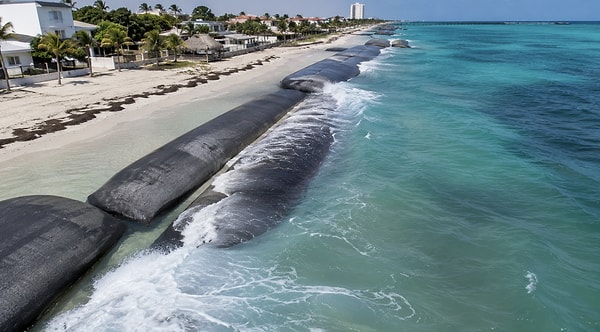
Polypropylene 'geotubes' that are filled with sand and strategically positioned on the ocean floor serve as nearly undetectable breakwaters beneath the water's surface.
Research published in esteemed scientific journals like Geotextiles and Geomembranes and Science Direct reveals that, as of September 2005, a coastal stretch spanning 4 kilometers had been safeguarded using this technology as part of a beach rehabilitation program that was launched in 2001.
In conventional coastal engineering practices, employing stone infill or massive concrete blocks may interfere with the sea's inherent dynamics, consequently resulting in an augmented loss of sand on adjacent beaches.
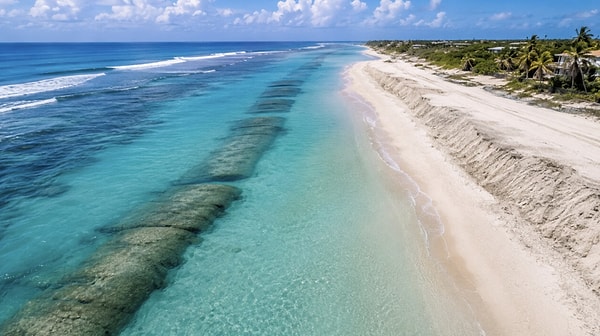
In the Yucatán project, engineers took a fundamentally different tack: Rather than crudely barricading the sea, their goal was to construct a malleable barrier that would harmoniously coexist with it.
Specialists elucidate the benefit of this adaptable design, stating:
'This strategy was conceived to circumvent the ecological harm instigated by inflexible structures and to accommodate the sea's physical fluctuations. For a vibrant coastline subjected to waves and tempests, adaptability is the paramount virtue.'
These inconspicuous geotubes, nestled beneath the tranquil sea in the low-hills, play a pivotal role:
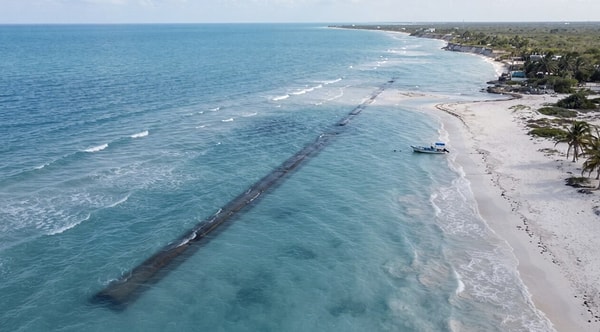
Curbing Wave Energy: Rather than outrightly obstructing the formidable incoming waves, it dissipates their energy prior to their arrival at the shore.
Maintaining Natural Flow: It refrains from impeding the longitudinal motion of sediments and sands, crucial for the stability of the regional beaches.
Fostering Incremental Restoration: With the diminishing wave power, sands commence to amass on the shore, instigating the self-repair process of the beaches.
After being installed, the geotubes were under constant scientific scrutiny for a minimum of 18 months, and their performance was rated highly.
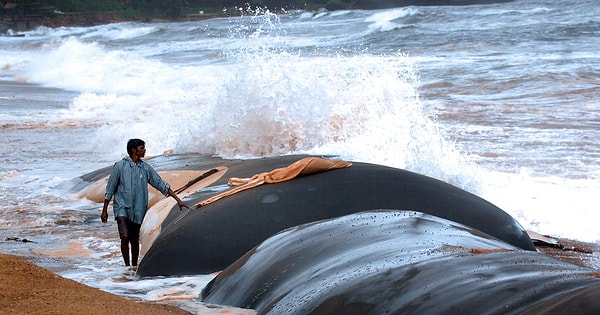
The findings of the study suggest that these underwater structures have significantly contributed to the accumulation of sand in protected areas, thereby gradually improving the quality of the beaches. Although there is still a pressing need for the refinement of technical criteria and maintenance procedures, the case of Yucatán has emerged as an exemplary reference for coastal management initiatives around the globe.
Another scholarly review, published in the Scientific World Journal, illustrates that this geotextile tube technology, which has shown its effectiveness in Yucatán, is now a global trend. Presently, these enormous sand tubes are employed in various regions worldwide to combat coastal erosion, generate artificial beaches, and rejuvenate mangrove forests, often dubbed as the lungs of the coastal ecosystem.
Keşfet ile ziyaret ettiğin tüm kategorileri tek akışta gör!
 Test
Test
 Gündem
 Magazin
 Video
Video



Send Comment