


Forget Asphalt and Concrete: They Built a Road Out of 218K Plastic Cups


The world's first plastic bicycle path, inaugurated in the Netherlands, has opened the door to a new era in road construction. Lightweight road modules, produced entirely from recycled waste and three times more durable compared to asphalt, are being considered a groundbreaking step towards sustainable urbanization.
Here are the details...

Under a pilot project launched in the city of Zwolle in the Netherlands, a 30-meter bicycle path was constructed using waste plastic bottles, cups, and packaging.
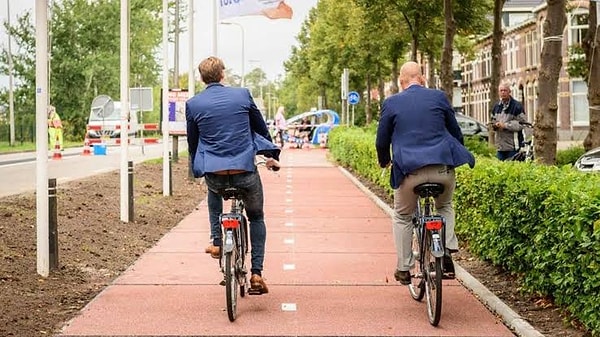
This road, which has been created by recycling waste equivalent to approximately 218,000 plastic cups, offers a lifespan three times longer than traditional asphalt alternatives.
The project was completed in partnership with engineering firm KWS, energy giant Total, and pipe manufacturer Wavin. Following the first implementation in Zwolle, it has been announced that the second line will be established in the city of Giethoorn, while Rotterdam is set to be the city adopting the technology on the largest scale.
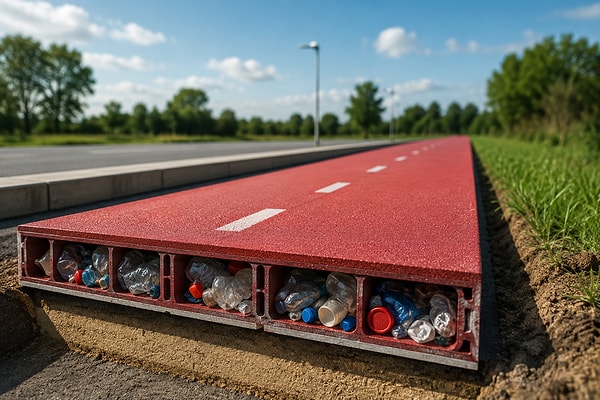
Prefabricated hollow plastic road blocks, produced in advance, offer numerous technical advantages on-site:
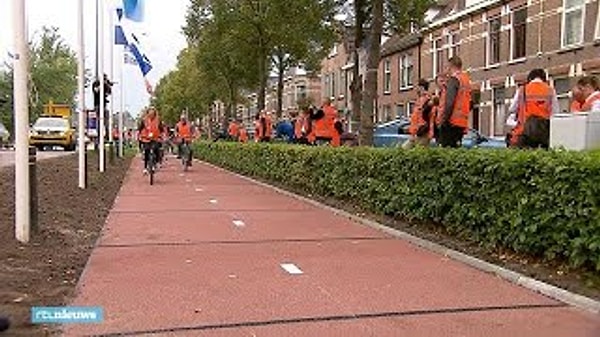
Thanks to their lightweight and hollow structure, these modules are extremely easy to carry and can be installed 70% faster than traditional methods.
Electric cables and plumbing pipes can be effortlessly placed into the cavities within the road.
By design, it can easily drain accumulated rainwater.
Sensors embedded in the road measure surface temperature, the number of bicycles passing by, and the material's resistance to traffic in real time.
The production of asphalt concrete around the world contributes to 2% of global road transport emissions, causing an annual release of 1.5 million tons of CO2.
Designer Simon Jorritsma encapsulates the birth of the idea with the words, 'Where you see a bottle, we see a road.'
In contrast, the European Union, which produces 25 million tons of plastic waste annually and has a recycling rate below 30%, is allocating substantial funds with the aim of making all packaging reusable by 2030.
Even though the idea of roads made from recycled plastic generates excitement, some environmental groups are approaching the project with caution. Harmen Spek from the environmental organization called Plastic Soup, points out the risk of microscopic particles breaking off from the plastic due to high temperatures, friction, and rainfall, and mixing into nature and water sources.
Keşfet ile ziyaret ettiğin tüm kategorileri tek akışta gör!
 Test
Test
 Gündem
 Magazin
 Video
Video



Send Comment