


Bank Account Scam : Beware of Fake IBAN Notifications


A new generation scam method, which has been on the rise recently, has victimized hundreds of citizens. Don't fall for the 'I've sent money to your IBAN, can you confirm?' trap. Those who click on the notification find themselves ensnared by the fraudsters. So, how does this scam unfold? Here are the details that concern everyone with a bank account.

This concerns everyone with a bank account. Whatever you do, don't click on that notification!
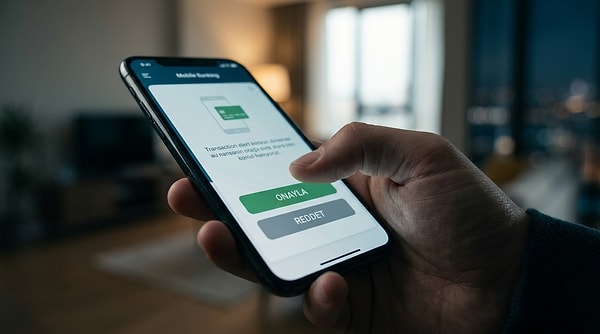
The proliferation of mobile banking applications and the acceleration of digital money transfers have spurred cyber fraudsters into action. Cyber thieves, reaching their victims through second-hand goods advertisements or fake shopping offers, exploit the gaps in the Central Bank's FAST system, a rapid money transfer infrastructure, and the carelessness of users.
The process begins with the fraudster contacting the seller or victim and asking for their IBAN information. Claiming to purchase the product or pay a debt, the suspect soon pressures the victim by calling them and saying, 'I've transferred the money to your account, but the transfer got stuck in the bank's security check. You need to immediately approve the mobile banking notification that came to your phone.'
Those who click on the "Confirm" button are having their bank accounts drained.

A user named '@atabeydogann' on X shared details about the aforementioned scam. According to the post, the whole operation is nothing more than a smoke and mirrors game.
Instead of sending money to the victim, the scammer manipulates the 'Request Payment' function found in the FAST infrastructure of the banking app they are using. By entering the victim's IBAN number into the system, they create a request to transfer money to their own account. The notification that appears on the victim's screen is not a confirmation of receiving a payment, but rather a confirmation to send money out. Users who press the 'Confirm' button without reading the detailed text on the screen end up transferring their savings into the scammer's account with their own hands.
Three golden rules to avoid falling into a trap.

Here are the essential measures to take for digital financial security:
1. Limit Transaction Amounts: Always keep your daily EFT and FAST limits at reasonable levels. If you need to make a high-value transfer, temporarily increase the limit and then lower it again after the transaction.
2. Separate Savings Accounts: Avoid keeping large amounts of cash in your primary demand account that you use for daily expenses and money transfers. Keep your savings in accounts separate from your main account, either closed to transfers or in term accounts.
3. Always Read Incoming Notifications: Carefully review the amount, recipient's name, and type of transaction in each bank notification that comes to your phone before pressing the 'Confirm' button. Never trust individuals who call you and direct you to give approval.
Keşfet ile ziyaret ettiğin tüm kategorileri tek akışta gör!
 Test
Test
 Gündem
 Magazin
 Video
Video



Send Comment