


Australia Builds Giant 5600 Kilometer Desert Fence to Stop Invasive Species


Australia has embarked on one of the world's largest environmental engineering projects to combat invasive species that threaten the continent's unique wildlife, agricultural lands, and sheep herds. The most striking feature of this colossal defensive line is the famous 'Dingo Fence,' stretching a whopping 5,600 kilometers.
Initially built to protect sheep farming in southeastern Australia from wild dingo dogs, this giant network has gradually transformed into the country's most critical land management and wildlife conservation project.

The fences developed by the Australian Wildlife Conservation (AWC) are far from just simple wire mesh.
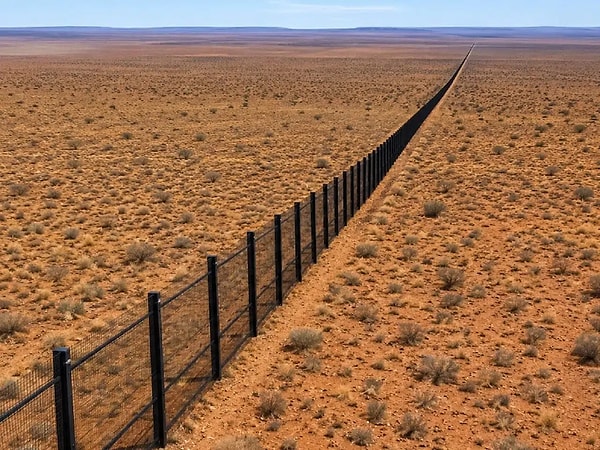
This system, a product of years of research and trial-and-error methods, has been specifically designed to outsmart the intelligence and physical abilities of predators.
Flexible and Slack Top: The top of the 1.8-meter-high steel fences is intentionally left loose. When a fox or cat tries to climb the fence, the top part sags downwards due to its own body weight. This imbalance causes the animal to lose its grip and fall to the ground.
Underground Skirt (Anti-Digging System): At the bottom of the fence, there is a 40-centimeter skirt laid horizontally on the ground. This prevents wild animals from digging under the fence and entering.
Double-Layered Wire and Electric Line: While the top of the fence consists of wires with 40 mm gaps, the bottom narrows down to 30 mm to prevent small pests like rabbits from passing through. Additionally, two electric wires running at heights of 120 and 150 centimeters serve as a deterrent for animals trying to climb.
Constructing these vast conservation areas is quite costly.
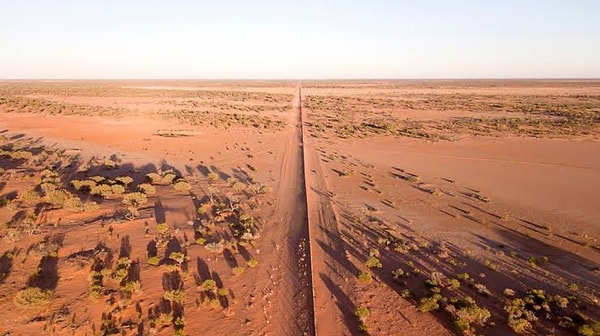
While the cost per kilometer for a standard fence ranges between $50,000 and $60,000, this price can climb up to $80,000 per kilometer in areas like Mount ZeroTaravale, where the terrain is rugged, rocky, and influenced by monsoon climates, necessitating specialized engineering solutions.
The 5-meter-wide vacant roads on both sides of the fences not only facilitate the passage of maintenance vehicles but also serve as buffer zones in case of fires. The maintenance of these fences is just as crucial as their construction. A hole dug by an endangered native species from within can pave the way for a wild cat to infiltrate from the outside.
The team at Newhaven Wildlife Sanctuary meticulously inspects the 44.2-kilometer perimeter fence three times a week. One of the biggest threats here are the male camels that weigh between 700 and 800 kilograms. Particularly during mating season, these camels can inflict significant damage on the connection points of the fences. To detect faults, experts are utilizing smart applications, cameras, and drone technology in hard-to-reach flood areas.
Recently, a major monsoon disaster in the Queensland region resulted in over 1500 millimeters of rainfall on the Taravale farm in just three days.
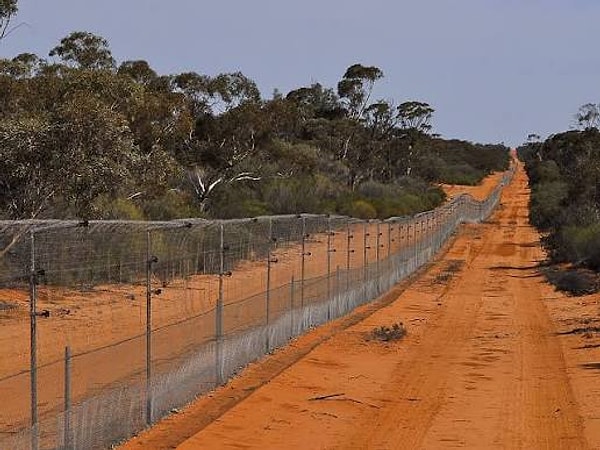
The 'Northern Bettong Fence', specifically designed for the rugged topography of Northern Australia, successfully passed the test of a three-year planning applied for 32 river crossings in the region.
The panels in two major river crossings, designed to prevent the high water flow from completely destroying the fence, were intentionally broken under the pressure of the water. This smart fracture system allowed the main body of the fence to be protected, enabling teams to make the area 'safe' again with a quick and low-cost repair after the disaster.
Australia aims to protect its endangered native animals and revive nature on the lands of their ancestors, thanks to these massive safe havens.
Keşfet ile ziyaret ettiğin tüm kategorileri tek akışta gör!
 Test
Test
 Gündem
 Magazin
 Video
Video



Send Comment