


AI Developed To Predict Your Biological Body Age Just by Looking Into Your Eyes


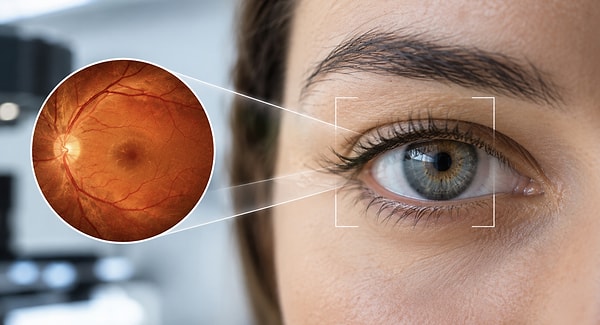
Researchers at Seoul National University have developed an artificial intelligence model that estimates a person's age from retinal photographs. It was observed that the discrepancy between the age predicted by the retina and the actual age is associated with diabetes, smoking, and certain eye diseases.
So, could a simple eye scan reveal how rapidly the body is aging?

The retina is the only organ in the body where both blood vessels and nerve tissue can be directly observed.
Two individuals of the same chronological age can experience aging at different rates. According to researchers, this disparity is determined by genetics, environment, and lifestyle. However, current methods of measuring biological age are not particularly suitable for widespread health screenings. Consequently, researchers have turned to the retina for a more practical approach.
Changes in the retina, such as arterial narrowing and decreased vascular density that occur with age, are known to progress in parallel with vascular aging in the body. Fundus photography is a quick, painless, and cost-effective method that is already widely used in health screenings.
Here are the details of the study:
Training Data: The model was trained with 29,530 fundus images taken from 7,535 individuals who underwent health screenings.
Testing: It was then tested on 14,832 different images belonging to 7,416 individuals.
Healthy and Diseased Eyes: In a departure from most previous studies, images of eyes with retinal or optic nerve diseases were also included in the system.
Gender Prediction: Alongside age, the model also predicts the individual's gender. This is intended to reduce errors that could arise from differences between female and male retinas.
The model was able to estimate the individual's actual age with an average error margin of 2.5 to 2.7 years. The researchers then focused on the difference between the retina age predicted by the model and the actual age, termed as the 'retina age gap'.
'Individuals of the same chronological age exhibit significant differences in terms of biological aging and health status, shaped by genetic, environmental, and lifestyle factors.' - Research Team, Seoul National University.
The retinal age of those with diabetes is, on average, 2.52 years higher than those without diabetes.

Researchers have examined the correlation between retinal age disparity and various health and lifestyle factors. Diabetes was identified as the most significant factor in increasing retinal age.
Diabetes: Those diagnosed with diabetes had an average retinal age that was 2.52 years higher. No such correlation was observed in individuals in the pre-diabetic stage.
Smoking: Compared to those who had never smoked, smokers had an approximate increase of 0.5 years in retinal age, while those who had quit smoking had an increase of 0.46 years.
Marriage: The retinal age of married participants was found to be 0.46 years lower than that of single participants. However, the researchers noted that this finding was statistically weaker and exploratory in nature.
Blood Pressure and Cholesterol: No correlation was found between high blood pressure, high blood lipids, and retinal age.
Eye diseases also reflected in the results. Eyes with age-related macular degeneration had a retinal age that was 0.60 years higher, while eyes with cataracts had a retinal age that was 1.86 years higher. No difference was observed in cases of glaucoma.
Caution should be exercised when interpreting the result related to cataracts. The increase may be partly due to the blurred image caused by the cataract reducing the quality of the retinal photograph, rather than the aging of the retina itself.
Researchers emphasize that the method is not yet ready for personal health prediction.
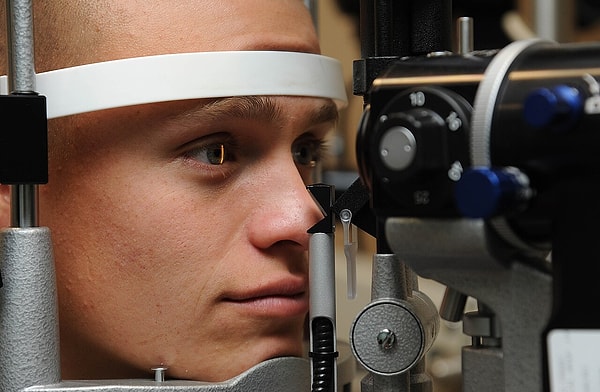
The developed system is not yet seen as a test that measures a person's biological age. The researchers did not compare the method with existing measurements of biological age. There is also a need for new studies where the same individuals are tracked over the years. Moreover, many of the effects captured by the model remain small compared to its own margin of error.
'Whether this reflects biological aging needs to be confirmed with long-term studies comparing it to established aging markers. For now, the difference in retinal age is more suitable for evaluations at the community level rather than individual risk prediction.' - Research Team, Seoul National University
Nevertheless, it is thought that the method could add a different function to routine eye examinations in the future:
Need for Additional Examination: In eye clinics where fundus imaging is routinely performed, it could help identify patients who may need a more comprehensive health assessment.
Tracking Change: If confirmed with long-term studies, repeated measurements could be used to monitor changes in the individual and the response to treatments applied.
The results of the research were published in the GeroScience journal.
Keşfet ile ziyaret ettiğin tüm kategorileri tek akışta gör!
 Test
Test
 Gündem
 Magazin
 Video
Video



Send Comment