


6 Things We Learned In School That Turn Out To Be Wrong


We heard them once as children and carried them around for years without ever checking. From knuckle cracking to brain capacity, from the taste zones on the tongue to Pluto's status, plenty of things we memorised do not match the evidence scientists actually have.
Here are six 'facts' picked up at school, at home or on the street that turn out to be wrong.

Cracking your knuckles does not ruin your joints.

The warning that cracking your knuckles will give you arthritis has stuck with a whole generation, but research does not back it up. The familiar popping sound comes from gas bubbles in the fluid that surrounds the joint.
American doctor Donald Unger cracked the knuckles of only his left hand at least twice a day for decades and left his right hand alone as a control. In the end he found no difference between the two hands, and the experiment earned him the Ig Nobel Prize in Medicine in 2009. A larger study of 215 people also found no meaningful difference in hand arthritis between people who crack their knuckles and people who do not. If the cracking comes with pain or swelling, though, it is worth seeing a doctor.
We use all of our brain, not just 10 percent of it.
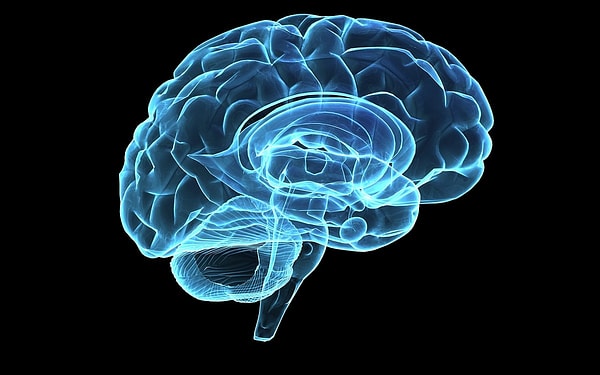
The idea that we only use 10 percent of our brains has inspired films, but it has no scientific basis. Brain imaging shows that almost every region of the brain is active over the course of a day, and that many regions keep working even while we sleep.
The brain makes up only about 2 percent of our body weight, yet it burns roughly a fifth of the energy we use. Evolution does not leave most of such an expensive organ sitting idle.
The tongue has no separate zones for sweet, salty and bitter.
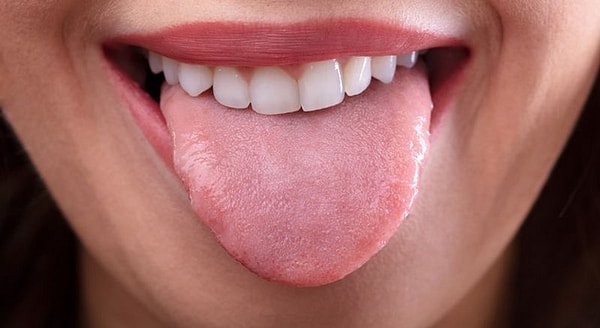
You probably remember the tongue diagram from school textbooks: sweet at the tip, sour and salty along the sides, bitter at the back. That map grew out of a later misreading of measurements made in 1901 by the German scientist Hänig. Hänig had found only small differences in sensitivity between areas, but over time those differences were passed on as if they were firm borders.
Studies carried out since the 1970s have shown that all the basic tastes can be detected on every part of the tongue. Every type of taste receptor is spread across the whole mouth.
Pluto is no longer counted as a planet.

Declared the ninth planet of the Solar System when it was discovered in 1930, Pluto was moved into the dwarf planet category by a decision of the International Astronomical Union on 24 August 2006.
To count as a planet, a body has to orbit the Sun, be rounded by its own gravity and have cleared its orbit of other objects. Pluto meets the first two conditions but not the third, because it shares the Kuiper Belt with other bodies of similar size. Its status changed, but in 2015 the New Horizons spacecraft flew past and photographed the giant heart-shaped icy region on its surface, putting this small world back in the spotlight.
Columbus was not the first European to reach the Americas
When Christopher Columbus arrived in the Caribbean in 1492, indigenous peoples had already been living in the Americas for thousands of years. European sailors had landed long before him too: the Norse Vikings.
Cut pieces of wood found at the L'Anse aux Meadows settlement on the Canadian island of Newfoundland were dated in 2021 to the year 1021 AD, using tree rings and the radiocarbon trace left by a solar storm in 993. In other words, Vikings were in North America about 470 years before Columbus.
Cats and dogs do not see the world in black and white
Human eyes have three types of colour-sensing cells, while dogs have two. Their world of colour is narrower than ours, but they are not locked into shades of grey: they can easily tell blue from yellow, while red and green look close to each other.
With cats the picture is a little more debated. Some studies argue that they also see mostly in blue and yellow, while others point to a cell type sensitive to red. What is certain is that neither animal sees the world like a black-and-white film.
Keşfet ile ziyaret ettiğin tüm kategorileri tek akışta gör!
 Test
 Gündem
 Magazin
 Video



Send Comment