


7 Places Around the World That Reinvented Themselves After Their Coal Mines Closed


When a mine closes, the town around it rarely gets an easy second act. Jobs disappear, industrial sites fall silent and people start to leave. Yet a number of places around the world have managed to reshape both their economy and their public spaces. Some opened old mines to visitors, some brought nature back, and others invested in new kinds of work. Here are seven of them.

In Spain and France, old coal country turned to clean energy and culture.
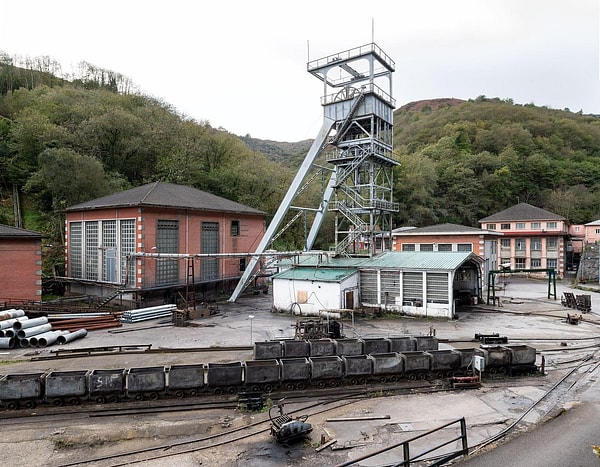
Asturias, Spain
The Asturias region in northern Spain had to change its economic structure once coal mining came to an end. Almost all of the region's mines were closed by the end of 2018, and creating new jobs and diversifying industry became priorities. With European Union support, projects are under way to restore former mining sites, invest in clean energy and develop local businesses. Training and reskilling programmes are also in place to help former miners move into new work.
Lens, France
Lens closed its last coal mine in 1986 and then looked for different ways to revive its economy. The most striking result was the decision of the Louvre to open a branch in the town. Louvre-Lens opened its doors in 2012 and helped the area attract visitors for art and culture, giving the former mining basin a chance to be known for more than its industrial past. Lens also shows that tourism income and new jobs do not appear on their own: they need long-term planning behind them.
Two towns in Germany chose small businesses and a public park over one big employer.
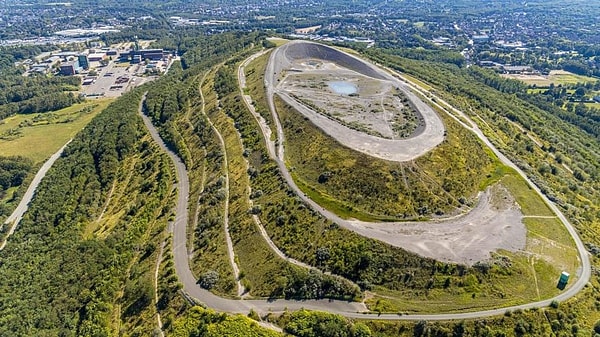
Bottrop, Germany
Bottrop, in the Ruhr area, was associated with coal mining for 155 years. When the Prosper-Haniel mine, one of the town's most important sources of work, shut down, it was clear the old economic order would not last forever. Instead of depending on a single large employer, Bottrop focused on attracting small and medium-sized companies. Environmentally friendly practices and energy-efficiency work also became important parts of the transition. The lesson of Bottrop is that when mining ends, creating several fields of work matters more than pinning every hope on one new sector.
Hamm, Germany
In Hamm, the closure of the last mine in 2010 left behind idle industrial land and a community struggling with economic decline. The city decided to turn one of these sites into Lippepark, a park open to everyone. Residents from different parts of the community were brought into the decision-making, and an advisory structure set up for the project gave local people a say in the park's future.
From Poland to Indonesia, industrial heritage became a reason to visit.
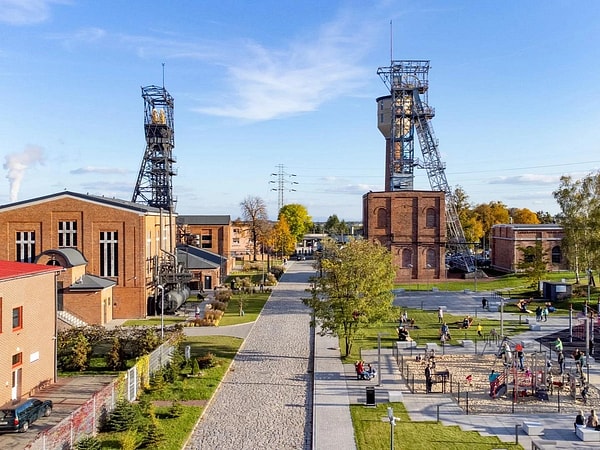
Rybnik, Poland
Rybnik, in southern Poland, began shifting its industry-heavy economy towards services in the 1990s. After the old Ignacy Mine closed, the industrial buildings it left behind gradually became spaces the town could reuse. The former water tower was opened to visitors, mine buildings were renovated and exhibitions about the industrial past were created. Where machines once ran, there are now public spaces for meeting and relaxing. The city administration wants the change to benefit small businesses nearby as well, because bringing new economic life to an old mine matters as much as making it look good.
Ostrava, Czechia
Ostrava was identified with coal mining and heavy industry for many years. As industrial activity declined, the future of the old production sites became a major urban planning question. The Dolní Vítkovice industrial complex was converted into a venue for culture, education and visitor events while keeping the traces of its industrial past, so buildings once at the centre of production are now places where new generations can learn about that history.
Sawahlunto, Indonesia
With the decline of the coal sector, Sawahlunto risked losing its population and its economic vitality. City leaders and local stakeholders chose to turn former mining areas into tourism and culture centres, and historic mining buildings were repurposed as places where visitors can get to know the town's past. According to an academic study, this change helped the town overcome the danger of becoming a ghost town and made significant progress in less than 15 years.
What they have in common
In none of these places did the transformation happen by itself. Moving to a climate-friendly economy means reusing old industrial sites and creating new jobs, and it also means bringing former miners and local residents into the process so that workers and communities are not left behind.
Keşfet ile ziyaret ettiğin tüm kategorileri tek akışta gör!
 Test
 Gündem
 Magazin
 Video



Send Comment