


10 Women Who Answered Those Who Underestimated Them and Changed the Course of History


Some took the throne, some put on armor and rode into battle, and some opened the doors of university faculties that had been closed to women. They lived in different eras, cities and languages, but they share one thing: they answered those who looked down on them with what they achieved, and left a lasting mark on history. Here are 10 women, from antiquity to the early years of the Turkish Republic.

Queens and empresses who held power against all odds.
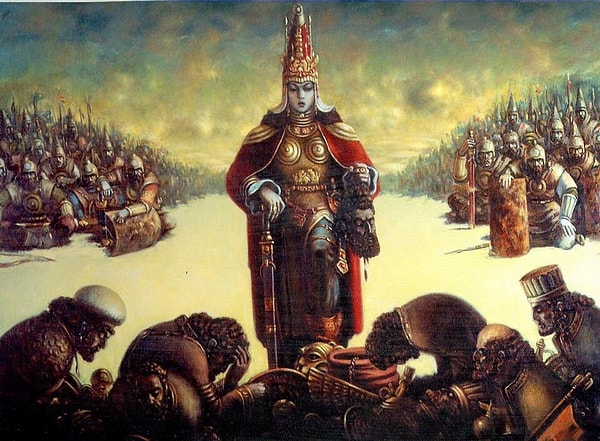
Tomyris: the steppe queen who stopped Cyrus the Great
The most detailed account of Tomyris comes from the ancient Greek historian Herodotus. According to him, she was queen of the Massagetae, who lived on the steppes east of the Caspian Sea; Turkish historiography often describes her as a ruler of Saka origin. The Persian king Cyrus the Great first tried to take her lands through a marriage proposal, and when she refused, he went to war. Her son Spargapises was captured through a wine trap set by Cyrus and died in captivity. In the pitched battle that followed (around 530 BC), the Persians were heavily defeated and Cyrus was killed. Herodotus describes it as one of the fiercest battles fought up to his time.
Altuncan Hatun: the wife who kept the Seljuks standing
Altuncan Hatun was the wife of Tughril Beg, founder of the Great Seljuk state. According to the TDV Encyclopedia of Islam, Tughril Beg consulted her on important matters and often decided according to her view. In 1058, when his brother İbrahim Yınal rebelled, Tughril Beg was trapped in Hamadan. While the vizier Kunduri stalled, Altuncan Hatun gathered the Oghuz forces in Baghdad and set out for Hamadan; contemporary chronicles describe this help as decisive in crushing the revolt. She died in Zanjan in 1060.
Catherine II: the German princess who took the throne in a coup
Born Sophie Friederike Auguste von Anhalt-Zerbst in 1729 in Stettin, Prussia, she married Peter, heir to the Russian throne, in 1745, converted to Orthodoxy and took the name Yekaterina. Six months after her husband became Peter III, she overthrew him in 1762 with the support of guards officers, including the Orlov brothers, and was proclaimed empress. During her 34-year reign she greatly expanded Russia's borders, annexing Crimea in 1783 and playing a leading role in the three partitions of Poland. She corresponded with Voltaire and Diderot and built the art collection that became the foundation of today's Hermitage Museum.
Cleopatra and Joan of Arc fought for their place in a man's world.
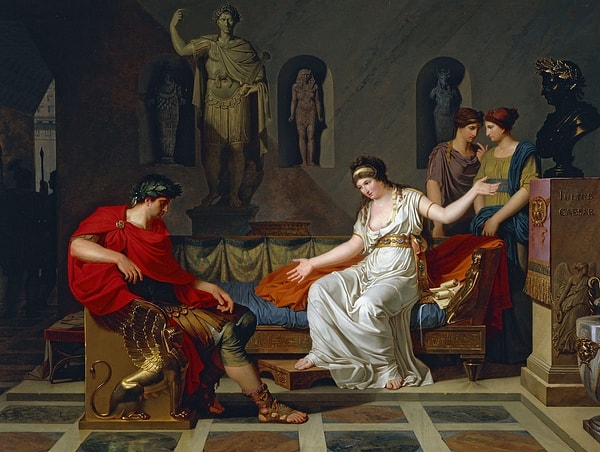
Cleopatra VII: the last pharaoh of Egypt
Cleopatra came to the throne in 51 BC after the death of her father, Ptolemy XII, sharing it with her younger brother Ptolemy XIII. When the palace faction sided with her brother, she was driven out of Egypt, raised an army on the Syrian side and came back. She won the support of Julius Caesar. In the Battle of the Nile in 47 BC her brother was defeated and drowned in the Nile while fleeing. Cleopatra then shared the throne with another brother, Ptolemy XIV, and after Caesar's death formed both a political and a personal partnership with Mark Antony. When she was defeated by Octavian and died in 30 BC, the Ptolemaic dynasty ended with her. According to Plutarch, she was the first ruler of her family to learn the Egyptian language.
Joan of Arc: the peasant girl who broke the siege of Orléans
Joan was born around 1412 into a farming family in the French village of Domrémy. By her own account, at about 13 she began hearing voices telling her she had to save France. During the Hundred Years' War she persuaded the dauphin Charles to let her join the army, and in 1429 she played a part in relieving Orléans, which the English had besieged. That same year Charles was crowned Charles VII at Reims. Captured by the Burgundians the following year, Joan was tried by a pro-English church court and executed in Rouen on May 30, 1431, at the age of 19. A retrial in 1456 annulled her conviction, and she was canonized in 1920.
Thinkers, artists and pioneers who opened doors for women.
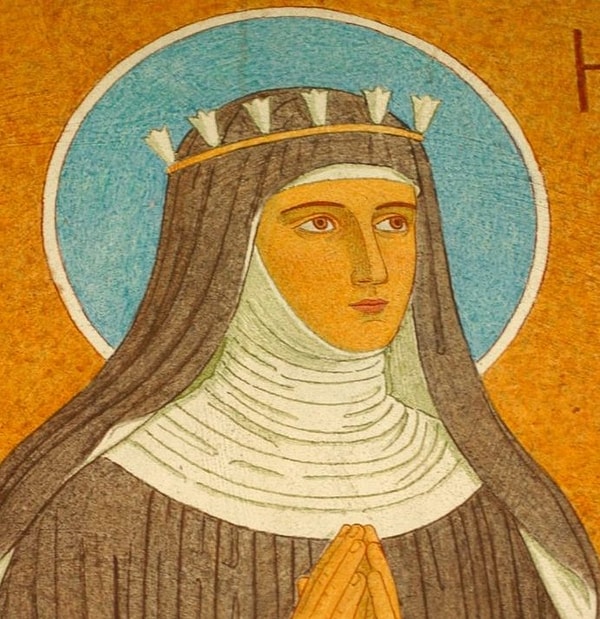
Hildegard of Bingen: the composer nun of the Middle Ages
Hildegard was born in 1098 and was given to the Disibodenberg monastery as a child, where she was raised by the nun Jutta von Sponheim. When Jutta died in 1136, Hildegard took charge of the community, and around 1150 she founded her own monastery at Rupertsberg near Bingen. Her writings recording her visions reached a wide audience after Pope Eugene III approved them. She wrote books on nature and medicine and composed dozens of chants; her Ordo Virtutum is considered one of the oldest surviving morality plays. In 2012 the Church named her a Doctor of the Church, one of four women to hold the title.
Mary Wollstonecraft: the thinker who put women's rights on paper
Mary Wollstonecraft was born in 1759 in Spitalfields, London. In A Vindication of the Rights of Woman (1792) she argued that women are not naturally inferior to men and that what holds them back is lack of education. She also wrote a book on girls' education, a history of the French Revolution and a travel book. Today she is regarded as one of the founders of feminist philosophy. She died in 1797, a few days after giving birth to her daughter Mary, who grew up to become Mary Shelley, author of Frankenstein.
Emily Murphy: pioneer of the 'Persons Case'
Born in Ontario, Canada, in 1868, Emily Murphy was a writer and activist for the rights of women and children. In 1916 she was appointed police magistrate of a court in Edmonton that heard cases involving women, and is remembered as the first female magistrate in the British Empire. On her first day, a lawyer challenged her authority, arguing that women were not 'persons' under the law. Murphy and four colleagues, later known as the Famous Five, took up the fight. On October 18, 1929, the Privy Council in London ruled that women were 'persons' under the law and could be appointed to the Senate.
Süreyya Ağaoğlu: Turkey's first female lawyer
Süreyya Ağaoğlu was born in Shusha in 1903; her father was the thinker Ahmet Ağaoğlu. After the family settled in Istanbul, she became the first female student to apply to the Darülfünun Faculty of Law and graduated in 1925. In 1927 she registered with the Ankara Bar and received her license, becoming Turkey's first female lawyer. Fluent in English and French, she represented Turkish jurists at many international meetings and founded associations for children and women. She told her life story in her memoir Bir Ömür Böyle Geçti and died in Istanbul in 1989.
Sabiha Bengütaş: the Republic's first female sculptor
Born in Istanbul in 1904, Sabiha Ziya Hanım first entered the Sanayi-i Nefise Mektebi (School of Fine Arts) as a painting student. When the girls' and boys' schools merged in 1920, she moved to the sculpture department she had longed to join and became its first Turkish female student. She was the only woman among three male students and had to pause her studies for a while because of her family's objections. In later years she created major works, including statues of Atatürk and İsmet İnönü and the Mudanya Armistice Monument. In 1927 she described herself in a magazine article titled 'The First Turkish Woman Sculptor'. She died in 1992.
Keşfet ile ziyaret ettiğin tüm kategorileri tek akışta gör!
 Test
 Gündem
 Magazin
 Video



Send Comment