


10 Unsettling Facts That Will Make You Question What You Know


Some facts, once learned, are impossible to forget. From the fly on your plate to nuclear bombs that were never found, and from a parasite that eats a fish's tongue to the skin we shed every minute, here are 10 facts that might change how you see a few ordinary things.


House flies have no teeth, so they dissolve your food first and then suck it up.
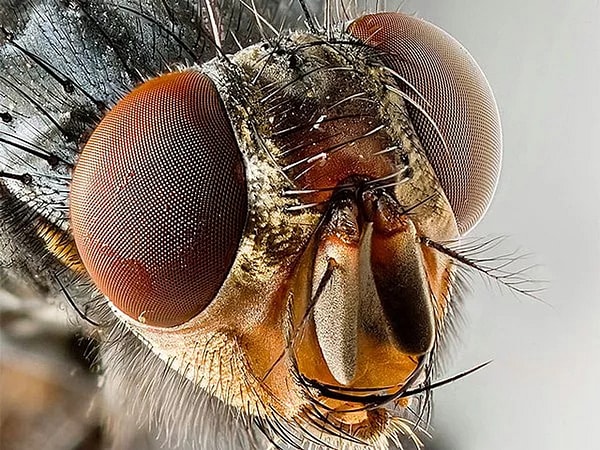
A fly's mouth isn't built for chewing; it works like a sponge that soaks up liquid. When it lands on solid food, it leaves saliva and digestive fluid on it to break it down, then sucks up the liquefied part. Considering how much time flies spend on garbage and rotting matter, shooing one off your plate is fully justified.
Your skin sheds tens of thousands of cells every minute
According to the Skin Cancer Foundation, skin sheds about 30,000 dead cells per minute, and some sources put the number as high as 40,000. New cells from the layers below take their place. Estimates of how many kilos this adds up to per year or over a lifetime vary so widely that it's best not to quote a single figure. What is certain is that part of the dust in your home comes from you.
There are nuclear weapons the US lost and never found.

Since 1950, the US military has recorded 32 nuclear weapons accidents under the name 'Broken Arrow.' In these accidents at least 6 nuclear weapons were lost and none of them has been recovered. One of them is the Mark 15 bomb dropped into the sea near Tybee Island, off the coast of Georgia, in 1958.
If something happened to the Sun, we would only find out about 8 minutes later
Sunlight takes about 8 minutes and 20 seconds to reach Earth, so the Sun you see in the sky is how it looked 8 minutes ago. If it vanished in an instant, we wouldn't notice until that time had passed. The good news: the Sun will not explode. Going supernova takes roughly 8 to 10 times more mass. In about 5 billion years it will swell up and slowly shed its outer layers.
The chainsaw's ancestor was designed for childbirth
In the 1780s, Scottish surgeons John Aitken and James Jeffray developed a hand saw made of a chain stretched between wooden handles. It was used in an operation called symphysiotomy, in which the pubic bone was cut to widen the birth canal during obstructed labor. In the 1830s, German surgeon Bernhard Heine built a chain saw with a crank. Motorized saws for cutting trees came much later, and as caesarean sections and anesthesia developed, the procedure was left behind.
You can't prove with certainty that the people around you really exist.

In philosophy this is called solipsism: the only thing we can know for certain is our own mind, and everything else is open to doubt. Descartes also doubted everything before arriving at 'I think, therefore I am,' though he himself was not a solipsist. Most philosophers reject the view, but no one has yet come up with a proof that refutes it conclusively.
Elephants can stay beside their dead for a long time.

The popular claim that 'an elephant dies of a broken heart when its mate dies' isn't backed by any study. What is known: according to a 2020 review by Shifra Goldenberg and George Wittemyer published in the journal Primates, elephants approach dead elephants, touch and sniff them, and sometimes even revisit decomposed remains. The researchers say this resembles mourning, but add that we don't fully know why they do it.
Llama spit often comes from the stomach
When llamas and close relatives such as alpacas get annoyed, they first launch the saliva in their mouths. If things get serious, they bring up half-digested feed and stomach fluid from the first compartment of the stomach and spray that instead. As you'd guess, the greenish mixture doesn't smell great. They mostly do it to keep each other away from food or water.
Some spiders catch and eat bats
A 2013 study by Martin Nyffeler and Mirjam Knörnschild in PLOS ONE brought together 52 cases of spiders catching bats. The cases were reported from almost every continent except Antarctica, most often from Central and South America. Most of the catches were made by web-building spiders, and the victims were usually small insect-eating bats.
There is a parasite that destroys a fish's tongue and takes its place
Its name is Cymothoa exigua, an isopod crustacean. It enters a fish through the gills and moves into the mouth, cutting off the blood supply to the tongue until the tongue withers and falls off. It then attaches to the remaining stub, and the fish keeps using it as if it were its own tongue. From then on the parasite feeds on the fish's blood and mucus. It isn't considered harmful to humans, but it can bite if handled alive.
Keşfet ile ziyaret ettiğin tüm kategorileri tek akışta gör!
 Test
 Gündem
 Magazin
 Video



Send Comment