


Vines Swallowed The Houses, Sand Buried The Town: 10 Abandoned Places Nature Has Reclaimed


Ten settlements that were once full of people now belong to nature. From a fishing village in China to Pripyat in the shadow of Chernobyl, from Kolmanskop in the Namib Desert to Angkor in Cambodia, this list shows how abandoned places slowly turn into something else. Vines have wrapped around the houses, and sand or grass has covered the streets.

A fishing village under green vines, a diamond town filled with sand.
Houtouwan, Pripyat and Hashima
Houtouwan, on China's Shengshan Island, is one of the most striking examples. The stone houses of this former fishing village are covered from top to bottom in green vines, and its narrow lanes have almost disappeared under the plants.
Pripyat in Ukraine has a very different story. The city was evacuated after the 1986 Chernobyl nuclear disaster, and over the decades trees have grown up between its buildings. In Japan, Hashima Island off Nagasaki was abandoned in 1974 when its mine closed; its remaining concrete structures still stand as a silent reminder of an industrial age.
Kolmanskop, Craco, Bodie and Villa Epecuén
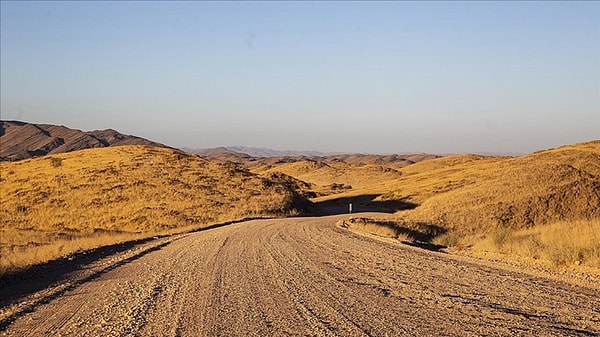
Kolmanskop, in the middle of the Namib Desert, rose with diamond mining in the early 1900s. Abandoned in the 1950s, its houses are now filling with desert sand that drifts through the doorways and piles up in the rooms.
Craco in southern Italy is a hilltop village emptied because of landslide risk; its stone buildings remain, but nobody lives in them. Bodie in California is known as a gold-rush town frozen in time. In Argentina, Villa Epecuén's fate was decided by water: a 1985 flood submerged the village, and when the water receded years later it left behind a ghostly landscape.
Traces left by war and time: Belchite, Oradour-sur-Glane and Ta Prohm.
Belchite in Spain still bears the marks of the 1937 Civil War; the ruined village was never rebuilt, and a new settlement was founded next to it. Oradour-sur-Glane in France was left exactly as it was after the tragic events of 1944 and is preserved today as a memorial site.
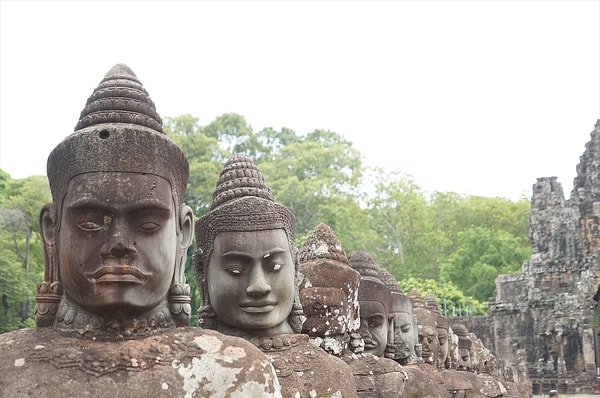
The last stop on the list is the Ta Prohm temple in Cambodia. Inside the Angkor complex, the structure is gripped by forest roots and enormous trees, a sight that shows how nature can slowly reclaim even the sturdiest stone buildings.
Each of these ten places was emptied for a different reason: economic decline, natural disaster, the end of an industry or war. What they share is that wherever people withdrew, nature moved in without wasting any time.
Keşfet ile ziyaret ettiğin tüm kategorileri tek akışta gör!
 Test
 Gündem
 Magazin
 Video



Send Comment