


They Placed a 240-Meter Inflatable Wall Underwater to Prevent Flooding


In the Netherlands, beneath the waterway traversed by ships, three giant rubber sections lie hidden for the most part of the year. The Ramspol barrier, which automatically inflates when stormwater is driven towards settlements, transforms into a wall of approximately 240 meters within about an hour, effectively halting the advancing water.

On ordinary days, it waits folded up at the bottom of the water.
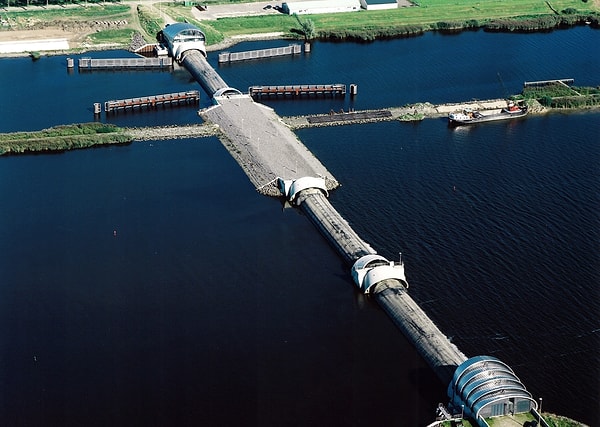
Hollanda’nın Kampen kenti yakınlarındaki Ramspol bariyeri, Ketelmeer ile Zwarte Meer arasındaki su geçidinde bulunuyor. Bariyerin görevi, şiddetli kuzeybatı rüzgarlarının IJsselmeer’deki suyu iç kesimlere doğru sürüklediği dönemlerde Noordoostpolder ve Overijssel çevresini taşkın riskine karşı korumak.
Yapının en dikkat çekici özelliği ise kullanılmadığı zamanlarda neredeyse tamamen görünmez olması. Bariyeri oluşturan ağır ve dayanıklı kauçuk bölümler, su yolunun dibine yerleştirilen özel beton haznelerin içinde katlanmış halde bekliyor. Böylece normal hava koşullarında gemiler herhangi bir kapı, duvar veya kalıcı engelle karşılaşmadan yollarına devam edebiliyor.
Geleneksel fırtına bariyerlerinde kullanılan büyük metal kapıların aksine Ramspol’da üç dev şişme körük bulunuyor. Her biri 80 metre uzunluğundaki bu bölümler yan yana yükseldiğinde su yolunu baştan sona kapatan 240 metrelik bir savunma hattı oluşturuyor. Tasarım, yoğun kullanılan su yolunun yalnızca tehlike anında kapatılmasına imkan veriyor
The system automatically kicks in once the water level surpasses 50 centimeters.
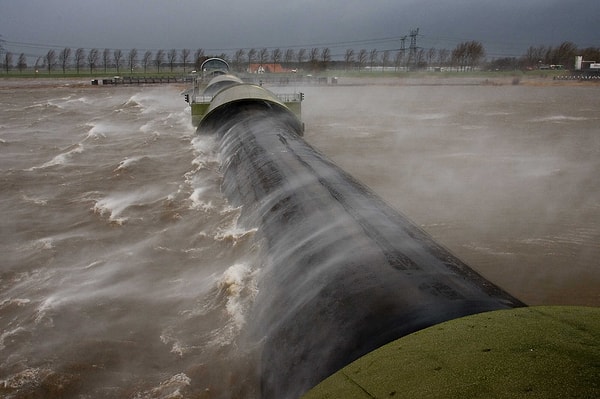
The barrier doesn't activate every time it rains or the water level rises. For the system to function, the water needs to rise 50 centimeters above the Netherlands' reference sea level, strong northwest winds need to blow, and the current needs to move towards the shore. The shutdown process automatically begins when sensors detect that the water level has remained above the set limit for a minute.
Powerful pumps kick in, filling three rubber bellows with air and water. At the end of a process that lasts about an hour, the structure, which lies folded at the bottom of the water, transforms into a giant wall 10 meters high and 240 meters long. The total volume of the three sections reaches 21 million liters, and the resulting image resembles a giant bicycle tire rising from the water.
As the barrier inflates, ship traffic on the waterway is temporarily halted. The rising bellows cut off the water moving from Ketelmeer to Zwarte Meer, preventing waves from reaching the inland areas. After the danger has passed, the water inside is pumped out, the air is released, and the giant wall folds back into the concrete basins.
The inflatable barrier thwarted the construction of a 115-kilometer dam.
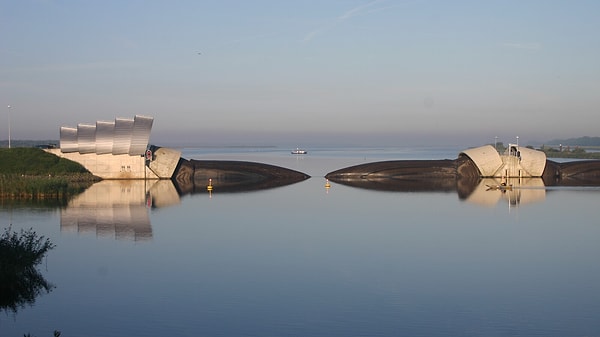
Had the Ramspol barrier not been constructed, it would have been necessary to elevate a dike spanning approximately 115 kilometers to protect the surrounding settlements. Instead, an inflatable system was chosen, which only stops the water at critical points. The project's notable advantages included less interference with the area, maintaining transportation on the waterway, and reducing costs.
Since December 2002, the barrier has been in operation and holds the unique distinction of being the only defensive structure in the world that uses an inflatable bellow system against storm waves. Depending on the conditions, the system closes once or twice a year and is inflated in a controlled manner for testing before each storm season begins. During the annual trial conducted on the first Tuesday, the pumps, sensors, and rubber surface are all checked together.
Keşfet ile ziyaret ettiğin tüm kategorileri tek akışta gör!
 Test
Test
 Gündem
 Magazin
 Video
Video



Send Comment