


They Built a Shield by Placing 80-Ton Concrete Blocks Along the Coast


From a distance, the giant concrete blocks lined up towards the sea along the Japanese coast may resemble a peculiar installation of sculptures. However, these four-legged structures are actually employed to protect the coasts, harbors, and coastal facilities against powerful waves. Known as Tetrapods, these concrete blocks are considered a significant engineering solution especially in countries battling typhoons, storm surges, and coastal erosion.

It resists the wave not like a wall, but like a net.
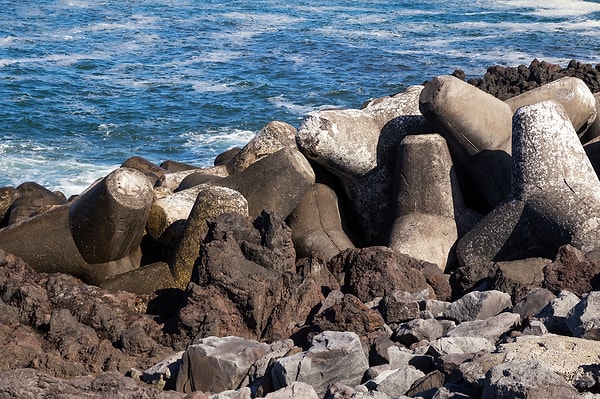
One of the most striking features of tetrapods is their ability to resist waves, not by acting like a solid concrete wall, but rather by allowing water to pass through their four-armed structures, dispersing wave energy in various directions.
This mechanism prevents waves from hitting the shore with a single, powerful blow. Instead, the energy of the waves is dissipated in the gaps between the blocks. When stacked, tetrapods create a three-dimensional structure that interlocks, enhancing their resilience against powerful waves.
It was developed in France, but gained popularity in Japan.
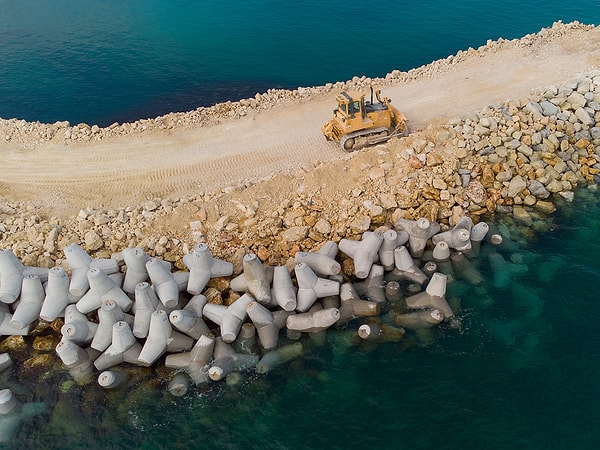
The story of the tetrapods began in France in 1950. One of the first applications of this design, which was developed in a hydraulic laboratory in Grenoble, was to protect the seawater entrance at an energy plant in Casablanca, Morocco.
Over time, the system spread to many countries. Japan, in particular, became one of the countries that used tetrapods most extensively. In the country's approximately 35,000 kilometers of coastline, ports, seawalls, landfill areas, and concrete coastal protection structures hold significant importance.
However, this method is not without controversy. While tetrapods can protect coasts against waves, they are criticized for altering the natural beachscape, potentially affecting sediment flow in some areas, and exerting pressure on the ecosystem. Despite these criticisms, they continue to be used as one of the most common coastal defense methods in areas with high storm and erosion risks.
Keşfet ile ziyaret ettiğin tüm kategorileri tek akışta gör!
 Test
Test
 Gündem
 Magazin
 Video
Video



Send Comment