


Massive Project Places Solar Panels Over Miles of Water Canals in California


The state of California in the USA, which is battling the climate crisis, is implementing a revolutionary pilot project to both meet its clean energy needs and protect its dwindling water resources due to drought. Solar panels built over irrigation channels not only generate electricity, but also dramatically prevent the evaporation and algae formation of water.

California, one of the regions most profoundly impacted by the effects of global warming, is embarking on a groundbreaking infrastructure project.
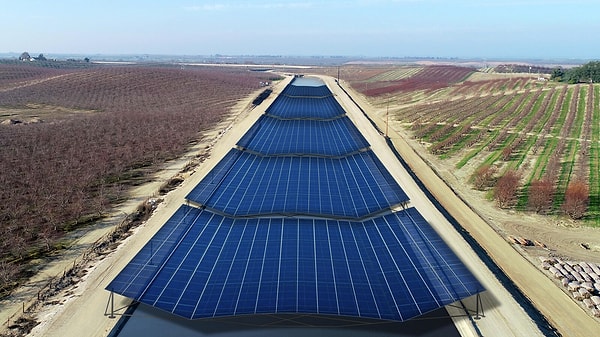
The pilot initiative, dubbed 'Project Nexus,' which encompasses the placement of solar panels atop the colossal irrigation canals in the state, aims to quench the state's thirst for clean energy and simultaneously safeguard its precious water resources from evaporation.
The initial data gathered from the advanced sensors installed in the channels has already revealed that the project has made tremendous contributions to both the environment and water management.
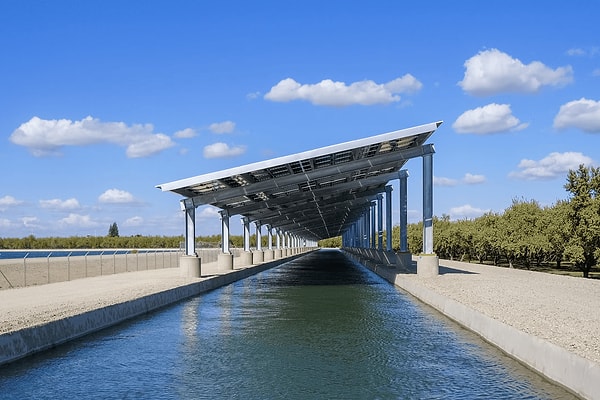
Thanks to the shade created by solar panels, the evaporation of water in the canals has decreased by up to 70%. Moreover, the panels' blocking of sunlight slowed down the photosynthesis process in the water corridors. This situation also provided a natural defense against aquatic weeds and algae, which deteriorate the quality of the water and make the flow difficult; a decrease of up to 85% in algae growth in the region was recorded.
Experts are highlighting the strategic benefits of installing solar panels over state-owned water canals, rather than deploying them on unused agricultural lands.
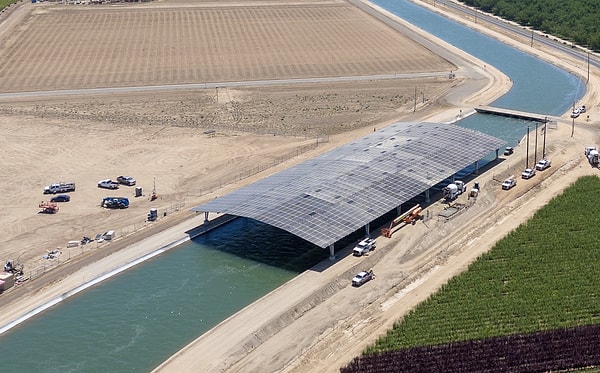
Millions of acres of land are required for California to meet its 100-bed renewable energy targets. However, by installing the panels over the canals, we can:
- Prevent the sacrifice of agricultural lands or natural habitats,
- Save on high land purchase costs since the state already owns these areas,
- Expedite the implementation of projects by minimizing lengthy bureaucratic approval processes and extensive environmental impact studies involved in new land allocations.
In this way, we not only preserve the integrity of our natural and agricultural spaces, but also optimize the use of existing resources, thereby accelerating the transition to renewable energy.
From an engineering perspective, there's a mutual benefit mechanism at work.
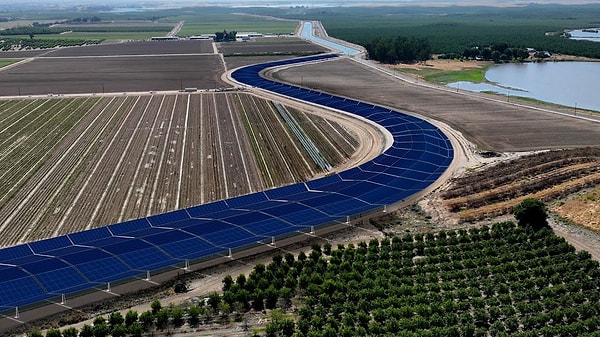
The flow of water beneath solar panels allows them to maintain a cooler temperature, preventing overheating. This cooling effect enables the panels to operate with significantly higher energy efficiency compared to standard land installations. The clean energy produced in this way directly powers the irrigation systems for regional crops such as cotton, tomatoes, and almonds.
Should this developed model prove successful, it is anticipated to be widely implemented across California, which boasts thousands of kilometers of open water channels. Moreover, it could serve as a model for other countries around the world that are grappling with drought.
Keşfet ile ziyaret ettiğin tüm kategorileri tek akışta gör!
 Test
Test
 Gündem
 Magazin
 Video
Video



Send Comment