


Ice Skater Shares Miserable Aftermath of Skating Across Frozen Lake


The thought of skating on a frozen lake in winter crosses our minds, even if we’ve never been interested in ice skating. Of course, though, it can be a pretty dangerous idea. Natural ice varies in thickness and texture, so even the most experienced skaters can suddenly lose their balance.
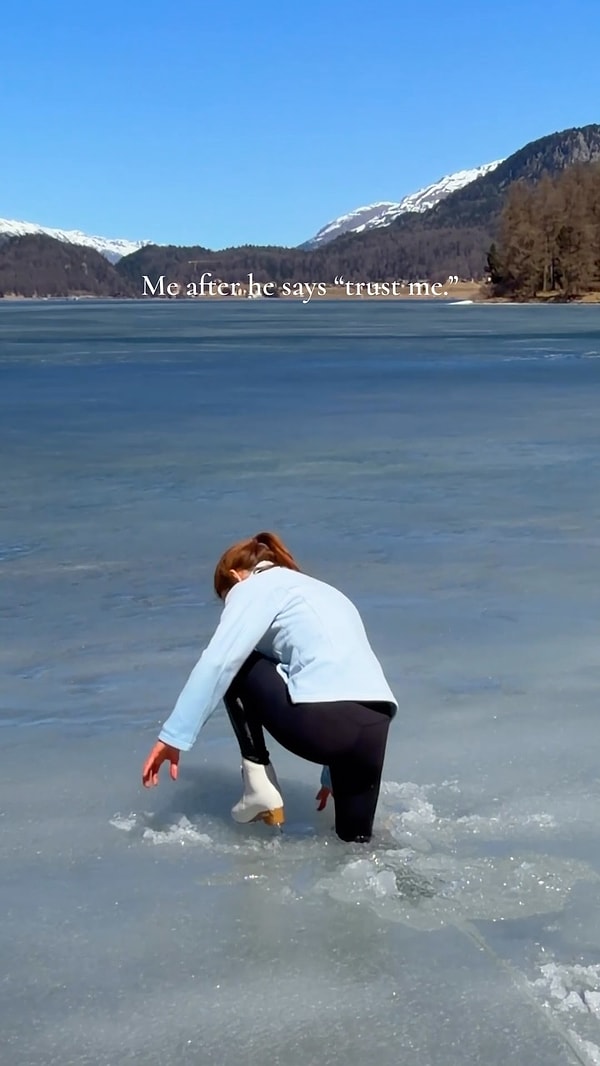
A user named “michaelacarrot” shared a series of unfortunate moments from an attempt to skate on a frozen lake surrounded by mountains. After her husband told her, “Trust me,” she grabbed her skates and headed out onto the ice—but she was disappointed from the very first steps. No matter how hard she tried, she couldn’t reach a patch of fully frozen ice, and her struggles had viewers laughing.


You can watch it here;
So how can you tell when a lake has frozen solid enough to skate on?
The first thing to check before stepping onto natural ice is its thickness. Experienced skaters drill through the surface with a drill, axe, or ice auger, then measure the depth with a ruler. They look for at least 10 centimeters of ice for skating alone, and a thicker layer for larger groups.
The ice’s color can also offer important clues. Clear blue or nearly black ice is considered the strongest, while white, opaque ice formed by snowfall is much weaker at the same thickness. Gray, slushy-looking ice, meanwhile, is regarded as unsafe. Areas with currents, reed beds along the shore, and spots where spring water flows into the lake freeze later, so it’s best to steer clear of them. Experts also recommend starting near the shore and moving forward step by step, carrying a rescue rope and ice picks, and avoiding skating alone whenever possible.
Keşfet ile ziyaret ettiğin tüm kategorileri tek akışta gör!
 Test
Test
 Gündem
 Magazin
 Video
Video



Send Comment