


Groundbreaking Begins for 8-Lane Bridge Connecting Inland Areas to Airport


Vietnam, one of Asia's fastest-growing economies, has embarked on a strategic engineering move that will completely rewrite the country's logistics infrastructure. Official construction has begun on the Ma Da Bridge, which will connect the country's mountainous interior to its new mega airport and deep-sea port.
Although not the largest in the world in terms of size, this bridge, described as the most critical piece of a colossal puzzle in terms of the role it plays, is poised to change the economic fate of the entire region.

Unlike traditional projects, the Ma Da Bridge was designed with eight lanes, not just to accommodate today's load and vehicle traffic, but also to endure the demands of the upcoming decades.
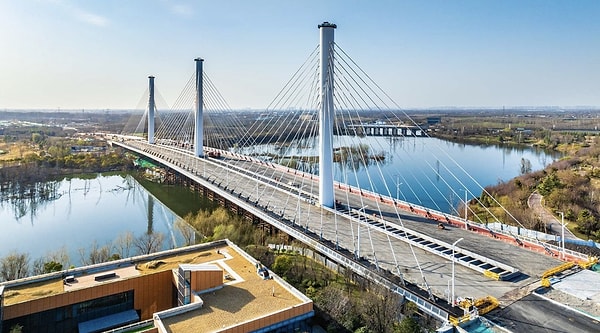
An advanced engineering plan was implemented for the bridge, which had to withstand rugged terrain conditions, challenging river crossings, and heavy vehicle traffic.
This structure, which is only 583 meters long, proves to the entire world that in infrastructure projects, it's not the size that matters, but the strategic location that holds far greater significance.
This system, which experts refer to as "multimodal connectivity," brings together different modes of transportation along the same axis.
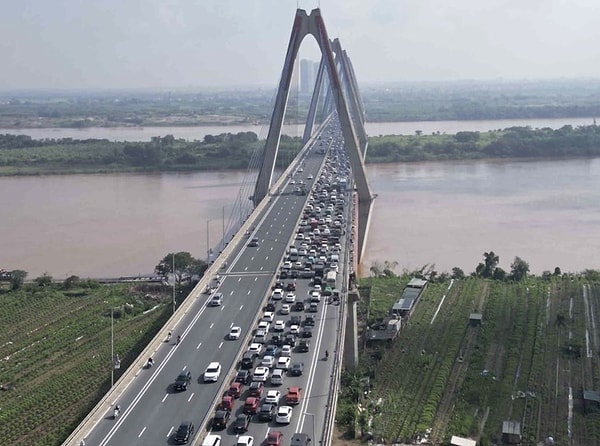
The Ma Da Bridge is essentially the heart of this system:
Production Base (Central Highlands): A region that's incredibly rich in agricultural production, yet geographically isolated due to its mountainous terrain.
Air Gateway (Long Thanh): The planned epicenter of aviation for the region, poised to become Vietnam's new mega airport.
Sea Gateway: A giant deep-water port, the lifeblood of Vietnam's trade.
Thanks to the bridge, a product from the inland can be transported by road, without any logistic bottlenecks, at a much lower cost and speedily to either an airplane or a ship. This will exponentially increase the competitive power of local production in international markets.
In recent years, Vietnam has emerged as the new darling of technology, electronics, and clothing giants that have parted ways with China, owing to its favorable business environment and labor force advantages.
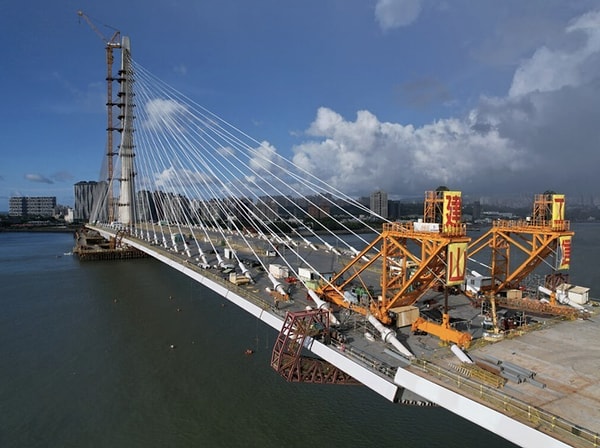
This industrial boom signifies the production of an immense amount of goods that need to be exported.
The Vietnamese government is aware that if they fail to establish logistic networks capable of keeping pace with the production speed of factories, growth will come to a halt.
Therefore, paramount priority is being given to strategic structures like the Ma Da Bridge, which is set to transform the region into a global hub for industry and commerce.
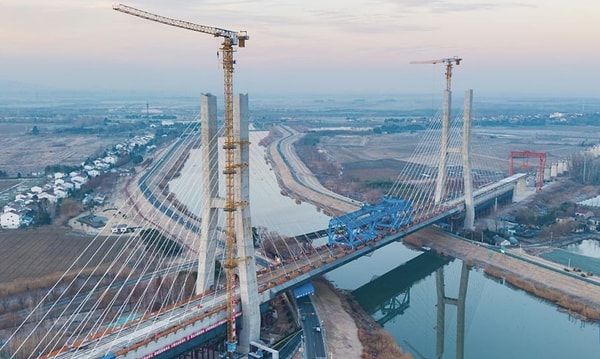
This silent revolution, which will directly impact the public's pocket, reduce costs, and open the doors of mountainous regions to the world, will significantly strengthen Vietnam's position in the global market once it is completed.
Keşfet ile ziyaret ettiğin tüm kategorileri tek akışta gör!
 Test
Test
 Gündem
 Magazin
 Video
Video



Send Comment