


Foreign Content Creator Warns About How Dangerous Mispronouncing Turkish Can Be


Learning a language or speaking it according to its rules may seem like an ordinary process from the outside. However, due to their structural characteristics, some languages can transform into a completely different dimension with the slightest change in tone or letter. Turkish, with its sound harmonies, punctuation details, and diversity of letters, stands at the forefront of these languages. A minor tonal error that we make unconsciously in everyday life can lead us into an undesirable situation.
A content creator who produces entertaining videos on social media about foreign languages and cultural differences shared a video highlighting these hidden dangers in Turkish. The video humorously illustrates how the dotted letters in Turkish and the correct pronunciation can completely turn word meanings upside down. It has won the admiration of both Turks and foreigners learning Turkish.
Source

You can watch from here;
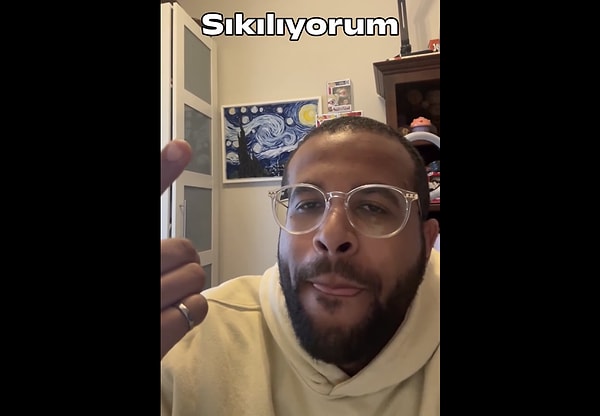
In Turkish, forgetting a single dot over a letter or mispronouncing a sound signifies much more than a simple spelling mistake. One of the clearest examples given in the video is the difference between the words 'Bol' and 'Böl'. With just a single letter change, a word meaning 'wide, abundant' can instantly transform into an action meaning to divide something into pieces. Similarly, mistakenly using the wrong letter and saying 'Doktor, ölüyorum' (Doctor, I'm dying) instead of 'Doktor oluyorum' (I'm becoming a doctor) during a hospital visit or a doctor's examination can create a situation that is tragically comical enough to make its way into medical literature.
However, the most perilous aspect lies in some popular phrases frequently used in everyday language. The incorrect pronunciation of the word 'Sıkılıyorum' (I'm bored), which the content creator intentionally left unexplained at the end of the video, asking viewers to look it up, opens a direct door into the vulgar and inappropriate waters of Turkish. The interchange of the letters 'I' and 'İ' can transform an innocent expression of discomfort into an extremely rude and inappropriate word within seconds. This problem is often encountered by foreigners who are newly acquainted with the letter 'i'. This situation once again proves how delicate the Turkish language is and how carefully it needs to be spoken, especially for foreigners who learn Turkish later in life.
Keşfet ile ziyaret ettiğin tüm kategorileri tek akışta gör!
 Test
Test
 Gündem
 Magazin
 Video
Video



Send Comment