


Did A Toilet Fault Really Doom A Submarine? 8 Hard Facts About Life Under The Sea


On April 14, 1945, the German submarine U-1206 was 60 metres down off the coast of Scotland when a toilet malfunction let water into the boat, and it never returned to port. Nothing like that is expected on today's submarines, but spending months underwater is still not easy. Here are eight details of a crew's daily life, from showers to sleep, gathered from navy and museum sources.


A toilet malfunction forced U-1206 to the surface 24 days before the war ended.
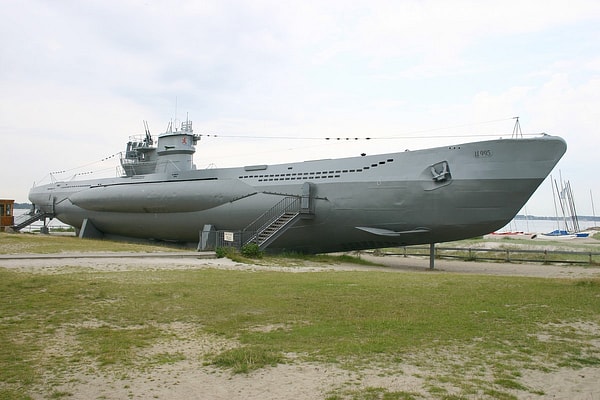
U-1206 had a new high-pressure toilet that could be used at depth. It was complicated to operate and needed the help of a sailor trained for the job. On April 14, 1945, off Peterhead, the system let seawater into the boat. When the water reached the batteries beneath the toilet, chlorine gas formed and the commander, Karl-Adolf Schlitt, had to surface.
There the boat was attacked by British aircraft and was too damaged to dive, so Karl-Adolf Schlitt scuttled it himself. Three sailors drowned as the boat was abandoned and 46 were taken prisoner.
Accounts differ on how the fault began. One source says a technician called to help opened the wrong valve, while the commander's report says Karl-Adolf Schlitt was in the engine room at the time.
Pictured: U-995, another German U-boat of the Second World War.
A shower on board lasts less than two minutes.
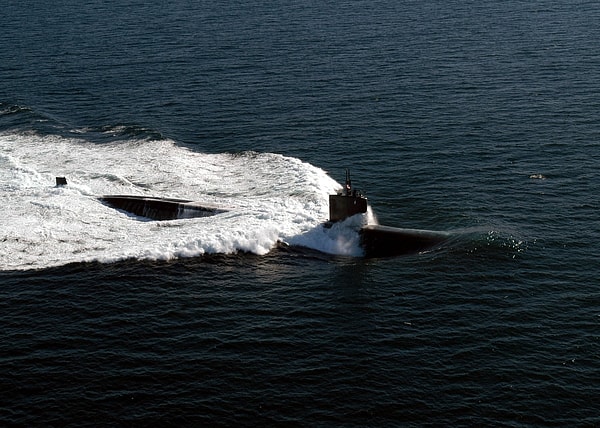
The navy has a name for it: the navy shower. You get wet for about 30 seconds, turn the water off to soap up, then rinse in under a minute. A shower like this uses about 11 litres of water, while an ordinary ten-minute shower can use as much as 230 litres. Nuclear submarines make their own fresh water from seawater, but that water is also needed for drinking, cooking and the boat's systems.
The Pantry Decides How Long The Boat Stays Under
A nuclear submarine produces its own oxygen and fresh water. According to the US Navy's supply command, what really limits the length of a patrol is the food that fits on board. The Los Angeles-class USS Key West is loaded with enough provisions to feed more than 150 sailors three meals a day for over 90 days. With no resupply at sea, every empty corner becomes a pantry, and bags of food are even hung in the engine room. Fresh fruit and vegetables run out within a week or two; after that it is canned and frozen food.
For decades, a day underwater was 18 hours long.
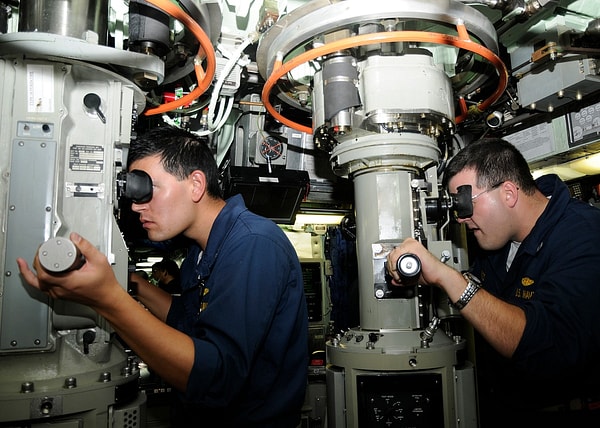
On US submarines, watches have been limited to six hours since the 1960s. With three teams rotating, the crew's day restarted every 18 hours: six hours on watch, and the remaining 12 for training, drills and sleep. That meant one cycle in three put the watch at an hour when a sailor would normally be asleep.
The Naval Submarine Medical Research Laboratory in Groton showed that fatigue dropped on a 24-hour schedule, and in May 2015 the Navy allowed commanders to switch to a new routine with eight-hour watches. Seth Burton, commander of USS Scranton, the first boat to use it for a full deployment, says the crew loved the new schedule.
Sneakers Count As Work Wear
A submarine is only useful as long as it stays hidden. According to the National Museum of the US Navy, sailors wear sneakers at sea so their footsteps cannot be heard. When the order for silent running comes, non-essential systems are shut down, the boat slows, and the crew is asked to rest and avoid unnecessary noise.
Messages From Home Have A Word Limit
Radio waves do not travel far in seawater. Very low frequency broadcasts reach only about 30 metres down, and a submarine can only listen to them. To reply, it has to come close to the surface and raise an antenna, which risks giving away its position.
The short messages families send are called familygrams. In the US the limit was first 15 words, then 50. On the Royal Navy's ballistic missile submarines, families can write 60 words twice a week or 120 words once. Messages are screened, and the navy decides whether bad news is passed on to the crew.
Your bunk may still be warm from the last sailor.
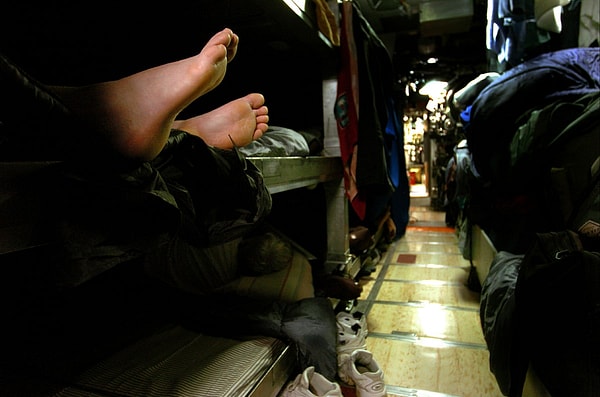
When there are more crew than beds, bunks are shared. A sailor coming off watch climbs into the bunk just left by a shipmate going on watch. The practice is known as hot racking, and it mostly falls to the most junior sailors. The temporary bunks in the photo were set up in the torpedo room during USS Virginia's sea trials in 2004.
The Unofficial Game Of Submariners Is A Card Game
It is called cribbage. According to a story told by the US Navy's submarine museum, in 1943, as USS Wahoo headed for the Yellow Sea, commander Dudley 'Mush' Morton dealt his executive officer Richard O'Kane a 29, the highest hand in the game. The crew took it as a good omen, and USS Wahoo sank two Japanese cargo ships that night.
Richard O'Kane's cribbage board is still handed down from submarine to submarine, and the tradition has survived the arrival of films and video games.
Keşfet ile ziyaret ettiğin tüm kategorileri tek akışta gör!
 Test
 Gündem
 Magazin
 Video



Send Comment