


Camera Captures Fascinating Inside Look at an Opera Singer's Vocal Cords


Vocal cords, with every breath and every word, generate the most unique tones of human identity. However, the movements behind these cords resemble an almost flawless biomechanical orchestra that cannot be seen with the naked eye. Seeing what changes in a singer's throat when they hit the most challenging notes, and how the muscles are directed with such pressure, takes our admiration for sound to a whole new level. This visual feast that emerges when musical genius and human anatomy come together, vividly illustrates how biological boundaries are pushed with art.
A video of an opera artist singing with a special endoscopic camera inserted through the nose has garnered significant attention on social media. The artist was recorded second by second, as she performed the Queen of the Night Aria from Wolfgang Amadeus Mozart's world-famous opera, The Magic Flute, with her vocal cords maintaining that tremendous and rapid rhythm.
Source

You can watch it from here;
So, What Exactly Happens to the Vocal Cords During This Process?
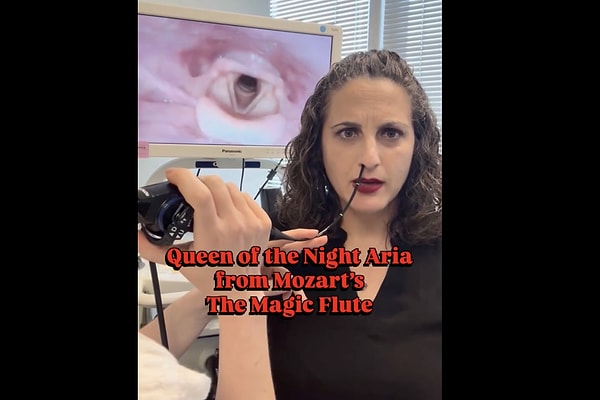
Behind those flawless high-pitched notes belted out by opera singers, lies the incredibly rapid and precise contraction and relaxation of the laryngeal muscles. As clearly seen in the video, when reaching the highest notes in a challenging piece like the Queen of the Night aria (Der Hölle Rache), the vocal cords come almost completely close to each other and vibrate hundreds of times per second. During this process, a perfect balance is established between the air pressure from the lungs and the resistance of the vocal cords; even the slightest lack of coordination can lead to being off-key or complete voice loss.
The Mysterious World of Vocal Cords
Staccato Notes and Muscle Control: When the artist transitions to those famous high-pitched sections of the aria, you can see how the vocal cords stretch like a musical string and how the laryngeal lid narrows the area.
Proper Technique is Vital: Opera singers, when producing these high-frequency sounds, rely on the power of the diaphragm rather than straining their throat muscles. If the load is placed solely on the throat muscles, serious medical conditions such as nodules or bleeding in the vocal cords can occur.
Anatomical Miracle: This image clearly proves that years of vocal training is not just a skill perceived by the ear, but also a tremendous internal mechanism controlled by muscle memory.
Keşfet ile ziyaret ettiğin tüm kategorileri tek akışta gör!
 Test
Test
 Gündem
 Magazin
 Video
Video



Send Comment