


10 Things Your Pupils And Gaze Reveal Without You Noticing, According To Research


Our pupils widen and narrow all day long. Most of that is about light, but not all of it. Thinking hard, getting excited or emotionally stirred can change the size of the pupil too. And then there is the act of looking itself: experiments have even shown how staring into someone's eyes for a long time can play tricks on the brain.
Here are 10 findings on pupils and gaze, each backed by published research.

Your pupils respond to light, distance and even mental effort.
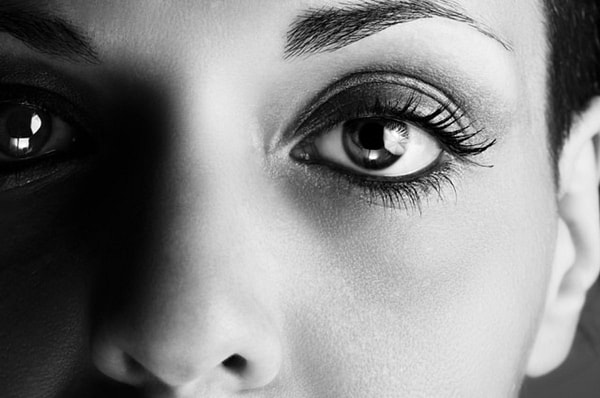
1. They widen in the dark and shrink when you look at something close
The pupil is the opening in the middle of the iris. In bright light, a ring-shaped muscle in the iris narrows it to let in less light; in the dark, another muscle widens it. In bright light the pupil can shrink to 2–4 millimetres, while in the dark it can open up to 8 millimetres. It also gets smaller when we look at nearby text or a phone screen. This is part of the 'near reflex', together with the eyes turning inward and the lens focusing, and it helps sharpen close-up images.
2. The harder you think, the bigger they get
In an experiment published in Science in 1964, Eckhard Hess and James Polt of the University of Chicago had participants solve multiplication problems. As the problems got harder, their pupils grew, and they returned to normal once the answer was given. In 1966, Daniel Kahneman and Jackson Beatty asked participants to memorise strings of digits: with each new digit held in mind, the pupil opened a little more, then shrank again as the digits were recited one by one. Years later, in Thinking, Fast and Slow, Daniel Kahneman described the pupil as a sensitive indicator of mental effort.
3. When the mind is overloaded, the pupil 'gives up'
There is a limit to how far the pupil widens. In a study by Granholm and colleagues published in Psychophysiology in 1996, pupils grew as the number of digits to memorise increased. At the capacity limit (around 7 digits) the growth stopped, and beyond 9 digits the pupil began to shrink. According to the researchers, this drop signals that the mind's resources have been exceeded.
Emotion, attraction and trust also show up in the pupils.
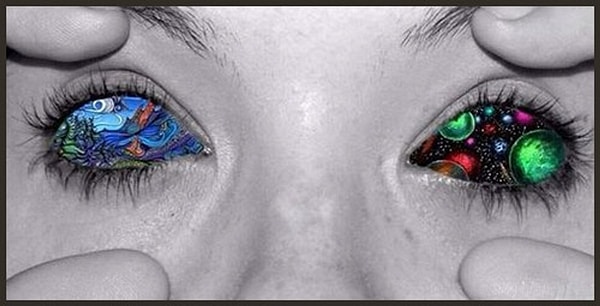
4. Both pleasant and frightening things make the pupil bigger
In the 1960s, Eckhard Hess suggested that pleasant images enlarge the pupil and unpleasant ones shrink it. Later studies did not confirm the second part. In an experiment published in 2008 by Margaret Bradley and her team at the University of Florida, all emotionally arousing photos, whether pleasant or disturbing, widened the pupil more than neutral photos. In other words, the pupil responds to the intensity of emotional arousal rather than to liking.
5. Large pupils look more attractive to us
It is said that in Renaissance Italy some women put extract of deadly nightshade (Atropa belladonna) in their eyes to enlarge their pupils; 'bella donna' means 'beautiful woman' in Italian. The plant is poisonous. In a 1965 article in Scientific American, Eckhard Hess reported that male participants found the same photo of a woman more attractive when her pupils had been retouched to look larger, yet they could not say what the difference was.
6. We unconsciously mimic the other person's pupils
In a study published in Psychological Science in 2015, Dutch psychologist Mariska Kret and her team had 61 university students play an investment game with virtual partners. Participants trusted partners with dilating pupils more, and their own pupils mimicked the partner's without them realising. An interesting detail: the link between this mimicry and trust only appeared with partners who seemed to belong to their own group.
Eye contact and staring hold surprises of their own.
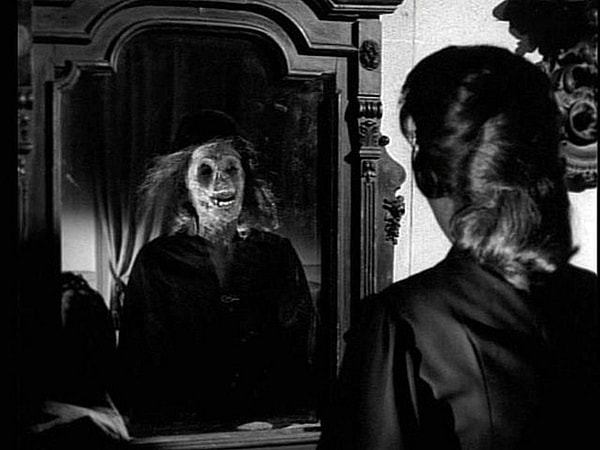
7. 'Liars avoid eye contact' is not backed by evidence
A meta-analysis by Bella DePaulo and colleagues, published in Psychological Bulletin in 2003 and covering more than a hundred studies, found no meaningful link between averting the gaze and lying. According to a 2006 analysis by Bond and DePaulo, people correctly spot lies only 54 percent of the time, just slightly better than a coin toss. Catching a liar by their gaze or pupils is not as easy as in the movies.
8. The most comfortable eye contact lasts about 3 seconds
In 2016, Nicola Binetti and his team from University College London showed 498 visitors at London's Science Museum videos of an actor looking at them for different lengths of time. On average, the most comfortable eye contact lasted a little over 3 seconds, and most people preferred between 2 and 5 seconds. Those who liked longer gazes also showed faster pupil dilation when they saw the actor.
9. Staring into someone's eyes for 10 minutes can distort perception
In a study published in Psychiatry Research in 2015, Giovanni Caputo of the University of Urbino seated 20 young adults in pairs facing each other one metre apart in a dimly lit room and asked them to look into each other's eyes for 10 minutes. As reported by the British Psychological Society, 90 percent of participants said they saw distortions in their partner's face, 75 percent said they saw a 'monster' and 15 percent said they saw the face of a relative. Their dissociation scores were also higher than those of a control group who stared at a wall. Giovanni Caputo describes the work as a preliminary study, and the sample was just 20 people.
10. Staring at yourself in a mirror can also bring strange faces
Earlier, in 2010, Giovanni Caputo showed a similar effect with mirrors in the journal Perception: most people who looked at their own reflection in dim light for about 10 minutes reported that their face changed or that they saw a stranger's face. One possible explanation is an effect described by Swiss physician Ignaz Troxler in 1804: when we fix our gaze on one point, unchanging details in the periphery fade from view after a while. Still, the Troxler effect alone does not seem to be enough, since in that effect details disappear, while in these experiments faces change. Scientists writing about the subject in Scientific American think the brain filling in the missing image in its own way may also play a part.
Keşfet ile ziyaret ettiğin tüm kategorileri tek akışta gör!
 Test
 Gündem
 Magazin
 Video



Send Comment