


Why Can't We Forget Unfinished Love? The Story of the Zeigarnik Effect and a Twist From Later Research


An unfinished job, a series that never got its ending, words left unsaid... Why do they keep circling in a corner of our minds? Psychology even has a name for it: the Zeigarnik effect! But there is a small surprise at the end of the story. Let's take a look together. 👇


It all started in Berlin with a waiter who didn't write anything down.
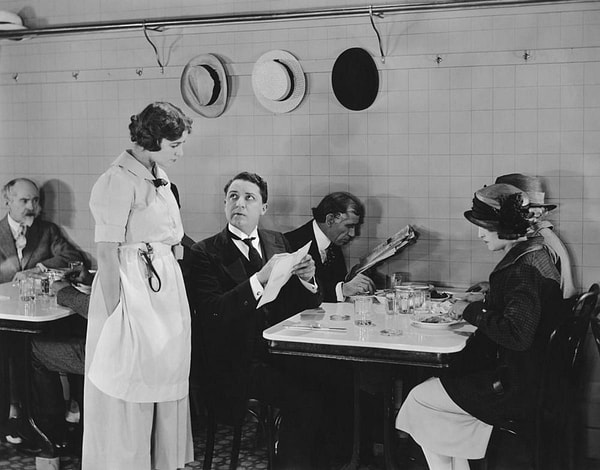
In the 1920s, psychologist Kurt Lewin and his students were sitting in a Berlin cafe when they noticed a waiter who kept every order in his head without writing it down. As the story goes, the waiter remembered each table until the bill was paid. Once the bill was settled, who had eaten what vanished from his mind.
The details change from source to source, but all versions meet at the same point: once the bill is paid, the memory empties. Lewin did not let this small observation go.
Bluma Zeigarnik took the observation into the lab.
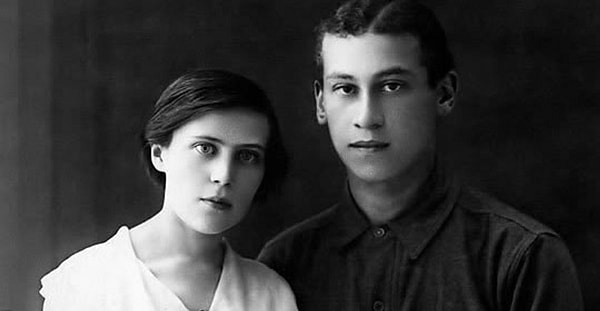
Lewin's student, Lithuanian-born Bluma Zeigarnik, published a study in the journal Psychologische Forschung in 1927. She gave participants more than 20 short tasks, such as modeling clay, folding paper and solving sums. She interrupted some of the tasks halfway, then asked participants which ones they remembered.
The interrupted tasks were recalled roughly twice as often as the completed ones. Zeigarnik later worked in Moscow, and the effect has carried her name ever since.
So is that why exes don't leave our minds?

Let's read this part as an interpretation. 🙂 Zeigarnik did not study relationships; the link to unfinished love was made later. The idea is still tempting: a relationship that ended without a real conversation can stay open in the mind, like a file that was never closed. For most people the feeling fades with time, but it is worth remembering that there is no scientific law here.
The real surprise: the effect is not as solid as believed
In a meta-analysis published in 2025 in Humanities and Social Sciences Communications, Ghibellini and Meier from the University of Bern brought together nearly a century of experiments. They found no general advantage in remembering interrupted tasks better. According to the researchers, the effect may depend on conditions such as how absorbing the task is and how the experiment is set up.
The tendency described in 1928 by another of Lewin's students, Maria Ovsiankina, did hold up consistently: people like to go back to an unfinished task.
The 'to be continued' trick of TV series, and how to quiet an unfinished task.
Series that cut an episode at its most exciting moment are the favorite example of the Zeigarnik effect. The unfinished scene keeps spinning in the viewer's mind, and the next episode opens with that curiosity. Screenwriters have a familiar name for this trick: the cliffhanger! 📺
Making a plan helps
In Masicampo and Baumeister's 2011 experiments, unfinished goals came to participants' minds even while they were busy with something else. When they were allowed to write down a concrete plan for their goals, this nagging went away. In other words, in the lab it was not necessary to finish the job; putting on paper when and how it would be done was enough. The paper's title sums it up nicely: 'Consider it done!'
Is there an unfinished task that won't leave your mind? Tell us in the comments!
Keşfet ile ziyaret ettiğin tüm kategorileri tek akışta gör!
 Test
 Gündem
 Magazin
 Video



Send Comment