


Why is Europe so Hot?


France, Germany, Belgium, England... An extraordinary heatwave that has swept across Europe has led to record-breaking temperatures. As these countries experience the hottest days in their history, it has been reported that thousands of people have lost their lives due to the extreme heat. Tedros Adhanom Ghebreyesus, the Director-General of the World Health Organization, announced that since June 21, there have been over 1,300 additional deaths in Europe linked to the high temperatures.
But what is the underlying cause of this lethal heat in Europe?
Can this situation be solely explained by Europeans not being accustomed to such heat?
According to experts, this is not the only reason.
Source 1
Source 2

Europe, as we've been seeing lately, is not the Europe we're accustomed to.
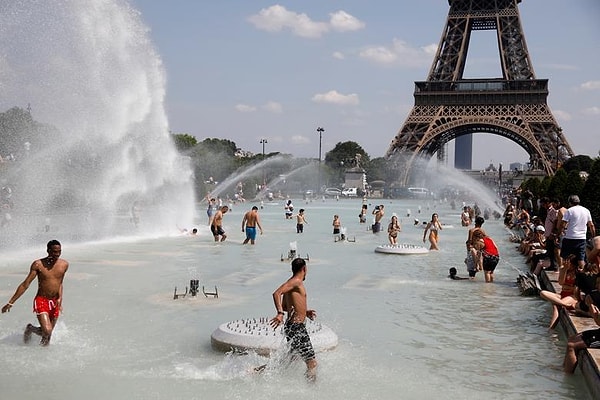
Europe continues to be gripped by a heatwave, with temperature records being shattered one after another. According to Euronews, France experienced the hottest day in its history, England recorded the highest temperature for June, Spain reached its highest average daily temperature since 1950, and Germany measured its highest temperatures since records began in the last three days.
People are resorting to various methods to cool down, including flocking to riverbanks, adjusting work hours, and devising different strategies. In France, tens of thousands of households are facing power outages due to the extreme heat. Iconic structures such as the Louvre Museum and the Eiffel Tower were forced to close earlier than usual due to the sweltering conditions.
Temperatures are soaring above 40 degrees.
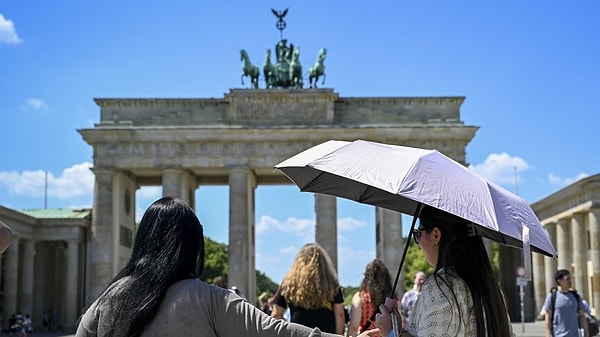
For the first time since 1947, the average daytime and nighttime temperatures in France have reportedly reached 30 degrees Celsius. Across the country, temperatures at 41 meteorological stations soared above 43 degrees. Similarly, in Spain, recent days have seen temperatures in many regions surpassing 45 degrees, with nighttime temperatures not falling below 30 degrees. In Gosport, England, the highest temperature of June was recorded at 36.1 degrees. In the northern and central regions of Italy, red alerts were issued in 16 areas.
Yet, when we look at these temperatures, there's nothing that strikes us as 'extreme'. In Turkey, the record temperature was broken on July 25, 2025, in the district of Silopi in Şırnak, where thermometers registered a whopping 50.5 degrees.
During the same period, extremely high temperatures were also measured in other parts of the country: 49.4 degrees in the district of Cizre in Şırnak, 49.6 degrees in the Kızıltepe district of Mardin, and 49.3 degrees in Nusaybin.
The question on everyone's mind is the same: Why is the heatwave in Europe proving to be fatal?

'On the ICE Berlin-Hamburg route, people are standing shoulder to shoulder. All the restrooms are locked. The bistro is closed, and due to an air conditioning malfunction, one carriage is out of service. People are even sitting on the floor. The emergency exits are blocked. The announcement system is not functioning. A brief toilet break will be given at a station in the near future.'
Let's start off by noting that the use of air conditioning is not widespread in Europe.
The use of air conditioning is not prohibited in Europe, but it's not as widespread as it is in our country. The approach in Europe is not to ban air conditioning outright, but rather to regulate where, how, at what temperature, and under what technical conditions it can be used, much like many other things. Therefore, regulations concerning air conditioning in Europe are primarily shaped around energy consumption, noise, external unit placement, preservation of historical buildings, and environmental impacts.
Many homes in Europe are old, and residents often choose not to install air conditioning units in order to preserve the exterior appearance of their buildings. Additionally, air conditioning units in public spaces are also regulated to maintain a certain temperature.
Reddit users describe their experiences living without air conditioning as follows:
'Buildings are designed according to the climate of the place you live in. For instance, in hot places, there are air conditioners, or buildings are designed to allow air flow. There are many very old buildings in Europe without air conditioning. These buildings are also designed to stay as warm as possible because the main issue in Europe is usually dealing with cold, not heat... Social life hasn't adapted to this either. In very hot countries, people often take a longer lunch break so they can work late into the night and early in the morning, thus avoiding the worst of the heat. People who are not accustomed to the heat often underestimate it, and many of these deaths are people who go outside to do sports or engage in an activity in the middle of the day.'
Europe was caught off guard by the Omega Blockage.
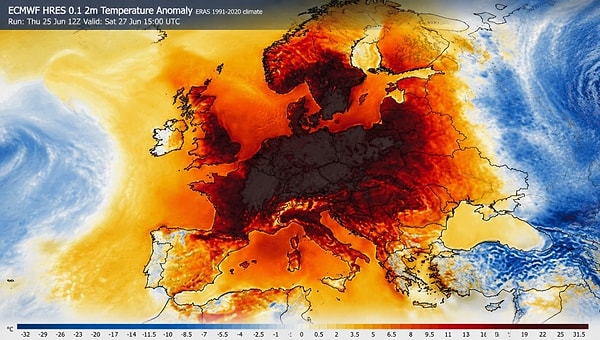
The frequency of heatwaves that Europe has been subjected to is on the rise as the years pass by. While Europe experienced only 5 major heatwaves over the 50-year span between 1950 and 1999, this number escalated to 18 during the period from 2000 to 2021. Experts refer to this high-pressure system, which lingers over the same region for days on end, scorching Europe, as the 'Omega Block.'
The system referred to as the Omega Block suppresses hot air downwards, hindering cloud formation, causing the sun's rays to constantly heat the ground, and facilitating the transportation of the extremely hot air from the Sahara to Western Europe. This extraordinary condition, created by a high-pressure system that affects a certain region for an extended period, is also known as a 'heat dome.'
Hence, the problem is not just the heat, but the trapping of hot air over the continent. High pressure pushes the air downwards from above. This situation leads to the compression of air molecules and further heating.
Traffic, urban concretization, industrial activities...
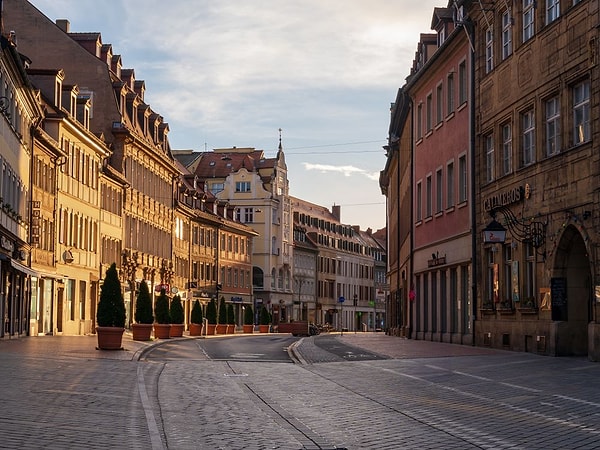
The term 'Urban Heat Island' refers to the conspicuous fact that cities are significantly warmer than rural areas due to factors such as traffic, concretization, and industrial activities. The structure of cities emerges as a critical component of the heat crisis in Europe. European cities, particularly designed for protection against the cold rather than the heat, struggle to dissipate the heat during a heatwave.
On a day when the air temperature is 38 degrees, the grass temperature can remain around 40 degrees, while asphalt temperature can soar up to 65 degrees. Naturally, asphalt and concrete, which store heat, fail to reduce this temperature when night falls. It's also worth noting the extended duration of sunlight in the northern parts of Europe.
Experts in the field underline the need for Europe to take certain measures to combat the hot weather: 'We need shades, trees, cool surfaces, building regulations, and new materials in our cities that focus on protecting us from extreme heat.'
In other words, the reason why the 'perceived' heat in Europe is so impactful is that both people and cities are unaccustomed to this situation.
Keşfet ile ziyaret ettiğin tüm kategorileri tek akışta gör!
 Test
Test
 Gündem
 Magazin
 Video
Video



Send Comment