


Ultimate Fridge Hack Keeps Fruits and Vegetables Fresh for Weeks


If you perceive those mysterious drawers at the bottom of your fridge as merely 'the place where fruits and vegetables are stored,' then you're making a significant mistake. Experts have revealed the secret behind those tiny adjustment knobs located on the vegetable drawers.
Here's the crucial tip that will prevent your lettuce from rotting and prolong the life of your apples...

Preventing food waste in the kitchen and keeping fruits and vegetables as crisp and fresh as the day they were bought is a common goal we all share.
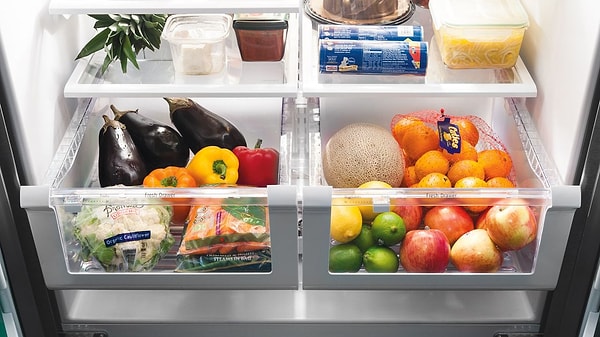
However, many of us are misusing the drawers located at the bottom of our refrigerators, commonly known as 'crisper' drawers. In fact, the small sliding adjustments found on these drawers act as secret air gates that determine the lifespan of our food.
Experts emphasize that these drawers are not merely storage boxes, but rather intelligent systems that establish a 'High Humidity' or 'Low Humidity' balance depending on the type of food.
The crisper drawers function by controlling the air flow entering and exiting the compartment.
High Humidity Setting: When you adjust the drawer to high humidity, the ventilation hole is completely closed, cutting off the air flow. This traps the humidity inside.
Low Humidity Setting: On the other hand, when you adjust it to low humidity, the ventilation hole opens. As humidity and air freely exit the compartment, the items inside are exposed to the external air.
So, which food should be stored at what setting? Here's the solution to the mistake that's been made for years:
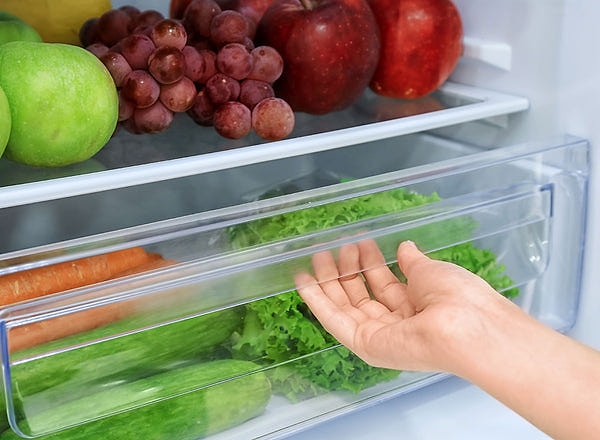
Avocado, apple, pear, melon, and other seeded fruits release 'ethylene gas' as they ripen. If you store these fruits in a closed (high humidity) environment, they will ripen and rot quickly due to the gas they emit.
Consequently, you should store these types of fruits, which are prone to rot, and vegetables like mushrooms that prefer a dry environment, at a 'Low Humidity' setting. This way, the ventilation hole remains open, allowing harmful gases to escape.
On the other hand, thin-skinned, wilt-prone products like broccoli, cucumber, fresh herbs, lettuce, and leafy greens need moisture. To keep these foods crisp and prevent them from losing water, you should set the drawer to 'High Humidity'. When the air flow is cut off, the greens stay fresh for a long time, nourished by their own moisture.
If you notice that the produce in your refrigerator's crisper drawer is freezing, there could be two primary reasons behind this issue.
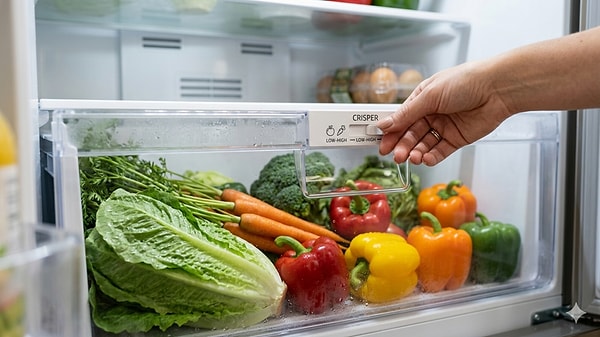
First and foremost, you should check the general temperature setting of your refrigerator. If the temperature is within the normal range, the second cause might be that you've overfilled the drawer. Stuffing the drawer to the brim blocks the ventilation holes, obstructs air flow, and leads to localized freezing.
A common confusion among many users is the mix-up between these two compartments. The drawers with humidity control are designed to preserve greens. However, the compartment in refrigerators often referred to as the 'fresh produce/deli' drawer aims to keep food at the lowest possible temperature without freezing. This compartment is not meant for vegetables; it's ideally suited for raw meat, poultry, and fish.
Not every refrigerator may come equipped with these advanced adjustment buttons.
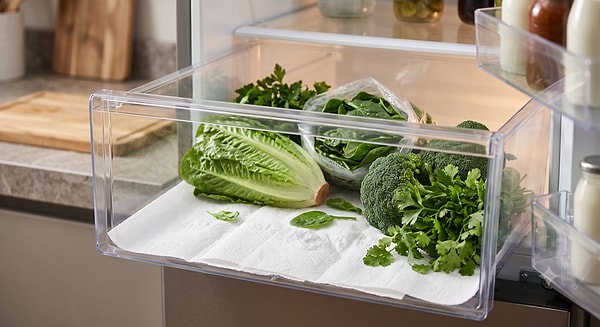
If your refrigerator lacks a humidity control slider, that drawer will function like a permanently high-humidity sealed box. In such a case, you need to manually regulate the air flow and humidity inside by following these crucial steps:
1. Remove Producers of Ethylene Gas (Most Critical Step): Since drawer without buttons are completely sealed, they cannot expel the gas. Therefore, you should never place fruits like apples, pears, avocados, bananas, and tomatoes, which release ethylene gas as they ripen, in that drawer. If you do, the released gas gets trapped inside and rots all the greens within a few days. The best practice is to store these fruits on the regular shelves of the refrigerator.
2. The Miracle of Paper Towels (Humidity Control): You should always line the bottom of buttonless drawers with paper towels or wrap your greens such as lettuce and spinach in paper towels before placing them in the drawer. The paper towels absorb the excessive and harmful humidity accumulated in the drawer, thus preventing the vegetables from getting soaked and mushy while maintaining the balanced environment they need for freshness.
Keşfet ile ziyaret ettiğin tüm kategorileri tek akışta gör!
 Test
Test
 Gündem
 Magazin
 Video
Video



Send Comment