


Turkey Braces for Scorching Heat Waves This Summer


As Europe is being scorched by the 'Omega Blockage' bringing record temperatures, the escalating 'El Nino' alarm in the Pacific has completely reshaped the risk map of Turkey. Prof. Dr. Mikdat Kadıoğlu, a faculty member at Istanbul Technical University, detailed the impacts of this colossal clash in the sky on Turkey and the drastic weather change expected by the end of June.

The Omega blockage is scorching Europe. Meanwhile, El Nino has set off!

Europe is currently gasping for breath under one of the most brutal heatwaves in recent years. Across a vast geography stretching from France to Spain, England to Italy, thermometers are toppling seasonal norms and reaching the threshold of 40-45 degrees Celsius. Experts are pointing to a sinister atmospheric system known as the 'Omega Blockage' as the cause behind this scorching scenario, which has essentially turned the continent into a giant oven. This system, which can remain stagnant over the same region for weeks, traps the hot air like a massive dome, thereby exacerbating drought and fire risks with each passing day.
Another global warning from the world's meteorological circles has shifted focus to the Pacific Ocean. It is indicated that El Nino, a key influencer of climate cycles, is set to enter a much stronger phase in the upcoming period. The El Nino phenomenon, which triggers global temperatures to rise and disrupts rainfall patterns, is intensifying the cost of the climate crisis worldwide, especially when coinciding with regional systems like the Omega Blockage.
"There's a traffic jam in the sky."
Professor Mikdat Kadıoğlu from Istanbul Technical University (ITU) likened the Omega Block to a 'traffic jam' in the sky, stating:
'Think of the Omega Block as a traffic jam in the sky. Normally, weather systems progress in an orderly fashion on a main route known as the jet stream, flowing from west to east; rain comes to a region, and passes within a few days. However, in the case of the Omega Block, a massive high-pressure ridge parks itself in the middle of the road, causing a traffic deadlock. It gets its name because this ridge draws the shape of the Greek letter Ω (omega) on the map. Underneath this ridge, the weather stays clear, warm, and stagnant. This is exactly the scorching scenario that Europe is experiencing today, with temperatures in Spain and France pushing towards 40-45 degrees. On either side of the ridge, two low-pressure troughs form, much like the back-up caused by blocked traffic; cool and rainy weather gets stuck under these troughs for days on end.'
Meteorology professor Mikdat Kadıoğlu has set a date.

Prof. Dr. Kadıoğlu points out that Turkey is currently on the fortunate and protected side of this massive system. However, he provides a clear end date for this temporary situation, stating, 'Blockages typically last anywhere from a few days to a couple of weeks. In our scenario, the trough reaches its deepest state around the Black Sea on Wednesday, June 24, even descending to isolated low pressure. Subsequently, the omega ridge returns from the west towards the weekend of June 26-27, reinstating the dominance of hot, dry air. In short, this 'coolness shield' lifts by the end of the week; as the blockage breaks down towards the end of the month, Turkey will start warming up again. Within a single week, you'll need to pack away both your winter coats and summer clothes.'
Cities that will be impacted by intense heat.
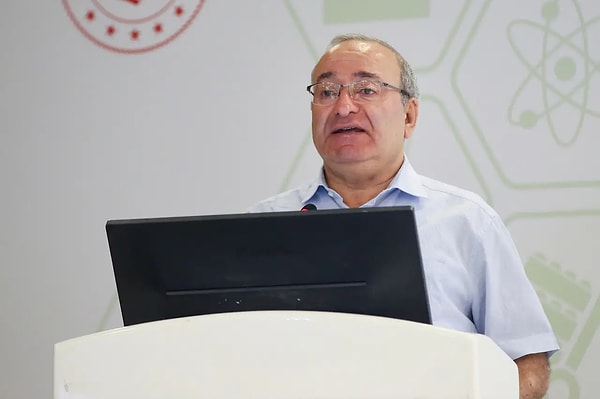
Professor Dr. Kadıoğlu, who also addressed the World Meteorological Organization's strong El Nino probability of 80% announced for the June-August period, listed the cities that will be heavily affected by the heat with the following words:
'July and August are already the hottest months in Turkey; when you add the global warming trend and the contribution of El Nino on top of that, we are expecting a summer where temperatures will exceed seasonal norms, heatwaves will occasionally be observed, and the risk of drought and forest fires will increase. The most vulnerable regions in terms of heat and fire are the Aegean (Izmir, Aydin, Mugla), the Mediterranean (Antalya, Mersin, Hatay), Southeastern Anatolia (Gaziantep, Sanliurfa, Diyarbakir), and most of Central Anatolia (Ankara, Konya). On the other hand, as blocking troughs occasionally settle over us, the inner parts of the Black Sea and the Eastern Black Sea (Samsun, Ordu, Trabzon, Rize) along with the high inland regions will stand out in terms of sudden downpours, hail, and floods. In other words, we will be discussing fires at one end of the country and floods at the other within the same summer.'
Keşfet ile ziyaret ettiğin tüm kategorileri tek akışta gör!
 Test
Test
 Gündem
 Magazin
 Video
Video



Send Comment