


Thousands of Underwear Buried in Soil Reveal an Unexpected Map of Health


Scientists from the University of Zurich resorted to an intriguing method to draw attention to a vital resource that has been overlooked despite being in plain sight. Researchers who buried a total of 2,000 cotton underpants in gardens, meadows, and fields across Switzerland created the 'Underpants Index', a measure of soil health and biological activity.

Two months after being buried in the ground, it was observed that some of the garments had completely decomposed, turning into a skeleton of mere seams, while others remained almost entirely intact.
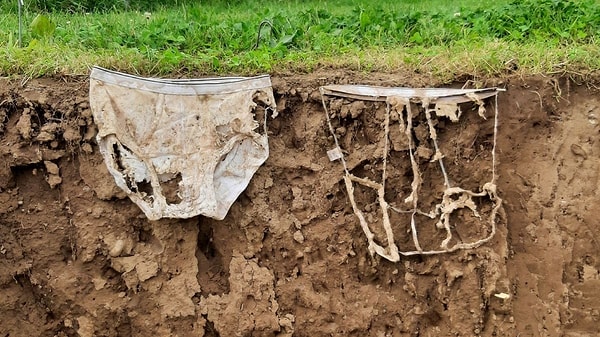
According to researchers, the absence of holes or decay in underwear buried in soil indicates a lack of biological activity, such as fungi, bacteria, and worms, and consequently, a deficiency in nutrients.
Agricultural ecologist Marcel van der Heijden underscored that the way land is used directly impacts soil quality, drawing attention to the fact that soil provides 95% of our food and is the second largest carbon store after land.
The research yielded striking data regarding the condition of the lands:

Monotonous lawns and meadows that encircle buildings turned out to be the poorest soils in terms of biological activity. In these areas, the decomposition rate of cotton fabric remained at an average of 40%.
In contrast, in specially treated, fertilized, and aerated gardens, the decomposition rate reached 58%. These areas, densely populated with worms and beneficial microorganisms, witnessed the most rapid biological decay.
Franz Bender, the co-leader of the study, cautioned that rapid decomposition doesn't always equate to perfect health.
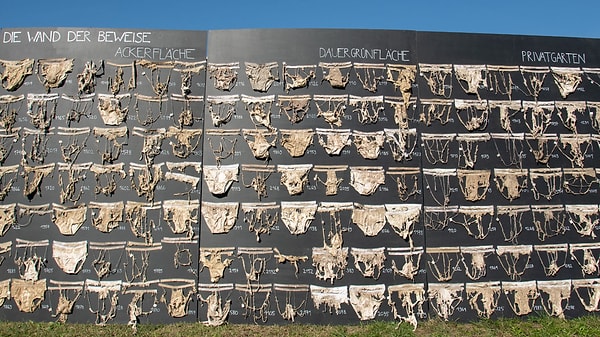
Bender, who suggested that the high rate of decomposition in private gardens could be due to excessive use of phosphorus and nitrogen (fertilization), stated that this situation could potentially harm local water sources and disrupt the natural balance.
Thanks to this fun and awareness-raising method, a comprehensive soil map was created across Switzerland. Scientists anticipate that similar 'underwear indices' could be implemented in different countries in the future, aiming to enhance soil awareness.
Keşfet ile ziyaret ettiğin tüm kategorileri tek akışta gör!
 Test
Test
 Gündem
 Magazin
 Video
Video



Send Comment