


What a Messy Closet Reveals About Your Mind: 5 Psychological Facts


The small details in our homes reveal far more about our mental processes and emotional lives than we might think. Psychologists agree that a perpetually cluttered closet isn’t simply a matter of poor organization; it can reflect underlying psychological and behavioral patterns.

Research published by DePaul University psychologist Joseph Ferrari and his team in the Journal of Environmental Psychology reveals a direct link between household clutter and lower psychological well-being.
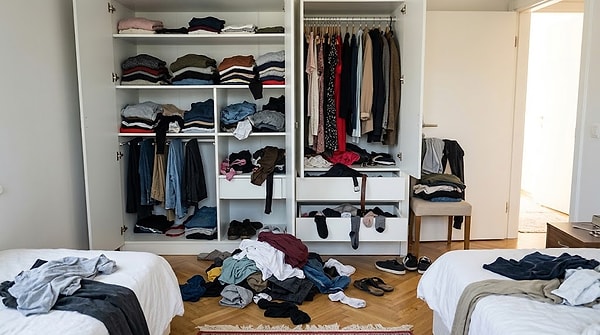
Psychologist Fuschia Sirois of Durham University, meanwhile, highlights the links between clutter, procrastination, and emotional regulation.
Experts say people whose wardrobes are perpetually cluttered often share these traits:
1. They Experience Mental Overload and Stress
As the worries and responsibilities of daily life pile up, mental energy wears thin. For people in this situation, organizing their wardrobe falls to the bottom of the priority list, and clothes begin to accumulate.
2. They Struggle to Manage Their Emotions and Get Started on Tasks (Procrastination)
Putting off tidying the wardrobe can be a way to avoid a task that feels boring or exhausting. Although procrastination may offer short-term relief, it allows the clutter to become a fixture.
3. They Find It Hard to Make Decisions
Deciding which clothes to keep, donate, or throw away takes mental effort. People who struggle to make decisions may keep items they no longer wear in their wardrobes for months.
4. They Form Strong Emotional Attachments to Their Belongings
It can be harder for these people to part with clothes tied to past relationships, trips, or meaningful periods in their lives. The emotional significance they attach to these items can make it feel impossible to say goodbye.
5. They Have Settled into Disorganized Routines
Small everyday habits—such as leaving clothes where they took them off or piling them on a chair or bed—can gradually become an ingrained way of life.
(Experts note that a cluttered wardrobe doesn’t necessarily point to a psychological problem. Limited space, physical exhaustion, and a demanding work schedule can also play a role.)
What Can Be Done to Change This Situation?

You don’t have to spend hours organizing your wardrobe. Experts recommend breaking the process into small, manageable steps:
Start Small: Begin with a single drawer or shelf rather than tackling the entire closet.
Sort by Category: Group T-shirts, shirts, and workout clothes together.
Let Go of What You No Longer Wear: Donate or recycle anything that no longer fits or hasn’t been worn in a long time.
Sort by Season: Store out-of-season clothes in boxes until you need them again.
Use Bins and Dividers: Create separate spaces for socks, underwear, and accessories.
Keep Your Go-To Pieces Within Reach: Place everyday clothes on shelves that are easy to access.
Put Things Away at the End of the Day: Instead of tossing clothes on a chair, hang them up as soon as you take them off.
An organized closet doesn’t just make it quicker to decide what to wear in the morning; it can also clear your mind and support your emotional well-being.
Keşfet ile ziyaret ettiğin tüm kategorileri tek akışta gör!
 Test
 Gündem
 Magazin
 Video



Send Comment