


This Transparent Sea Creature Is Almost Invisible, But One Touch Can Be Deadly


Taking a dip in the tropical waters of Australia may not always be as innocent as it seems. This is because the box jellyfish, almost invisible due to its structure, might also be lurking in these waters. Known for its transparent body, long tentacles, and potent venom, it is recognized as one of the most dangerous marine creatures in the world. Moreover, the danger it poses stems not only from its venomous nature, but also from the rapid onset of effects following contact.

Although it may appear transparent, its tentacles can be deadly.
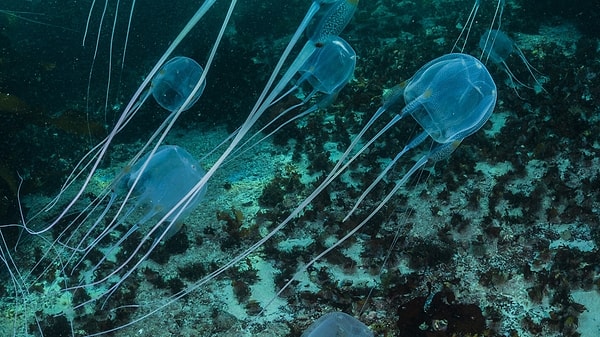
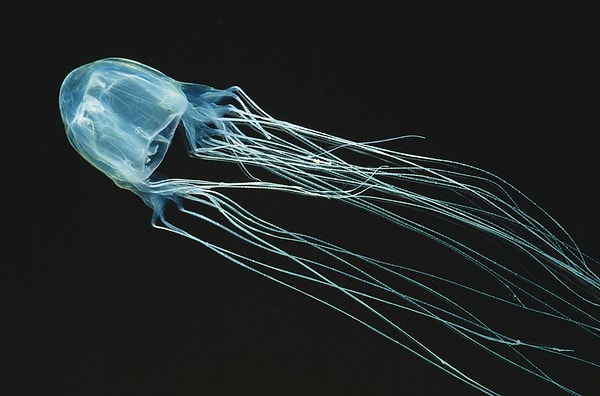
The Box Jellyfish is recognized by its transparent body, which resembles a square, and its long tentacles. According to the Australian Museum, the species Chironex fleckeri can possess a bell structure that reaches up to 30 centimeters and tentacles that can extend up to 3 meters. These tentacles contain stinging cells that can transfer venom to the skin upon contact.
The venom can act very quickly, depending on the intensity of the contact. In severe cases, unbearable pain, skin marks, breathing difficulties, and serious effects on the heart can be observed. Consequently, on the coasts of Australia, a Box Jellyfish encounter is not considered a mere 'marine creature contact'; rather, it is treated as a serious risk that requires immediate intervention.
It has 24 eyes, yet in the conventional sense, it lacks a brain.
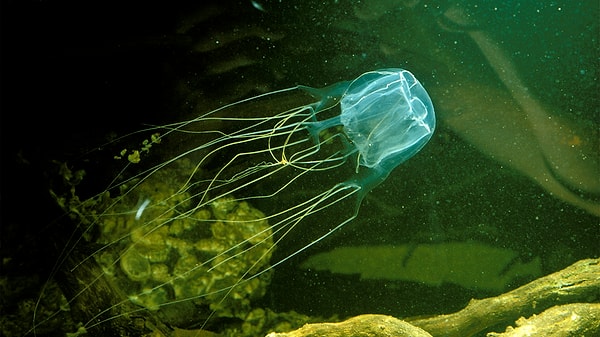
One of the intriguing aspects of the box jellyfish is its vision system. Despite lacking a central brain, these creatures can perceive their surroundings thanks to their advanced eye structures. According to BBC Wildlife Magazine, box jellyfish possess 24 eyes, a feature that assists them in avoiding obstacles and actively navigating.
In contrast to most jellyfish that are carried along by currents, box jellyfish are capable of more active movement. This is why their approach to shallow waters, particularly during certain seasons, can pose a risk to humans on tropical coasts. Their seemingly invisible transparent structures further increase the danger; because by the time they are noticed, contact has usually already occurred.
Vinegar can be crucial in the initial intervention.
While first aid for box jellyfish stings can vary depending on the region, vinegar plays a significant role in tropical jellyfish warnings in Australia. Surf Life Saving Queensland recommends safely removing the person from the water in the event of tropical jellyfish stings, calling for emergency assistance, and rinsing the affected area with vinegar for at least 30 seconds. Vinegar can potentially prevent unexploded stinging cells from releasing more venom.
However, vinegar alone is not a cure. Severe stings require immediate medical attention, and in some cases, antivenom may be administered. Therefore, it's considered safest to check local warnings before swimming in areas where box jellyfish are sighted, to wear protective clothing, and to adhere to lifeguard instructions on closed beaches.
Keşfet ile ziyaret ettiğin tüm kategorileri tek akışta gör!
 Test
Test
 Gündem
 Magazin
 Video
Video



Send Comment