


The Sport That Improves Mathematical Skills in Children!


For some children, mathematics can be the toughest subject. The introduction of abstract concepts can make calculations challenging for kids. However, there are ways to make mathematics more appealing and easier to understand for those who do not enjoy it. One such method involves basketball.
Jacob Wienecke, a sports and exercise researcher at the University of Copenhagen, has explored the relationship between basketball and mathematics.
Source

Mathematics is often the most challenging subject for many children.
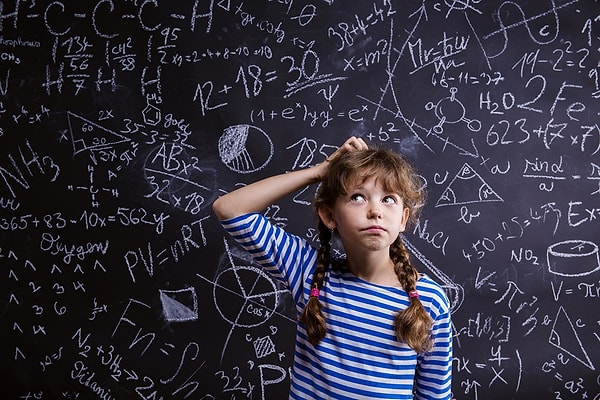
Mathematics, taught through abstract concepts, is literally a nightmare for some children. Especially when the multiplication table comes into play, everything gets jumbled up. You need to find the method you need to apply to solve a problem, be quick in operations, and perform multiple operations at the same time. There are still those among us who get goosebumps at the mention of a pool problem...
So, would children love math if we changed the way we teach it?
The answer to this question is probably yes. At least, that's what some research suggests. Jacob Wienecke, a sports and exercise researcher at the University of Copenhagen, believes that 'sports and physical activity could provide a new perspective on mathematics for students who are not interested in math lessons.'
The results of Wienecke's research are quite intriguing.
Children who started playing basketball demonstrated a 15% better performance in math tests compared to other children.
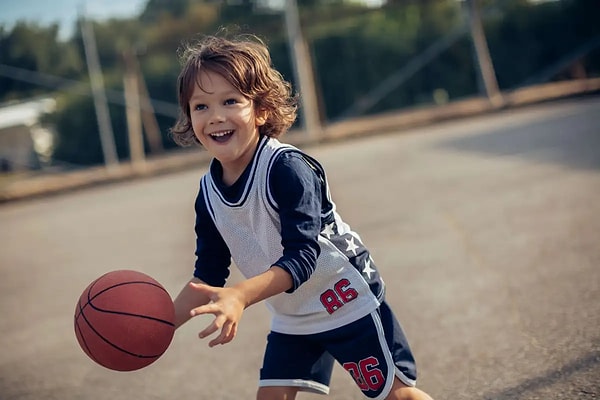
The results of a study conducted in Denmark were published in the Educational Psychology Review journal. The project involved more than 300 students aged between 11 and 13. The students combined lessons on fractions with specific basketball drills in a one-hour meeting each week.
For instance, teachers asked the children to shoot 10 baskets and then determine the ratio of successful and unsuccessful shots. They then practiced converting these numbers into percentages.
The exercise was not solely focused on fractions. After the workshop, participants recorded an approximately five percent improvement in other mathematical concepts as well.
Naturally, as he played basketball regularly, his skills in this area improved.
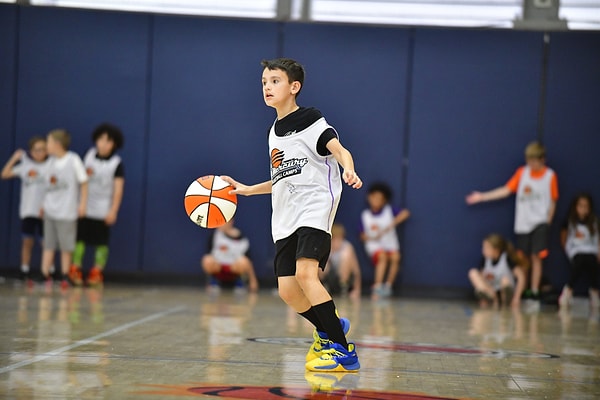
Wienecke stated, 'Our research demonstrates that you can easily incorporate other subjects into physical education, and it works. This approach can allow children to experience the subject in a completely different way, while maintaining their motivation and enjoyment of learning.'
Existing research to date also indicates that physical education classes can indeed be integrated with other disciplines. This dual approach allows students to remain physically active while concretely understanding abstract concepts through movement, leading to lasting learning. This is referred to as 'kinesthetic learning' or 'movement-based learning' in educational literature.
For instance, children tend to learn about angles in mathematics more effectively by moving their arms to mimic the angles, rather than from drawings on paper. Similarly, when arithmetic operations are practiced through various games, not only does the speed of children's calculations increase, but mathematics also becomes less tedious.
Classes don't have to be boring.
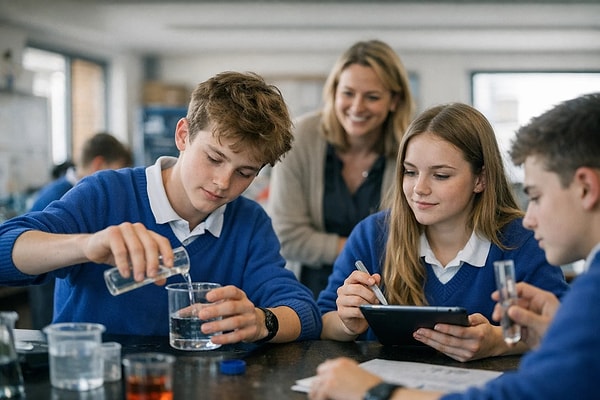
Not only mathematics, but also physics, geography, biology, English, history, and other subjects can be taught through activities in which children play an active role. For instance, abstract concepts that tend to alienate children from physics, such as friction force, centrifugal force, speed, and acceleration, can be explained practically through dribbling a basketball or running races. Similarly, history, which is often perceived as boring and memorization-based by many students, can be practiced in physical education classes through traditional sports, activities like archery, or folk dances from the respective period.
So, what benefits does this learning style offer to children?
It Makes Abstract Concepts Concrete: Subjects that contain abstract concepts like mathematics, science, or geography turn into a tangible experience when combined with movement.
It Activates Kinesthetic Intelligence: Not every student can learn by sitting at a desk, seeing, or hearing. Movement-based learning (kinesthetic) opens a wonderful door for students who struggle with traditional methods.
It Enhances Brain Functions: The amount of oxygen going to the brain increases during physical activity, triggering neuroplasticity (the brain's ability to form new connections). This improves focus, memory, and problem-solving skills.
It Reduces Sedentary Lifestyle: One of the biggest problems for children born into technology is a lack of physical activity. A student who moves even while working on mathematics or Turkish naturally increases their active time during the day.
It Develops Motor Skills: Physical skills such as coordination, balance, speed, and flexibility develop unknowingly while performing academic tasks (e.g., sprinting during a word hunt).
It Reduces School Stress: Physical movement triggers the release of happiness hormones (endorphins, serotonin). Integrated physical education amidst a heavy schedule of exams and classes lowers students' anxiety levels.
It Increases Motivation Towards Lessons: Students often break their prejudices against subjects they generally find 'boring' or 'difficult' (e.g., foreign language or history) when they see that the subject is gamified and involves movement. It enhances participation and a sense of belonging to the school.
Teamwork and Communication: Most integrated activities are done in groups. Running together to solve a problem, developing strategies, and helping each other nourish students' empathy and leadership skills.
Keşfet ile ziyaret ettiğin tüm kategorileri tek akışta gör!
 Test
Test
 Gündem
 Magazin
 Video
Video



Send Comment